|
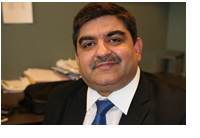 Anubhav Kapoor is Tata Technologies' General Counsel and Company Secretary and is based in Pune. Anubhav is responsible for Tata Technologies' global legal, IP, regulatory compliance and corporate governance practices and policies. Anubhav has about 24 years of experience.
Anubhav has handled multifarious areas such as structuring strategic business contracts, IPR, global compliance design and audits, legal due diligence, M&A, arbitration & litigation management. Also being a corporate secretary, he has dealt with high visibility boards and handled complex matters including those related to corporate governance, Sustainability, insider trading, private & public offerings. He is passionate about innovation and IPR and also heads the Corporate Sustainability and CSR practices globally. Having worked with Polaris Software, Domino's Pizza, Allied Nippon, to name a few, in a similar role, Anubhav's experience as an in-house counsel spans across various industries including automotive, aerospace, pharmaceuticals, food, banking and insurance software and engineering. He has spoken on several national and international forums on topics related to IP.
Anubhav is a member of the Institute of Company Secretaries of India. A Law Graduate from India, he has also done his Masters in Law from the University of Michigan, and MBA in Finance & Information Technology from Institute of Management Technology.
ET: What are the key principles of Sustainable business practices which are critical to the creation of long-term shareholder value?
AK: The major principles that govern Sustainable business practices for long-term shareholder value are:
- Stakeholder alignment - Maintaining mutually beneficial relationships with employees, customers and the community benefits in terms of positive profile, customer and community support.
- Inclusion of socially responsible and environmentally sound policies as core elements in organization's growth strategy.
- A focus on innovation.
- Leading the path/ influencing others.
ET: While many corporate Sustainability programs have achieved success on various initiatives, few corporates have embedded this practice in the overall organizational strategy. What are the barriers that hinder companies from inculcating these practices to attain their Sustainability goals?
AK: The most common framework for businesses to start on the path of Sustainability is 'Triple Bottom Line' interpreted as - people, planet, profits. What constitutes the challenge for companies is to align their company's Sustainability agenda with global Sustainability standards. This also implies the lack of understanding of the impact of Sustainability initiatives on their business. It requires cross functional engagement that is driven by the commitment and buy-in from the top management of the company, wherein actual implementation requires efforts from middle and lower management. Moreover, the lack of national or geographical specific regulations makes it stand low on the priority list for businesses.
ET: How will the recent collaboration between Global Reporting Initiative (GRI), BSE Ltd, Confederation of Indian Industry (CII) and others impact India Inc.?
AK: Companies publishing Sustainability reports aim to disclose their business impact on several parameters related to social, environment and economic aspects. Therefore, this collaboration is expected to bring more transparency on various issues, to name a few: combating climate change, embedding human rights in value chain, safeguarding gender equality and protecting biodiversity. Specific regulations mandated for companies listed at the BSE further encourage them to adopt the best practices while implementing the Sustainability measures across their line of business. This will facilitate an easy adoption of the national guidelines and global standards beyond compliance and guide businesses to achieve better Socio-Environment Return on Investment (SEROI).
ET: What are some of the best practices in corporate Sustainability that India Inc. can mirror from other advanced economies?
AK: Some of them include:
- Integration of Sustainable design across the product portfolio and lower the impact of their products.
- Innovative performance measurement plans rewarding employees for meeting non-financial performance goals, including their efforts on mitigating climate change through various emission reduction initiatives.
- Focus on high priority issues related to biodiversity conservation in the company's environmental policy, and providing detailed findings on their efforts in publicly available company reports.
- Moving towards goals like 100% ethical sourcing.
- Adoption of hybrid transport system for commutation as well as transportation of products.
ET: The Tata Group has a history of satisfying its multiple stakeholders. Can you please advise executives trying to understand this trend towards investing in Sustainability?
AK: Societal well-being and benefit is at the heart of our business strategy and operations. We inherit the social values from the Tata legacy and it is our constant endeavour to push the bar higher through investments in technology and innovation driven Sustainability activities.
However, the understanding of Sustainability is typically specific to an industry sector, stakeholder and context. The Sustainability trends can be assessed by taking different stakeholder's expectations into account. What it can mean for a product manufacturing company is to identify and address the social and environmental issues in its supply chain and mitigate its long term Sustainability risks. This can include issues related to wages and benefits, improving work safety, cutting down emissions and effluents and reducing carbon and water footprints. The other aspect to it can be addressing the issues or meeting the increasing expectation of its customers by improving safety and performance aspects of its product, improving its packaging material and reducing resource consumption during its usage.
To read the complete issue click here.
|









 The ELS Lotus logo is trademark of Empowered Learning Systems Pvt. Ltd.