|
|||||



|
|
|||||||||||

 |
|
|||
| He who has IP wins!
In recent times, there has been an increased awareness of the concept of Intellectual Property, with much debate in the press about the might of large firms who have been able to lead legal battles to other camps over their claims. Interestingly, these battles are not just against smaller imitators but you have the big boys too arguing over ownership rights, as evidenced by the on-going battles: Yahoo v/s Facebook, Apple v/s Samsung, Microsoft v/s Google, etc. What is IP all about? In the words of the World Intellectual Property Organization (WIPO), Intellectual property (IP) ‘refers to creations of the mind: inventions, literary and artistic works, and symbols, names, assets/images, and designs used in commerce’. Put simply, these are intangible assets of certain kinds that have been attributed to individuals and organisations and can only be used with due acknowledgment (usually under a commercial arrangement). This debate has many dimensions as witnessed recently in India, with Parliament passing an amendment in the Copyright Act which has given increased protection and brought cheer to musicians, lyric writers and singers, while drawing the ire of the music production companies. That about sums it up about whose right is it anyway when it comes to ownership disputes: the creator of the original idea or those who make an unknown product into a commercial success? What makes it hard to resolve is that both sides have valid reasons to buttress their respective case. The dispute takes a jingoistic turn when the battle is over Geographical Indication (GI). To the uninitiated, this refers to a country or to a specific local area or region or place of origin of a particular product. The regional distinctiveness signified by the name is an assurance of quality and is an automatic hallmark for the product. Examples include Darjeeling Tea, Kolhapuri Chappal, Goa Feni, Tirupati Laddoo, etc. But when Basmati Rice was under threat from the ‘American Basmati’ (created by Ricetec, a US based rice breeding firm), it raised enormous uproar both in India and Pakistan (who both claim a traditional heritage link to Basmati). The primary argument in favour of patents, according to the WIPO, is that it provides ‘incentives to individuals by offering them recognition for their creativity and material reward for their marketable inventions. These incentives encourage innovation, which assures that the quality of human life is continuously enhanced’. However, there is another school of thought that believes that laws on Intellectual Property are instruments of the established economic powers to exert unfair legal pressure on the emerging and Third world nations who do not have the means to fight expensive legal battles in international fora to protect what is traditionally theirs. Or, as in the case of the pharmaceutical industry, the weaker segments of society (and the poorest in the world economic order) become victims of the profiteering marauders of Big Pharma (witness the case of the availability and pricing of the AIDS drug in Africa, etc.). You can take either position depending on your economic logic but there is no denying that statistics reveal that for years the largest filings for patents have come from the economic giants of the world, US and Japan. However, in yet another sign of the changing global equations, China has now displaced Japan to become the top country for resident patent applications, according to the WIPO. This is an interesting development, because for years China, India and other emerging nations were not the epitome of respect for Intellectual Property. In fact, many established global companies still harbour fears about piracy, copying, plagiarism, and other associated challenges of protecting their intellectual creations in these markets. But, clearly, with the growth in their economic clout and with increased calls for ‘responsible behaviour at the global stage’, both China and India have begun to slowly modify their laws in line with WTO and TRIPS requirements by changing their domestic statutes. And, it is not limited to change in laws alone. The true test would be enforcement of laws. And, there is fair evidence of this in India too, the most recent being the High Court decision asking ISPs to stop streaming from illegal websites. Clearly, the tide is turning and we will see more active steps being taken to protect the legal positions of firms who have taken proactive steps under the IP laws. All this adds to one thing: if you have not begun to pay attention to protecting your Intellectual Property (be it through Trade Marks, Copyright, GI, etc.), it is time you studied this aspect more closely and create a strategy to protect what is really yours. |
||||


 |
|
||
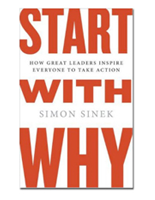 Simon Sinek is still relatively unknown in business circles, even though his book, ‘Start With Why: How Great Leaders Inspire Everyone To Take Action’, was published in 2009. However, his TED Talk has gone viral with over 5 million hits (and I would recommend it too). What is the compelling point he makes? His thesis is that the truly inspirational leader is able to evoke a positive response from his troops (as well as customers, for that matter) because at the core they communicate the raison d’etre of the concept. Clarify the ‘why’ of doing something (the proposed course of action, the product, etc.) and there is a cause that attracts the likeminded. This is genuine appeal that brings in the believers, the innovators. Sinek stresses the classic Law of Diffusion of Innovation in society - the five segments being the Innovators, early Adopters, early Majority, late Majority and the Laggards, to drive home the point that what successful firms and leaders do is to ‘sell’ the ‘why’ of an action or a product, thereby convincing the Innovators (the 2.5% of the Bell curve) to try the new idea or concept. If convinced, they become the rolling stone that triggers-off the avalanche. He illustrates his point with multiple examples from the world of politics and business (Martin Luther King, Apple, etc.). Arguably, SInek’s thesis may not be very new but undeniably his ability to communicate his point has received accolades, as evidenced by the fact that his TED talk is one of the most viewed videos on the Net. Sinek’s primary concept is the Golden Circle principle of ‘Why’, ‘What’ and ‘How’. According to Sinek, most people know ‘What’ they do, as their actions are easy to identify; most even, know ‘How’ they do stuff, but not enough people now ‘Why’ they do what they do! With some powerful illustrations, Sinek explains that very few people or companies can clearly articulate ‘Why’ they do ‘What’ they do. Emphasising that making money is not a ‘Why’ (that’s a result, according to him); the central question always relates to your purpose, cause or belief, as true passion emanates from this vital source. A powerful point indeed! And, Sinek goes on to explain that the root of his theory lies in biology, showing the linkage between our ‘gut feel’ and brain, given the association between our limbic brain & neocortex parts of the brain (our feelings impact our thinking, never mind the rational thinkers!). Sinek is not your conventional management writer but with his roots in advertising and as a teacher of strategic communication at Columbia University, he sends a powerful message that reinforces the work that many other management researchers have made before; and, makes one think again about the ‘Why’ of your business. Recommended reading! | |||
|
|||
 Samarthanam is a Bengaluru based NGO which provides opportunities for the deserving, young, and talented children with disability of any form, or from marginalized economic backgrounds. It was founded in 1997 by Mahantesh G.K. and two of his friends by providing free hostel facilities to the deserving students. Since inception, Samarthanam has been working to empower the visually impaired, disabled and underprivileged people in India. The NGO supports them with an aim to keep in pace with the rest of the society by providing quality education, accommodation, nutritious food, vocational training, placement based rehabilitation and achieve personal independence. However the long term focus of Samarthanam is shaping an inclusive society which provides opportunities, without any discrimination, for the development of the visually impaired, disabled and underprivileged people. Samarthanam's mission is to empower the visually impaired, disabled and underprivileged people through developmental initiatives focusing on educational, social, economic, cultural and technological aspects. Samarthanam was originally started with two visually impaired friends and over the span of 13 years has grown into a full-fledged organisation that provides end-to-end support facilities. Having executed a wide range of projects from education to rehabilitation, Samarthanam has evolved to become a renowned and deeply respected entity in the developmental sector. Some of its activities include:
In addition to this, the NGO is also committed to building a disabled friendly, inclusive residential school at Bengaluru. Its vision is: An inclusive society, free of discrimination against the disabled, where people with disabilities, especially the visually impaired, enjoy equal opportunities and an enhanced quality of life. If you want to get more information and support Samarthanam Trust for the Disabled, you can visit the website http://www.samarthanam.org/ or write an email at info@samarthanam.org or look up the Facebook page at http://www.facebook.com/Samarthanam |
|||

|
||
|
