
| May 2013 |
    |
| Thinking Aloud | Podium | We Recommend | Standing Ovation |
| Designing Success, Engineering Style - Jay | Interview with Sitangshu Goswami, CEO of Magna Steyr India | Engineering Design videos on YouTube about | Vidyarambam Trust – The beginning of learning |
|
Dear Reader, Empowering Times this month focuses on the burgeoning offshore engineering design and research & design (ER&D) industry which is benefiting from the technological advancements which have blurred geographical limitations. India with its vast talent pool is expected to reap dividends from the global growth of the industry, as organisations look to gain cost and time advantage to bring new products to the markets. Automotive designing was the mainstay for India in the past decade, but recently there is a gradual shift to other engineering design capabilities with many global organisations setting-up design centres here. The expected growth potential is very encouraging and it is up to the organisations to grab the bigger share of the pie using the domestic skill-sets available. The next decade is expected to be crucial not only from the perspective of volume of business, but also from the value potential that will be offered. Hope you find this month’s issue about the ER&D industry interesting and informative. In Thinking Aloud this month Jay tells us that in comparison to the traditional IT industry which has been a big victim of the weak global economic scenario, the ER&D industry in India has impressed with a double digit growth figure and holds a robust growth potential. The increased complexities and the availability of specialised software tools to make fine engineering designs has moved the realm of designing from the sweaty shop-floor to super-specialised design centres. With the help of connective technology these centres can be based in far off geographical locations where skill sets are easily and abundantly available. With over USD 20 billion of savings experienced by MNCs in India last year, Jay says that this is just the beginning and the industry is on the verge of explosive growth. Podium this month features Sitangshu Goswami, CEO of Magna Steyr India, who shares with us his thoughts about the ER&D industry in India from an insider’s perspective. He says that the slow-down in the global automotive space has led to companies looking at other verticals which are based on the similar fundamental requirement i.e. engineering design. He is of the opinion that not only will India benefit from the offshore component of the global engineering design industry, but there is also potential of large domestic demand coming from the increased needs of a developing economy. He says that the key challenge in outsourcing engineering design lies in the fact that the original design centres have knowledge bases which have been built over many years and transferring this knowledge is not easy. Also, the academic curriculum is not industry focused and companies have to invest a lot of time and money in training engineering graduates to develop specific skill-sets for practical application. But nevertheless he is optimistic about the market potential and the ability of the domestic skill-set to grab the opportunities. | |
|
In We Recommend this month, we present a collection of various videos on YouTube about automotive and engineering design. There is a video which shows the sketching of a car design right from the rough pencil sketch, while another one is a tutorial on tips and tricks to design a car. In another video, students of the College of Creative Studies (Detroit) speak about their projects and about the future of design, while in another video, teams of sculptors work on building clay models of cars in a GM design centre. The videos are a must watch for any car aficionado and for anyone who wants to become one!
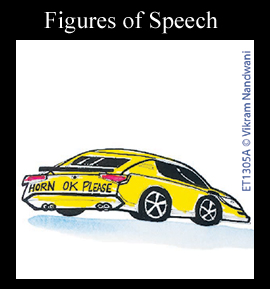
In Standing Ovation this month we feature Vidyarambam, a Tamil Nadu based NGO focusing on the educational needs of needy children. From a modest beginning in 2002, Vidyarambam today has a wide reach across the state and imparts educational support to children in 96 villages with over 280 study centres. It has a well-defined structure of educational programs for children in various age groups and also has book libraries, mobile toy library and computer centers. For its cause and its determination, Vidyarambam deserves a Standing Ovation! In Figures of Speech, Vikram presents a designer car MADE IN INDIA! As always, we value your opinion, so do let us know how you liked this issue. To visit our previous issues you can visit the Resources section on the website or simply Click Here. You can also follow us on Facebook, Twitter, Linked In & Google+ - where you can join our community to continue the dialogue with us! | |


 Sitangshu Goswami, the CEO of Magna Steyr India, is a mechanical engineer from Delhi who started working for the HCL group in 1987. After a short stint with HCL he moved to the automotive industry wherein he worked for Eicher and LML. In 1999 he left OEM and started working for an automotive engineering services company. He joined EDAG India. From EDAG he worked for several years in Germany where he got a chance to serve various global OEMs. Sitangshu became the Jt. Managing Director of EDAG in 2006. During his 12 years of service in EDAG he has worked for various global and domestic vehicle programs. He is primarily a BIW (Body in White) design engineer.
 |
We Recommend Engineering Design videos on YouTube about |
|
As we talk about engineering research and design, in the We Recommend section we present some amazing videos about automotive designing and sketching.
|
||||||||||
| Hope you enjoy viewing the videos! |
 |
Standing Ovation Vidyarambam Trust – The beginning of learning |
|
| |
|
To achieve its benign objectives, Vidyarambam runs the following programs:
Vidyarambam reaches to 24 out of 32 districts in Tamil Nadu and has so far launched 2,508 Pre-Primary learning centers (64,892 children) and 2,579 Support Course Junior and Senior centers (51,743 students). For the unwavering efforts and a kind cause, Vidyarambam truly deserves a Standing Ovation! If you want to get more information and support Vidyarambam, you can visit the website at http://www.vidyarambam.org |
|
 Vidyarambam is an NGO based in Tamil Nadu, India which finds its roots in a learning center formed in 2002 by Mr. Ranganathan, which catered to the educational requirements of 17 students. Today, Vidyarambam’s span covers over 96 villages, over 280 study centers and touches over six lakh rural children. The NGO strives to support and enhance education as it believes that every student is a success, and to make this a reality it offers support courses to aid in their journey towards literacy. Accordingly, it lends a helping hand to children already in school (pre-primary to class VI), but weak in languages and mathematics.
|
||
|

