
| August 2013 |
    |
| Thinking Aloud | Podium | We Recommend | Standing Ovation |
| Higher Education in India - Vijayan | Interview with Dr. Sunil Jayantha Nawaratne, Secretary, Ministry of Higher Education of Sri Lanka | Book: The Element – How Finding Your Passion Changes Everything, by Sir Ken Robinson | Bani Mandir, West Bengal |
|
Dear Reader, One of the many pillars that support overall economic growth is Education, this being an important aspect especially in Emerging Markets today. These markets are faced with challenges such as environmental degradation, economic deprivation, social inequality, ineffective public-sector management and weak corporate governance. None of these challenges can be overcome without a massive increase in the number of competent and motivated leaders and professionals, which in turn requires the reformation of the Education sector. India for one is faced with the challenge of ensuring inclusive and quality Education to all – both basic and Higher Education. This is indicative from one of the challenges that the 12th Five Year Plan intends on addressing and hopes to answer questions such as ‘how can we improve the quality and the utility of our Education, while ensuring equity and affordability?’ The Ministry of Human Resource Development also reports that the essence of Human Resource Development is Education, which plays a significant and remedial role in weaving and balancing the socio-economic fabric of the nation. ET this month takes a look at the Higher Education sector in Emerging Markets, the transformation of which is a fundamental condition to sustain economic progress. In Thinking Aloud, Vijayan looks into the Higher Education sector in India and the challenges it faces. The student community is the key stakeholder who is aware of the plethora of courses available to pursue, which today is not confined to the four walls of a classroom. Given this scenario, the teaching community has to transform themselves to new ways to deliver content and pedagogies. Yet another challenge is the close linkage between the student, the needs of the employment ecosystem, the herd mentality of parents and peer groups for their children to pursue courses in which they might not have the behavioural and other attributes for the same. Podium features Dr. Sunil Jayantha Nawaratne. A profound Educationist, Dr. Sunil shares his views on the Education system in Sri Lanka, the many challenges it faces and the long term goals of the sector. Dr. Sunil highlights the various steps taken to make Sri Lanka “The Emerging Wonder of Asia”. He also talks about the key stakeholders of the Higher Education sector and the various skills required for students today to face the ever changing standards of employability. He opines that developing “Human Capital” or suitable “Knowledge Workers” demanded by the long-term vision and goals of the nation is a major responsibility of the Higher Education system of the country. | |
|
In We Recommend, Sir Ken Robinson through his book ‘The Element – How Finding Your Passion Changes Everything’ delves into finding our ‘Element’ which is the meeting point of one’s natural talent and personal passion. Through various real life stories of well-known personalities, the author presents examples of how these people realised their capabilities and unique talents which eventually helped them to be what they are today. Sir Ken is also of the opinion that the Education system in most parts of the world is a ‘one-size-fits-all’ system and also puts forth his stance stating that intelligence and creativity is interlinked and further describes the same.
Standing Ovation features an NGO which began as a village library dedicated to educating the rural poor and is today what is known as Bani Mandir, aiming at the eradication of illiteracy, and other socio-economic problems in West Bengal. Apart from educating the rural masses, it also offers various facilities such as crèches, training for both women and youth and various other awareness programmes. In Figures of Speech, Vikram’s toon really graduates! As always, we value your opinion, so do let us know how you liked this issue. To visit our previous issues you can visit the Resources section on the website or simply Click Here. You can also follow us on Facebook, Twitter, Linked In & Google+ - where you can join our community to continue the dialogue with us! | |



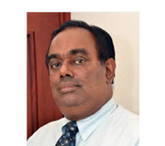 Dr. Sunil Jayantha Nawaratne is the Secretary, Ministry of Higher Education of Sri Lanka. He obtained his first degree in Business Administration from the University of Sri Jayawardenapura and later an MA in Economics from Kagawa University, Japan. He has also completed his PhD in Management at Keio University in Tokyo.
 |
We Recommend Book Review: The Element - How Finding Your Passion Changes Everything By Ken Robinson |
|
Through various real life stories of well-known personalities such as Gillian Lynne, Matt Groening, Paul Samuelson, Mick Fleetwood, Bart Conner, Albert Einstein, Paul McCartney, Meg Ryan, Debbie Allen among many others, the author presents examples of how these people realised their capabilities and unique talents which eventually helped them to make a living (and a very successful one at that), by just doing what they loved the most. Sir Ken Robinson suggests that we really do not understand our own natural capacities to grow and change in spite of being born with imagination, intelligence, feeling, intuition and sensory awareness, of which we only use a fraction. This lack of understanding is further compounded by peer groups, culture and our own expectations of us. Sir Ken also tries to bring about a paradigm shift in the views held by most Education systems in the world. The book highlights the fact that till date, the Education system in most parts of the world is a ‘one-size-fits-all’ that teaches children what is right and what is not, although this might differ from person to person. The author puts forth his stance stating that intelligence and creativity is interlinked and further describes the same. Yet another aspect highlighted in the book is ‘the Zone’. To be in the Zone is to be in the deep heart of the Element. One of the strongest indicators of being in the zone is a sense of freedom and authenticity. When we are doing something that we love and are naturally good at, we are much more likely to feel centered in our true sense of self. Nearing the end of the book, the importance of finding our Elements individually and all of us together is stressed upon. A book written in simple, straightforward and down to earth language touches various topics such as passion, talent and achievements through various anecdotes and personal experiences. More videos from Sir Ken Robinson: http://www.ted.com/talks/ken_robinson_says_schools_kill_creativity.html http://www.ted.com/talks/ken_robinson_changing_education_paradigms.html About the Author: Sir Ken Robinson is an internationally recognized leader in the development of Creativity, Innovation and Human Resources in Education and in business. Sir Ken works with Governments and Education systems spanning Europe, Asia and the USA, with international agencies, Fortune 500 companies and some of the world’s leading cultural organizations. For twelve years, he was Professor of Education at the University of Warwick in the UK and is now Professor Emeritus. He has received honorary degrees from the Rhode Island School of Design, the Open University and the Central School of Speech and Drama; Birmingham City University, the Liverpool Institute for Performing Arts and Oklahoma State University. He was honoured with the Athena Award of the Rhode Island School of Design for services to the Arts and Education; the Peabody Medal for contributions to the Arts and Culture in the United States, the Arthur C. Clarke Imagination Award, the Gordon Parks Award for achievements in Education and the Benjamin Franklin Medal of the Royal Society of Arts for outstanding contributions to Cultural Relations between the United Kingdom and the United States. |
||||||||
|
|
||||||||
|
||||||||
|
||||||||
 |
||||||||
 World renowned Educationist and creativity expert, Sir Ken Robinson elucidates in his book ‘The Element’, the truth behind why a child gets bored easily in class or why people in general are disillusioned and frustrated with whatever they do in their day to day life. The author is of the opinion that finding the Element in oneself is essential to discover what one can really do and who you really are. In other words, the Element is a point where natural talent meet personal passion.

 In August 1945, a group of local school Teachers took the initiative to build a platform and render help to the poor and needy people in distress. What started off as a village library dedicated to educating the rural masses then, is today what is known as Bani Mandir, an NGO aiming at the eradication of illiteracy, superstitions and other socio-economic problems in West Bengal.
