
| November 2013 |
    |
| Thinking Aloud | Podium | We Recommend | Standing Ovation |
| HR: The Under-Leveraged Business Function – Jay | Interview with Achal Khanna , CEO, SHRM – India | Articles & Videos | Rakshana, Andhra Pradesh |
|
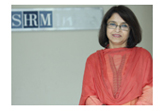
Dear Reader, ‘People are our greatest assets’ is probably an adage that many of us are very familiar with. Against a backdrop of economic challenges, increasing pressure is being placed on the HR professional who is reliant on their HR department to carefully manage the employee lifecycle. With the rapidly changing business landscape today, the challenges within the field of human resources are endless. The role of HR professionals is constantly evolving and expanding, with new challenges surfacing beyond operational HR issues. As the business world changes, so does the role of HR professionals and the various unseen challenges that this profession will also have to tide over. This month, ET explores the challenges of HR professionals. Just a quick reminder, for all your HR related questions you can ask Jay @ELSEmpowered using #Managementquery. In Thinking Aloud, Jay explores the various aspects of the HR function and its challenges. HR today is an under-leveraged business function, and that said, HR professionals today lack the ability to use the power of metrics to make a convincing business case for their contribution. An emerging development is the study of HR Analytics which enables the function to not just present dashboards but also to attempt predictions by mapping trends in the system. A key requirement for the HR function is a strong conviction in the profession. To run today’s enterprise the least HR leaders can do is to upgrade and update their own knowledge & skills to stay relevant to today’s professional requirements. On the Podium we feature Ms. Achal Khanna, CEO of the Society for Human Resource Management (SHRM). Ms. Khanna has served various HR roles before heading SHRM India. She throws some light on the various challenges the HR community in India faces and how SHRM India is instrumental in resolving these challenges. Further, Ms. Khanna is of the opinion that technology is the single-most significant differentiator in the workforce of today and the past. Some key deliberates in one of SHRM’s latest conclave titled “Empowering Change: Workplace of the Future” have also been highlighted. | |
|
In We Recommend, this month, we share some articles and videos extracted from Harvard Business Review and YouTube. These are put forth by eminent personalities from various walks of management and touch on topics such as leadership and how to manage workforce while at the same time try to create the best workplace on earth. This section also takes a quick look at what goes into making a career in HR.
Standing Ovation features Rakshana, an NGO dedicated to uplift the marginalized communities in Andhra Pradesh through various village developmental programs. Its mission is to facilitate the sustainable empowerment of the socio-economic under privileged communities by organizing and capacitating them to eliminate barriers to their development. In Figures of Speech, Vikram’s toon stumbles upon a very ‘human’ challenge! As always, we value your opinion, so do let us know how you liked this issue. To visit our previous issues you can visit the Resources section on the website or simply Click Here. You can also follow us on Facebook, Twitter, Linked In & Google+ - where you can join our community to continue the dialogue with us! | |


 |
We Recommend Articles & Videos |
|
The World Wide Web offers us a plethora of management-related literature, but this month we share with you links to resources from gurus who offer their viewpoints on various topics: 1) Why Did We Ever Go Into HR? Matthew D. Breitfelder and Daisy Wademan Dowling takes a quick look at what goes into making a career in HR. They are of the opinion that things are changing as talent management becomes a make-or-break corporate competency with a shift from managing the monetary levers of human resources to increasing the asset value of human capital. Link: http://hbr.org/2008/07/why-did-we-ever-go-into-hr/ar/ 2) A Market-Driven Approach to Retaining Talent Peter Capelli in his article delves into a market-driven retention strategy that begins with the assumption that long-term, across-the-board employee loyalty is neither possible nor desirable. Though moving to a market driven strategy to retain talent is not easy, it is the new reality: the market, not your company, will ultimately determine the movement of your employees. Link: http://hbr.org/2000/01/a-market-driven-approach-to-retaining-talent/ar/1 3) Creating the Best Workplace on Earth After three years of investigating the question – “Suppose you want to design the best company on earth to work for. What would it be like?” authors Rob Goffee and Gareth Jones considers that the “organization of your dreams” is one where individual differences are nurtured; information is not suppressed or spun; the company adds value to employees and one which stands for something meaningful; the work itself is intrinsically rewarding; and there are no rules. They put forth to us the “Dream Company” Diagnostics. Link: http://hbr.org/2013/05/creating-the-best-workplace-on-earth/ar/1 4) Leading Quietly by Adam Grant Adam Grant of Wharton is among the 40 best business school Professors under the age of 40 and is the youngest tenured Professor and single highest-rated teacher at The Wharton School. Grant’s research focuses on the drivers of work motivation and how these motivations help to improve employee work performance. He looks at such factors as expressions of gratitude and the advantages of introverted leadership in the video link below. Link: http://www.youtube.com/watch?v=7YC0G-ZA8gU 5) Reimagining the path to growth by Lynda Gratton Having worked with several corporations globally, Lynda Gratton, Professor, London Business School, discusses the "future of work." In her video, she describes the five areas affecting companies today and why and how collaboration will be the key to business success. Link: http://www.youtube.com/watch?v=p5Q_NT44u-8 Note: To access the entire article, you are required to register online on Harvard Business Review | ||||||||
|
|
||||||||
|
||||||||
|
||||||||
 |
||||||||

 Rakshana is a non-profit, non-governmental voluntary organization, operational in 140 villages in various parts of Andhra Pradesh. Formed by a group of social workers, Rashana facilitates the sustainable empowerment of under privileged communities by organizing and undertaking various projects to eliminate socio-economic, political, cultural, physical, psychological and environmental barriers to development.
