
| May 2014 |
    |
| Thinking Aloud | Podium | We Recommend | Standing Ovation |
| The Information Business – Jay | Interview with Kaushal Sampat, President & CEO - Dun & Bradstreet – India | Things A Little Bird Told Me – Biz Stone | Vikash, Orissa |
|
Dear Reader, In the times we live in today, we inevitably face making a choice based on data and information which are both qualitative and quantitative in nature. More often than not, the type of decisions we make now may also have a rippling effect on future choices. Financial decisions for one can be difficult at times given that we are clouded with so much of data from various sources, and yet we often ask ourselves “how much information is enough to make an informed decision?” Then there is the reliability factor which may be at stake too. The importance of making a choice in monetary terms, be it at an individual or corporate level, has gained prominence that we have many educational institutions imparting financial knowledge to non-finance professionals. Apart from this, there are several companies which help investors and key decision makers to dissect information, make sense of the same and then make a move to invest rather than just depend on instincts alone. This month on ET, we take a quick look at the Financial Information sector. In Thinking Aloud, Jay talks about the information flooded world that we live in and the difficulty to judge which data will lead us to the intended results. It becomes particularly difficult to interpret numbers, prominent in the world of finance amid the vast number of firms which not only attempt to explain the maze of financial data but also flaunt their products and services. Panel experts, technology and other tools of analytics all do add to making sense of the financial puzzle, on one side, while on the other, there remains the limitation of how reliable such interpreted data can be. On the Podium, Mr. Kaushal Sampat, President & CEO - Dun & Bradstreet – India, gives readers a glimpse of the financial information sector in India. Today, the sector is still in the maturing stage compared to other developed markets and is faced by many challenges such as the absence of a central level public registry and mechanism for bulk file transfers, among other concerns. He is of the opinion that investors are bombarded with enough and more information coming from various sources (read Information Paradox). Mr. Sampat also explains the role that Dun and Bradstreet as a company plays to overcome this paradox, highlighting some of the products and services that the company has to offer to its customers. | |
|
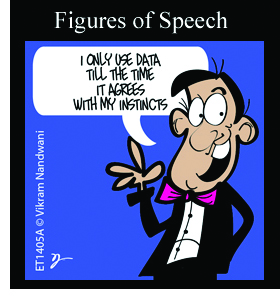
In We Recommend, Co-founder of Twitter, Biz Stone, through his book ‘Things a Little Bird Told Me’ shares his insights on business success. The book which is much more than a rags-to-riches story tells one about merging ones abilities with ambitions, and to look through the lens of infinite possibilities, driven by ideas and not plain hard work alone. The author addresses key aspects of any business, be it failures, vulnerability, ambition and corporate culture. He also tells readers the importance of creativity and how to tap and harness it. Standing Ovation features Vikash, an NGO based in Orissa which functions in the backward areas of the State to empower and uplift the people in these communities. It aims to provide quality education, healthcare facilities, equal opportunities for the disabled and aims to address other issues related to the right to sustainable livelihood and good governance, among others. It has a special consultative status with the Economic and Social Council of the United Nations and many of its models have been used in local/regional networks. In Figures of Speech, Vikram’s toon suggests that personal instincts and data can sometimes go hand in hand! As always, we value your opinion, so do let us know how you liked this issue. To visit our previous issues you can visit the Resources section on the website or simply Click Here. You can also follow us on Facebook, Twitter, Linked In & Google+ - where you can join our community to continue the dialogue with us! | |



 |
We Recommend Things A Little Bird Told Me - Confessions of the creative mind: Biz Stone (Co-founder of Twitter) |
 The book takes you through the personal experiences from his childhood, career and life and draws parallels with these experiences and throws light on how they have influenced him in his way of thinking. The book takes you through the personal experiences from his childhood, career and life and draws parallels with these experiences and throws light on how they have influenced him in his way of thinking.
Embellished with tales of the ups and downs with working in Silicon Valley and Biz’s journey from obscurity to stability at Google, the call of entrepreneurship (which steered Evan Williams, Jack Dorsey and Biz) to start Twitter and unshackling himself from a successful enterprise to start at the beginning at another new venture - Jelly. A self-confessed creative genius, Biz’s journey surprises as well as inspires. His strength of character is reflected in the way he bounces quickly from failure to success and is not ashamed to open up about his blunders. He comes off as sunny and warm and willing to look like a fool at times. Biz’s firm belief that constraint inspires creativity is what gave birth to Twitter which was limited to 140 words. Biz was willing to take the risk and trusted his instinct and ability to deliver what he believed in. People have played an important part in this journey and he has always focused on emotional investment – Twitter put people first and technology second. To quote Biz – “No matter how many machines we added to the network or how sophisticated the algorithms got, what I worked on and witnessed at Twitter was and continues to be a triumph not of technology but of humanity”. It’s interesting to note that it is possible to build a company whose purpose is not only making money, but also making people's lives better. To capture the essence of Biz’s world
In Biz’s own words –“The book is more about a rags-to-riches tale. It’s a story about making something out of nothing, about merging your abilities with your ambitions, and about what you learn when you look at the world through a lens of infinite possibility. Plain hard work is good and important, but it is ideas that drive us, as individuals, companies, nations, and a global community. Creativity is what makes us unique, inspired, and fulfilled. This book is about how to tap into and harness the creativity in and around us all.” About the author: Christopher Isaac "Biz" Stone was born on March 10, 1974. Stone graduated from Wellesley High School in Massachusetts and though he did not complete his graduation from Northeastern University, Stone holds an honorary Doctor of Laws from Babson College, and is a Fellow at Oxford University. He resides in Marin County, California with his wife Livia and his son Jacob. He and his wife founded and operate the Biz and Livia Stone Foundation, which supports education and conservation in California. |
||||||
|
|
||||||
|
||||||
|
||||||
 |
||||||

 Based in Orissa, Vikash is an NGO established in 1986, to provide treatment and life with dignity to leprosy affected people. In the initial days, inclusion and development of leprosy affected persons were the key activities of the organization. In the 90s, it was a leader in promotion of alternative energy. Towards the end of the century, it had earned respect for its work in the field of disability. It works in socially turbulent areas of the Eastern Ghat in Dandakaranya belt. Its model for waste management has been replicated in 100s of hospitals and many urban areas.
