|
|
|
THINKING ALOUD
The Pharma Sector's Quality Challenge - Jay
|
 |
PODIUM
Interview with Prem Singh - President - Global Human Resources at Wockhardt Ltd.
|
 |
|
WE RECOMMEND
Dreaming Big - My Journey to Connect India by Sam Pitroda with David Chanoff
|
 |
STANDING OVATION
Diya Foundation - Bangalore
|
 |
|
Dear Reader,
In 2014, Sun Pharmaceutical Industries was in the process of acquiring Ranbaxy Laboratories, and at that point of time, the combined employee strength of the Pharmaceutical giants was close to 14,000 each. Industry and HR experts pointed out to various concerns, one being the challenge of duplication of roles after the merger and the fact that managing such a huge human resource base, as well as plants, without their optimal utilisation, would imply incurring huge costs. Further exacerbating the situation, apart from managing its people resources, rationalisation of the staff-productivity ratio were two major challenges amid the various regulatory woes during the process. As if the series of 'patent cliffs' and long developing lifecycles weren't enough!
The Indian Pharmaceutical industry is one of the most attractive investment destinations in the world. With increasing returns, lower risks and anticipated growth, investors are more interested in this industry than ever before. The proof - the depth of the Indian government's involvement and its numerous efforts to stimulate organised growth of the industry, marked with numerous important turning points which have typically stemmed from the issues faced by the industry. From the people perspective, this would mean involving new professionals to tackle the new set of challenges.
With an increasingly competitive domestic market, pharma companies in India are being faced with the challenge of having to work really hard to drive revenue growth. Given the evolving market dynamics the traditional sales structure, processes and skills are not enough to succeed today. Companies are starting to explore ways to assess their current capabilities, identify and prioritise gap areas, and invest in ways to systematically upgrade themselves in the prioritised areas through a combination of talent management and enabling tools and processes. Developing these capabilities will require people with advanced skills, robust and well-defined processes, and enabling tools and techniques.
ET this month features the current HR challenges in the Indian Pharmaceutical Industry.
In Thinking Aloud, Jay highlights how the Indian Pharmaceutical sector is under immense stress apart from scrutiny from the industry watchdogs. Added to this, the challenge of compliance and building a consistent culture of quality exists. He stresses that it is about time that this industry, like other sectors, build and enhance an all pervasive culture of quality.
On Podium, Wockhardt Limited's Global HR President, Mr. Prem Singh, highlights key trends and developments in the Indian Pharmaceutical sector and the challenges especially during times of M&A and joint ventures. Mr. Singh also shares some best practices followed at Wockhardt and the changes in the HR function over the next few years.
In We Recommend, Rohan reviews Sam Pitroda's 'Dreaming Big - My Journey to Connect India.' As the title suggests, the book is about the author's life journey from Odisha to the US and back. Led by a vision backed by former Prime Minister Rajiv Gandhi, Sam Pitroda created a revolution in the telecom sector in the country and we are realizing its benefits today. The book highlights key incidents of his life and how Pitroda overcame obstacles during his journey.
In Standing Ovation, we feature Bangalore based, Diya Foundation which was founded in 1999. The Foundation is a vocational training center and sheltered workshop that provides training and employment to differently-abled individuals. The idea behind Diya Foundation is to empower such individuals through the acquisition of skills.
In Figures of Speech, Vikram's toon tries to find a solution to the HR problem!
As always, we value your opinion, so do let us know how you liked this issue. To visit our previous issues you can visit the Resources section on the website or simply Click Here. You can also follow us on Facebook, Twitter, Linked In & Google+ - where you can join our community to continue the dialogue with us!
|
|

|
|
The Pharma Sector's Quality Challenge - Jay
|
|
An industry under stress. It would not be wrong to describe the Pharmaceutical industry in India in this manner. Of course, the brave faces of the industry leaders may not betray this fact. However, given the plethora of Warning Letters and Import Alerts that various leading players in the industry have received over the last 3-4 years, undoubtedly, questions are bound to be posed to the firms in the sector. While domestic business has continued unabated, manufacturing for exports has taken a hit from the increased scrutiny by the US FDA officials. One begins to wonder whether firms in India have been blatant violators of current Good Manufacturing Practices (cGMP). Surely it cannot be, so everyone agrees. But, if the conspiracy theorists are ignored, the fact remains that there are challenges of compliance and building a consistent culture of quality.
While the stock market has seen major swings in recent months, amongst the worst affected are large Pharmaceutical companies, where at one point in 2015, the combined fall in their market capitalization was over Rs. 99K crores. This was the consequence of increased US FDA scrutiny on market leaders like Sun Pharmaceuticals, Dr. Reddy's Laboratories, Wockhardt, Cipla, and many others. Analysts have maintained that the intrinsic capabilities of the major players is not in doubt but what is essential is the ability to quickly bounce back from such setbacks.
A lot is at stake. Reports indicate that firms from India add up to around 30% (by volume) and about 10% (value) in the $70-80 billion US generic market, thus making Indian firms a significant presence in the generic Pharmaceutical market in the United States.
Let us keep in mind that almost all industries face adverse public scrutiny from time to time - two industries notoriously in the news often are the Auto firms (with product recalls) and the Financial sector (with heavy penalties for non-compliance being the order of the day every other year). The Pharmaceutical industry should not become the next whipping boy of regulators. The nature of the industry is such that their products and services are quite literally seen as contributing to individual well-being & public health. Adverse notice from regulators - and consequent bad press - not only impacts the financial bottom-line of a firm but also erodes confidence in the industry as a whole. This is bad news for the Pharmaceutical sector of India as reports indicate that the hit to the industry is already over Rs. 1 trillion!
This is a complicated landscape right now - and made more so given the unique technological challenges of the Pharmaceutical business (decade long investment in the innovation cycle to bring new drugs to the market, an emotive regulatory environment and constant pressure of rising costs, to name a few). Surely, a cause worth fighting for?
For many decades this is one sector identified with 'Make in India'. Isn't it time to unleash the human capital of this sector to build and enhance a culture of quality all across? Let the industry leaders mull over it and make this an important part of their agenda.
back to top ^
|
|

|
|
Interview with Prem Singh - President - Global Human Resources at Wockhardt
|
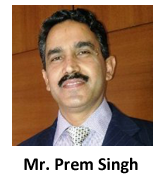 Mr. Prem Singh is a graduate in Mechanical Engineering and a Post Graduate in Management from IIT Delhi. He has been in the field of Human Resources for over 25 years, out of which 22 years has been in India and 3 years outside India on an expatriate assignment.
Currently he is the President - Global Human Resources at Wockhardt, where he leads the HR function, provides strategic direction towards organizational capability building and growth of the business. Wockhardt is an Indian MNC, having its presence in India, USA, UK, Ireland, France, Russia, Brazil, Japan and other parts of the world. Prior to joining Wockhardt, Mr. Singh worked with Piramal Enterprises as Vice President - HR. His previous assignments were with Essar Group, Owens Corning (India) Ltd, JCB (India) Ltd and Tata International Ltd etc.
Mr. Singh featured in the Top 100 Most Talented Global HR Leaders by CHRO Asia in 2015.
Under his leadership Wockhardt has bagged three "Great Places to Work" awards in 2015, including Rank # 1 in the industry. He has also been conferred with the Chairman's Leadership Award for his turnaround of the HR function within a year. Apart from this, he was also awarded with the Global HR Excellence award for his contributions to the development of High Performance Organization at Owens Corning Inc.
Mr. Singh has been conferred with the accreditation by All India Management Association for proficiency in management training and is a certified Black Belt in Six Sigma. He is also an invitee member on the Program Advisory committee of National HRD Network and also a member of the HR sub-committee of the Confederation of Indian Industry (CII).
ET: Going by recent reports, the Indian Pharmaceutical firms have been under severe pressure from various quarters. What are the recent market developments in the Indian Pharmaceutical sector?
PS: While there is a wide perception about the "pressure" on the Indian pharma sector, I see this as a significant opportunity. Healthcare spending in both developed and developing economies is on the rise and will continue to be so. Providing safe and affordable drugs and democratizing healthcare brings home a very good space for India pharma players. The challenge however has been at the regulatory front and as the Indian pharma companies try to come up to the standards, this will go a long way to raise the bar in terms of safety of the population on one hand, and a definite opportunity to Indian companies to participate in a large healthcare space. Thus, we have an opportunity to meet the unmet medical needs and make an impact!
ET: Over the years, the Pharmaceutical industry has seen an array of Mergers & Acquisitions and joint ventures taking place (as also divestments & de-mergers). What are the challenges faced in the HR role under such situations?
PS: The biggest challenge under such circumstances is to align the values, culture and beliefs, and ensure a coherence in the way business is conducted. Since these are not easily measurable and metricised, establishing a common scale becomes quite difficult. That is where the challenge starts.
ET: Wockhardt has also been recognised at various for excellence in people practices. Please share with us some of the best practices followed at your company.
PS: We have been recognized for several areas like human resources practices, supply chain, marketing excellence, safety, IP, etc. and in the last 18 months we have won 76 awards at various forums. We also bagged three awards in the "Great Places to Work" survey, including Rank # 1 in the industry as the "Best Company to work for." Most of our best practices are around learning, engagement, communication, recognition, excellence as a way of life and social impact.
ET: Your sector is known for employing large Sales Force, spread across the country. Besides, the Pharma industry has also seen unionisation at the Field Force level. What is the primary distinction in managing manufacturing employees and the Field Force?
PS: The difference is that of degree, rather than that of kind. The plant unions are within a well-defined boundary of the plant, whereas the sales field force is very widely spread, which brings a very different kind of dynamics to the fore. This adds to the complexity and scale, however, the nature of their demands tend to be similar, if not the same!
ET: The traditional HR function will need to re-define its role amid the ever growing and ever changing pharma industry. What are the changes you see in the HR function in this regard over the next few years?
PS: A major challenge for HR is to deal with the generational change that is taking place. Today, there are three generations at the workplace, which brings its own challenges. Secondly, the way technology is making an impact on the lives of people and social media taking centrestage, engaging people in a meaningful manner and on sustainable basis, is going to be the key.
back to top ^
|
|

|
Dreaming Big - My Journey to Connect India
Sam Pitroda with David Chanoff
|
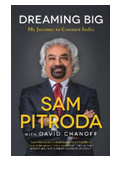 Don't be misled by the title. This is not just about a dreamer and his dreams. This is a heart- warming life journey, the trials, travails and triumphs of a doer, who went on to implement the big dreams and how.
In one's lifetime, how often does one encounter an opportunity that has the potential of deeply impacting and empowering teaming millions spread across the country and changing the narrative for a nation?
Satyanarayan Gangaram Pitroda (Sam) was presented with one such opportunity and he made it his life's mission. This is Sam's amazing story who wrote his own destiny amidst abject poverty and deprivation. He was aware of the challenges of the obstinate Indian bureaucracy and red tape, yet, he was keen to contribute to India's development. As the founder and first Chairman on India's Telecom Commission, he is credited with digitally connecting India by laying the foundations for India's Telecommunications and Technology revolution of the 1980s. The inner binding of the book in black and yellow is perhaps purposeful. It epitomises the bright-yellow PCO/STD booths that sprung across India in the 1980s when the telecom revolution under Sam hit all corners.
Inspired by the birth of his granddaughter, Aria, this endearing autobiography takes us through the journey of a young man from Titilagarh (a non-descript village in Odisha) to Chicago, where he lives now. Dotting this extraordinary passage of sorts are life events that seem like a roller coaster ride. Going up to dizzying heights of personal and professional achievements, plummeting downward in a hopeless spiral of despair (faced false charges of corruption, ill health and was almost financially bankrupt) and then, once again, climbing back up with a renewed sense of purpose. Emerging stronger from the experience each time.
Over the five decades, Sam has become an internationally respected telecom inventor, entrepreneur, development thinker and policy maker and holds around 20 honorary PhDs, close to 100 worldwide patents, and has published five books and numerous papers and lectured widely all over the world.
It is not surprising then that his book makes for an enthralling read. A clutch of family pictures interspersed with a few other formal/official ones betrays his deep bond and source of delight. However, the most fascinating part is that, at times, he has not shied away from putting himself in a vulnerable place by being candid and honest with his point of view. As if to suggest that he wants the reader to understand and connect with him, just the way his PCO/STD booths helped connect millions of Indians.
back to top ^
|
|

|
|
Diya Foundation, Bangalore
|
 Diya Foundation (Diya) is a vocational training center and sheltered workshop based in Bangalore which provides training and employment to differently abled individuals. Founded in 1999, the idea for the centre grew out of a growing need for vocational training once basic schooling is completed for such individuals.
Diya provides an easy transition from school to work, work to life goals and life security. Through training, intellectually challenged adults are taken on a journey from self-awareness to expressing their self-worth, striving towards self-organization and finally self-actualization.
At the Foundation, both pre-vocational and life-skill training programmes are imparted. While the former includes training on basic skills related to functional academics, personal-social abilities, general work orientation, interpersonal skills and group dynamics, the latter imparts skills required in managing personal finances, home maintenance, caring for personal needs, achieving self-awareness, acquiring self-confidence, occupational guidance and preparation and sheltered workshops for training in papier mache and paper products, candle making, chocolate making, computer data entry, screen printing work and gardening skills.
Diya Innovations, a 'for-profit' social enterprise, is an off-shoot of Diya Foundation and is the employment and marketing arm of the Foundation. Trainees proficient at working without ongoing supervision are recruited by Diya Innovations. Besides chalking out alternatives for intellectually challenged individuals, the organization also focuses on work alternatives for their mothers. Their project called Ekta is a self-help group that consists of the parents of mentally challenged adults, people with disabilities and women who come from a lower socio-economic background.
For turning bleak futures to a bright one, Diya deserves a Standing Ovation!
back to top ^
|
|

|
| Captured beautifully by Rupesh Balsara, one of the main attractions during the migratory season (early January - late February), is the arrival of the pink Flamingos at Bhigwan, a small town around 100 kms away from Pune. |
|
|
|
Empowered Learning Systems
Pvt. Ltd.
http://www.empoweredindia.com
101, Lords Manor, 49, Sahaney Sujan Park,
Lullanagar, Pune – 411040,
Maharashtra, India


|
 The ELS Lotus logo is trademark of Empowered Learning Systems Pvt. Ltd. The ELS Lotus logo is trademark of Empowered Learning Systems Pvt. Ltd.
©2016 Copyright Empowered Learning Systems Pvt. Ltd. (ELS). For private
circulation to clients and well-wishers of ELS. While ELS endeavors to ensure
accuracy of information, we do not accept any responsibility for any loss or
damage to any person resulting from it.
|
|
|
|
| |