|
|
|
THINKING ALOUD
On Being the Crazy One - Jay
|
 |
PODIUM
Interview with Dr. Ashwini Nangia - Professor of Chemistry at the Central University of Hyderabad
|
 |
|
WE RECOMMEND
Elon Musk: How the Billionaire CEO of SpaceX and Tesla is Shaping our Future by Ashlee Vance
|
 |
STANDING OVATION
SOS Children's Villages of India - New Delhi
|
 |
|
Dear Reader,
Years ago Steve Blank, often known as one of the godfathers of Silicon Valley, was approached by the National Science Foundation, the biggest science-funding authority in the US to launch a program to train scientists to become entrepreneurs. One might conclude that science and business are two very different subjects and are at opposite ends of the spectrum. Yet, they actually go hand in hand and this is indicative from various studies which show that science can turn in to business.
Having trained scores of scientists in the art of entrepreneurship, Blank explains that although experiments are the most rigorous way to figure out if something works or not, yet we do not find more scientists who are entrepreneurs - the irony! But today this paradigm has shifted. Only yesterday, we imagined a scientist generating an idea in a laboratory, executed the research and published their results. Today, scientists are walking the extra mile and taking their work beyond these publications and patents into bringing an idea or invention to commercialization and establishing start-ups or companies. But this is not without its own challenges coupled with the fact that new ventures would altogether require a different skill set and knowledge than doing actual science.
All is not lost. To support such scientist turned entrepreneurs, many entrepreneur centres have sprung up in University campuses and at the national level to help budding scientists follow their goals. Various governments globally have realised the importance of this segment of the population. While the US and China are far ahead in the race, we are getting there.
The strengths of the scientist and the entrepreneur can shine together. ET this month throws light on scientists who have dreamt the impossible dream and followed their quest to make it possible. The subject for ET this month - 'Scientists as Businessmen: an odd couple?'
In Thinking Aloud, Jay throws light on what it takes to be an entrepreneur and what drives them to become one. Among many others, the traditional driver has been to make money, although this is not a sustainable drive for entrepreneurs of the day. Jay tips his hat to these visionaries who have walked that extra mile to add 'meaning' to our lives.
On Podium, Dr. Ashwini Nangia, Professor of Chemistry at the Central University of Hyderabad highlights that there are several scientist-entrepreneurs today and many more academic-entrepreneurs springing up. Inspite of the many challenges, his start-up 'Crystalin Research' is a first of its kind in India where Dr. Nangia was able to combine a scientific mind-set with a business culture.
In We Recommend, Consultant Meeta Lee reviews Ashlee Vance's book on South African-born Elon Musk. Vance portrays how he rose from a locally known Internet entrepreneur, his near-bankruptcy experiences and his vision for growing several companies into multi-billion Dollar global enterprises and today stands as one of America's most influential industrialists.
In Standing Ovation, we feature Delhi based, SOS Children's Villages of India - a non-profit, non-government, voluntary organization, committed to help abandoned children by giving them a family and home through their unique family based care model.
In Figures of Speech, Vikram's toon scientifically cracks the code for start-ups!
As always, we value your opinion, so do let us know how you liked this issue. To visit our previous issues you can visit the Resources section on the website or simply Click Here. You can also follow us on Facebook, Twitter, Linked In & Google+ - where you can join our community to continue the dialogue with us!
|
|

|
|
On Being the Crazy One... - Jay
|
|
Guy Kawasaki is a popular name in the start-up world. His easy-to-read writings on what it takes to get started & sustain the entrepreneurial journey have inspired many. But he too had an improbable answer to the interesting question that I am often posed with: can I too become an entrepreneur?
Kawasaki writes in the 'The Art of the Start', 'The truth is that no one really knows if he is an entrepreneur until he becomes one - and sometimes not even then.' He then goes on to add, 'There really is only one question you should ask yourself before starting any new venture - Do I want to make meaning?'
I am not sure how many ask this question, as often the driver to get started is simple: make lots of money! However, as many have found to their folly, this is not a sustainable drive for an entrepreneur. Money can become the bi-product from the journey but cannot be the end goal. This is one fuel that cannot sustain for the long haul. For wasn't it Steve Jobs who once said that, 'Being the richest man in the cemetery doesn't matter to me. Going to bed at night saying we've done something wonderful, that's what matters to me.'
What can make 'meaning'? It could be a product or service that you believe can make a difference to the world around you. It could be something that you find missing in the environment you are in - and that dissatisfaction is a strong enough trigger to make you want to do something about it! Yes, this is crucial. Many of us are disgruntled or dissatisfied with products or service or the constraints that bind us - but will carry on carping. Only a few will step forward to tackle this burning issue head-on and seek a solution to the cause of your vexation. And, having embarked on a mission to redress this peeve, one garners support from others. Thus a coalition of forces is weaved into a network to propel you forward to finding an answer. If you have stitched together a strong enough base, a community of stakeholders is the outcome: customers who believe that you are offering the right solution to the problem that they too have grappled with, suppliers who are ready to partner you in a common ride, employees who find that you are an employer worth working with & contributing to, financiers who have bought your conviction and participate to get a better return on their investment from amongst the options before them, and so on...
While the element of risk is omnipresent to an enterprise, and the entrepreneur is not oblivious of it, he remains undeterred. So many of these adventurers have been labelled as irrational & foolish by the doubting majority but thanks to their craziness, the world is richer with their gifts of creation. If it were not for them, we would be still struggling with inefficient and poorly designed products, appalling service and uncomfortable physical environment. I must add that the entrepreneurial streak that I refer to is not the exclusive preserve of the private sector. Such visionaries have elevated public good also with their initiatives and have heroically undertaken long-gestation projects in government too and offered immense benefits to communities. A recent case in point is the Aadhaar project - a transformational project that is well on the way to reshape public policy and advance efficiencies & generate greater effectiveness in the delivery of public welfare schemes across the board. An intrepid team of committed bureaucrats have proved all the naysayers wrong with humility and now the value of the program is being widely recognized - though the best is yet to come. Looking back, it clearly was an audacious venture and had to be piloted with as much blood, sweat and tears as any other unicorn start-up!
Rob Siltanen said it best in the Apple commercial of 1997, and it bears repeating even now:
'Here's to the crazy ones. The misfits. The rebels. The troublemakers. The round pegs in the square holes. The ones who see things differently. They're not fond of rules. And they have no respect for the status quo. You can quote them, disagree with them, glorify or vilify them. About the only thing you can't do is ignore them. Because they change things. They push the human race forward. And while some may see them as the crazy ones, we see genius. Because the people who are crazy enough to think they can change the world, are the ones who do.'
So, entrepreneurs, take a bow. Let's hear it for the crazy ones!
back to top ^
|
|

|
|
Interview with Dr. Ashwini Nangia - Professor of Chemistry at the Central University of Hyderabad
|
 Dr. Ashwini Nangia is a Professor of Chemistry at the Central University of Hyderabad. He has an MSc degree from IIT Kanpur and has a PhD from Yale University. He is the founder of Crystalin Research on the University campus.
Dr. Nangia is a member of the International Program Committee of International Union of Crystallography Congress at Osaka, INSA National Committee on Crystallography, INSA National Committee on Crystallography and a member of the editorial boards of CrystEngComm and Crystal Growth & Design. He was the Associate Editor of ACS journal Crystal Growth & Design and is on the Advisory Board of Chemistry - An Asian J. and Journal of Pharmaceutical Sciences.
He was awarded the Young Associate of the Indian Academy of Sciences, Bangalore, the Raja Ramanna Fellowship by DST and is a JC Bose National Fellow. He was elected Fellow of the Royal Society of Chemistry, London, Indian Academy of Sciences, Bangalore, Indian National Science Academy, New Delhi, and National Academy of Sciences (India), Allahabad, and AP/TS Akademi of Sciences, Hyderabad.
Crystalin Research is a new scientific enterprise started at the Technology Business Incubator facility on University of Hyderabad campus, spearheaded by Dr. Nangia. He has recently been appointed as the Director of the National Chemical Laboratories (NCL).
ET: The scientist-entrepreneur has been relatively uncommon in Indian start-ups. Can you please elaborate your journey of turning into an entrepreneur and what inspired you to take this path less trodden?
AN: Actually, I will only partly agree on this. There are several scientist-entrepreneurs I have come across. What is a rare species, and there is a slight distinction here, is the breed of academic-entrepreneurs. Yes, the latter route is indeed the path less travelled, at least in India. In the US and UK, it is quite common to find high profile academics, including several Nobel laureates running more than one start-up company at a time and also using their exit option with smart acumen. The start was slow for Indian academics, for both tradition and infrastructure and administrative reasons. It is only as recent as 2009 that the Government of India came out with its bold paper "Knowledge to Equity" which makes it now possible for academics and scientists to wear two hats, and have a stake in start-ups as technical founders.
In my case, I work in the area of solid state and supramolecular chemistry, also known as crystal engineering, which deals with the structures and properties of crystalline materials. About 80% of drugs are sold as tablets and these are generally crystalline in nature. As a matter of fact, and interestingly, different crystal forms of drugs have significantly different physical and bioavailability behaviour, the topic of polymorphism having immense significance to the pharmaceutical industry. To cut a long story short, this is the background of how one thing led to another and I decided, after taking permission from the University of Hyderabad, to start a venture in pharmaceutical solid-state discovery and innovation by the name Crystalin Research in 2010.
ET: Your start-up 'Crystalin Research' is India's first scientific enterprise focusing exclusively on R&D in solid-state crystalline forms for the pharmaceutical industry. How did playing a dual role of an academician and an entrepreneur help in earning and sustaining your set-up?
AN: You are correct. We are perhaps the first R&D company in solid crystal forms growing out of an academic background in India. The dividing line between being bold or stupid is razor thin. I guess we started at the right time in the right ecosystem. The culture of Technology Business Incubators on University/ Institute campuses started to become known and growing about 5 years ago. So we got the early bird advantage. My academic background and the nature of work on pharmaceutical crystal forms (e.g. polymorphs, salts etc.) actually feed into each other. The subject is highly technical and requires state of the art instrumentation and up to date knowledge of the field. So my academic activity in the crystal engineering field actually helped to sustain the venture and earn the confidence of people looking for our expertise on crystalline drug projects.
ET: Does India have the supporting infrastructure to help Scientists, like you, to become entrepreneurs?
AN: I think I have in part answered the question. Yes, it does now. In that sense, things are changing for the better since recent times. The call of our Honourable Prime Minister Shri Narendra Modi is a natural follow up to the present needs of this country. Make in India, Innovate in India, Invent in India - the infrastructure and support systems are in place to make things happen for Young India.
ET: Traditionally, Scientists have different objectives than businessmen. What are the challenges you faced in your quest to marry a scientific mind-set with a business culture?
AN: This is a classic artificial divide. Louis Pasteur, whose name most of us know, actually was the first scientist to do science with a purpose. He married curiosity and understanding by solving problems with a practical end;his famous quote "There are no such things as applied sciences, only application of science." In the 1800s, two serious problems were plaguing the human population (among others, I suppose) - illness from spoilt milk and death from rabies. He started the new disciplines of what we call today microbiology (sterilization) and immunology (vaccination) to solve problems of human suffering (at that time). If one can do fundamental sciences, that's great. If one can do applied technology, that's even better. But if one can do both at the same time, it's a win-win game. And it is only natural that the government and taxpayers who are funding most of the public research ask the question: "What have scientists done for me lately?" I think the divisions between science, technology and business were a luxury of the past times.Today's need is to multi-task all in one.
ET: What is your advice to budding scientists who wish to begin their own entrepreneurial journey?
AN: The old order was one specialized in a given field or topic and could reasonably hope to make a successful career. Today, expert knowledge in a given domain is surely a necessary start point. But one must add on a host of other elements, collaborations, networks, etc. to be successful as a scientist-entrepreneur or in any profession. I had an opportunity to hear about half a dozen MIT-Harvard Professors at a meeting last year in Boston. It's amazing how they seamlessly navigate across science disciplines to technology and applications and bring in a dash of business angle too, all in a 30 minute talk. That is the message for the next generation of scientists.
back to top ^
|
|

|
|
Elon Musk: How the Billionaire CEO of SpaceX and Tesla is Shaping our Future by Ashlee Vance
|
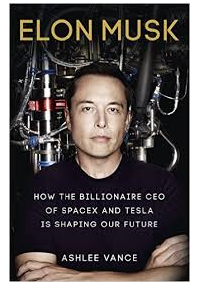 A man with an ingenious vision, the "Iron Man", an undaunted risk taker, these are a few adjectives that are used by Vance to describe Elon Musk in his book. "Elon Musk" is a simple, remarkable and well told story about the amazing life of one of Silicon Valley's most electrifying, volatile and aspiring entrepreneur, the man behind PayPal, Space X, Tesla and Solar City. Musk, a billionaire, has a vision of putting man on Mars by 2050, he is the man who converted his ideas into invention by building the Tesla Model S electric car.
What is fascinating about Musk is his untiring resolve to risk everything he has for his companies. The book tells us about Musk's rough childhood filled with violence and racial discrimination and about how he managed to succeed academically. He paid for his education at the University of Pennsylvania, using the money that he earned by renting out his house for parties. He started his career by venturing into a couple of dot com companies (PayPal was one of them) and was forced out as CEO when eBay acquired PayPal. With the money he made from PayPal, he invested in SpaceX, Tesla and Solar City. The author rightly describes this as "short of building a money crushing machine, Musk could not have picked a faster way to destroy his fortune."
As a kid, Musk was always fascinated by space. At the age of 12, he created a video game called 'Blastar' which got sold to a computer magazine for $ 500. Five things, which Musk thought would affect the future of humanity were internet, sustainable energy, space exploration, artificial energy and reprograming the human genetic code. Today, he runs SpaceX and is the Board Chairman of Solar City. He also wants to eliminate the use of fossil fuel and so has built the world's leading electric car company, Tesla. These three companies, though distinct are connected. The Tesla cars run on solar energy and the power is provided free of cost at Solar City. In case these solutions don't work out to safeguard the existence of humanity as planned, he is positioning SpaceX to launch a human colony on Mars!
Ashlee Vance, the author, focuses on Musk's vision and captures his entire curve right from his unrestrained upbringing in South Africa, his roller coaster personal life and journey to the United States to his vivid technical revolutions and ground-breaking pursuits.
A well written book by Vance which focuses not only as Musk as a visionary but also as a person. It is a chronological account of billionaire Elon Musk as well as the explanation on the inspirations behind his actions. Vance spent more than fifty hours in conversation with Musk and interviewed close to three hundred people to tell the wild stories of Musk's world-changing companies and to paint a picture of a complex man who has transformed American industry and ignited new heights of innovation.
back to top ^
|
|

|
|
SOS Children's Villages of India (SOS) - New Delhi
|
 Herman Gmeiner, an Austrian philanthropist, established the first SOS Children's Village in Austria. At present, this is active in over 132 countries and has been present in India since 1963. SOS Children's Villages take action by providing abandoned children facilities and programmes that will benefit them. Working in the spirit of the United Nations Convention on the Rights of the Children, SOS - India promotes these rights through its unique family based care model across 22 states in India through two key programmes:
Family Based Care (FBC)
The SOS Children's Village model is based on four principles - the SOS mother, the sisters and brothers, the family house and the SOS Children's Village - forming the basis and the framework of the concept. FBC, is a curative programme which reaches out to over 6,500 abandoned children in India. Each children's village has 12-15 family homes, with every home consisting of 10 children on an average, with their SOS mother in a family house. All round development including education, nutrition, health and psychological development is taken care of till the children are settled in their lives.
Family Strengthening Programme (FSP)
FSP, a preventive community intervention programme, covers over 17,000 children at 33 locations across India, and is supported by local partners and communities. Designed to prevent children from losing parental care or from being abandoned, this programme runs in slums and rural areas, within a 30 km radius of an SOS Children's Village. The beneficiaries of this programme are widows, single women, and below poverty line families. Spanning 3 to 5 years, the programme aims to enable families to become self-reliant.
The Government of India has appreciated the work of SOS Children's Villages of India and has recommended it to other organizations in the country to follow this model.
To know more about SOS, please visit http://www.soschildrensvillages.in/
SOS-India deserves a Standing Ovation for its work!
back to top ^
|
|

|
| Nal Sarovar Bird Sanctuary, located in Nal Sarovar, Gujarat consists of a lake mainly inhabited by migratory birds in winter and spring. At the largest wetland bird sanctuary in Gujarat, through his camera lens, photographer Rupesh Balsara captures a picture of a Dalmatian Pelican at sundown at Nal Sarovar. |
|
|
|
Empowered Learning Systems
Pvt. Ltd.
http://www.empoweredindia.com
101, Lords Manor, 49, Sahaney Sujan Park,
Lullanagar, Pune – 411040,
Maharashtra, India


|
 The ELS Lotus logo is trademark of Empowered Learning Systems Pvt. Ltd. The ELS Lotus logo is trademark of Empowered Learning Systems Pvt. Ltd.
©2016 Copyright Empowered Learning Systems Pvt. Ltd. (ELS). For private
circulation to clients and well-wishers of ELS. While ELS endeavors to ensure
accuracy of information, we do not accept any responsibility for any loss or
damage to any person resulting from it.
|
|
|
|
| |