|
|
|
THINKING ALOUD
Better under Pressure - How Leaders Transform Organisations by Changing the Way People Think - Prasad
|
 |
PODIUM
Interview with Shishir Joshipura - Managing Director & Country Manager - SKF India
|
 |
|
WE RECOMMEND
Articles & Links
|
 |
STANDING OVATION
Adarsh Charitable Trust, Kerala
|
 |
|
Dear Reader,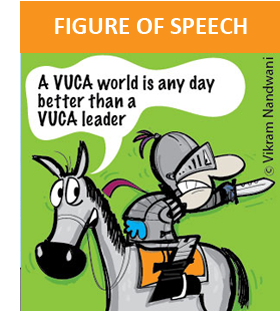
Constant technological, social, political and economic changes are what defines the environment in which firms operate in today. Companies may as well settle for incremental improvements to tackle changing scenarios but will this ensure that they will stay ahead of the game? This is where a CEO's (leader's) role is of paramount importance.
Over the years, CEOs have been revered as corporate saviours. The level of commitment that these thought leaders put into the company's sustainability is remarkable. These commitment levels are especially seen when a CEO has to be part of a solution in a crisis. While there is no single model for success, the exact nature of a CEO's role is largely influenced by the magnitude, urgency and nature of the transformation, the capabilities of the organisation, and the personal style of the leader. The ingredients to a successful transformation includes constant communication for the need to transform while modelling the desired changes, building a strong top management team, and getting personally involved. Case in point is the BP oil spill which raised eyebrows from an environmental, commercial and political viewpoint. Management experts fault the then CEO Tony Hayward who sought to play the blame game, leaving the Board little choice but to seek a change in leadership. BP needed a leader at the helm, who modelled accountability and would transform and clean up the organisational mess that it was in.
For CEOs and leaders leading a transformation, no single model can ensure success. However the odds of success can be multiplied by targeting leadership functions and by desiring an impactful mind-set and behaviour change of its stakeholders, both internal and external. Together, these can powerfully accelerate a successful performance transformation.
In ET this month, we touch on the CEO's role in leading transformations. We have thoughts from both Prasad Deshpande and the MD & Country Manager of SKF India, Mr Shishir Joshipura, who had recently conducted a session at the international conference of the Association for Talent Development at Denver, USA, on how the Transformative Approach helped market leaders stay ahead.
In the Thinking Aloud section, Prasad shares his views on the attributes of a CEO which will help him sail through the turbulent times that companies operate in.
On the Podium, MD & Country Manager of SKF India, Mr Shishir Joshipura, makes a convincing point for a change in the mind-sets for transforming organisations. He shares his thoughts on how, according to him, this change can take place.
In We Recommend, we search through the internet and check out some links related transforming organisations and leadership.
In Standing Ovation, we feature Adarsh, a Kerala based institute dedicated to rehabilitating differently-abled children having cerebral palsy and other sensory-motor childhood developmental disorders.
In Figures of Speech, Vikram's toon 'leads' the way!
As always, we value your opinion, so do let us know how you liked this issue. To visit our previous issues you can visit the Resources section on the website or simply Click Here. You can also follow us on Facebook, Twitter, Linked In & Google+ - where you can join our community to continue the dialogue with us!
|
|

|
|
Better under Pressure - How Leaders Transform Organisations by Changing the Way People Think
|
|
- Prasad
|
|
The term, 'it's a VUCA (Volatile, Uncertain, Complex, Ambiguous) world', has been used so often that it is now quite a cliché. However, this does not detract from the fact, that the business environment is becoming even more VUCA. Brexit bears testimony to this fact.
How does a CEO navigate the 40 foot waves that appear to be the norm and forget about serene seas of the past as an unreal memory? How does a CEO not just stay afloat and survive, but race ahead in the storm and reach the port ahead of competition? The truth is that growth, which is not an option, is so contextual that there is no playbook for the CEO to refer. Yet some CEOs deliver their greatest successes when times are the toughest. They innovate and focus on transformation. They think differently, do things differently and behave differently. They write their own playbook.
Transformation is a dramatic outcome, a result of a series of innovative steps each building on the other. So when CEOs decide that they need to transform their organisations to move ahead of the market, they choose to focus on 'changing mind-sets' as the starting point of their intervention. There are many learnings along the way, but to my mind there are three specific steps which a CEO can make a difference.
Changing Mind-sets - Realising individual potential. The starting point matters. Individuals, by being aware of their thinking preferences and by understanding the lens with which they 'see' the world, recognise that there could be other more effective ways of thinking. Individuals recognise that they have a choice of not being stuck in a groove and to do things differently. A major learning is to ensure that everyone speak the same language - there are no exceptions.
Diversity of Thinking - Realising team potential. The best ideas are generated when people who think differently, understand each other and do not take differences personally. They are comfortable challenging each other so as to encourage creative abrasion, the sparks which generate new ideas. The value of this approach is that when differences in people are explained from a cognitive perspective, people accept these differences readily and are less judgmental. Secondly, people need to know 'how' to change their behaviour. The turning point was when they understood that what they really needed to focus on was on adapting their thinking and behaviour to be effective in a given situation and not change who they were. This has helped raise the level of collaboration within teams and with teams from other departments.
Defining and Reward New Behaviours - Leaders need to live up to their potential. Everyone needs to demonstrate a new set of behaviours, especially the leader who needs to energise their teams by being bold and thinking big. From an individual and team perspective, for example, it is the willingness to move away from constraint based thinking to solution based thinking, and to step out from one's boundaries to collaborate. Leaders need to demonstrate by their behaviours what this means in a given context.
The ambition to grow and stay ahead of the market can put an organisation and the CEO under pressure and under pressure CEOs need to bring out the best in themselves and others.
Justin Menkes in his brilliant book 'Better under Pressure' summed this up succinctly. CEOs who succeed do so by drawing on a set of three essential and rare attributes:
- Realistic optimism: pursue audacious goals at the same time remain aware of the magnitude of challenges confronting them and the difficulties ahead.
- Subservience to purpose: an extraordinary dedication to work based on the remarkable importance they place on their goal.
- Finding order in chaos: people with this ability find taking on multi-dimensional problems invigorating and bring clarity to quandaries that baffle others.
By focusing on changing mind-sets and not just competencies, by transforming how an organisation collaborates with each other, by effectively demanding leaders to 'step up' by using existing cognitive resources, a CEO can imbue some of these essential attributes in his team to stay the course. In the end, it's really who we are that matters.
back to top ^
|
|

|
|
Interview with Shishir Joshipura
|
|
Managing Director & Country Manager - SKF India
|
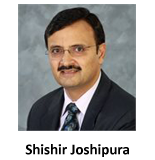 A mechanical engineer from BITS Pilani and an Advanced Management graduate from Harvard Business School, Mr Joshipura is the Managing Director of SKF India and the Country Head for SKF group's subsidiaries in India. In the past, he has worked in various capacities with Thermax Limited for the first 26 years of his career prior to joining SKF in December 2009.
SKF is listed amongst India's 50 most admired companies in 2012 and 2014 by Fortune. In 2013 Businessworld and Business Today listed Mr Joshipura amongst India's most valuable CEOs and top 100 CEOs in India respectively.
He is currently the elected Chairman of Confederation of Indian Industries (CII), Pune chapter and serves as an independent member of the Board for SBI Funds Pvt Ltd (SBI Mutual Fund). He is President of Ball and Rolling Bearing Manufacturer's Association (BRBMA) and has served as Chairman of Process Plant and Machinery Association of India (PPMAI) from 2007 to 2009. Mr Joshipura is also a founding Director for Alliance for Energy Efficient Economy (AEEE).
ET: As a senior business leader, please share with us what made you focus on mind-set change as a starting point of transformation?
SJ: The business context has changed in significant ways over the last three years with a Volatile, Uncertain, Complex & Ambiguous (VUCA) environment being the only certainty. It is no longer sufficient to win with your customer. The need of the hour is to make your customer win with their customers. The organisation's ability to do more is severely tested both by the environment and disruptive competition.
SKF has built its leadership position over the years by deploying the knowledge assimilated across the globe and delivering innovative solutions to enhance the rotating equipment performance. When I was speaking with our customers and suppliers, one message was loud and clear - they expected much more at a higher speed from us; employees expressed a similar feeling albeit in a defensive sort of way. The dialogue within our teams almost always pointed to an action area with "other" persons and everything seemed "perfect" within "our own world".
The VUCA world demanded a differentiated response from SKF. Our mind-set is best manifested in the way all of us behave and the answer to usher in change was obvious - it begins with "me" and not "them".
ET: How according to you did has this approach made a difference in transforming the organisation from being technology centric to customer centric?
SJ: Our leadership position is built at the base of our technology prowess and the "knowledge" we build into our engineering. In the new world economic order, much more is expected from leaders apart from technology and knowledge sharing. Customers are seeking solutions that meet their horizons. In mature technology businesses, the differentiators are created through innovation that create higher value at a higher speed. The best way to speedy innovation is by putting customers at the center of everything we do. This forces the organisation in a completely new paradigm to incorporate a new behavioural mind-set which is closer to customer innovation, ensure speedy response and a higher "buy in" from customers and above all creating and delivering differentiated values to the customer.
ET: What steps are you taking to embed learning and ensure that everyone across the organisation speaks the same language and develops the conviction to sustain this?
SJ: We were clear from the beginning that we are undertaking a transformational journey. The transformation we were seeking was dimensioned at three different levels - Individual, Team and Enterprise - interdependent yet each had a distinctive journey.
The most important element was the journey of the leadership team - alignment and commitment - "Before and After",
demonstration of new behaviour - Lead by example, encourage and support boldness. Individuals had to become aware of their thinking styles (and therefore behaviour) and transit to new desired behaviours being fully aware of their personal blind spots. Teams that work for the same goal and yet behave "inside their own boxes" had to learn to function in a truly cross functional manner, learning to honour differences amongst members and yet speaking in a collective one voice.
As a first step we asked our front line teams to define and select projects which were considered "beyond the normal business plans". They had to be "stretching" yet achievable. We set up a review mechanism at the highest level in the organisation and conducted these reviews as "learning reviews". These reviews were distinctly different in nature as the focus was on understanding the application of training inputs, making teams understand the journey they had completed and above all enabling an energized feeling with higher levels of empowerment. We also completely revamped our recognition system wherein we defined behaviours as criterion for winning - it wasn't enough just to be the highest numbers team and/or individual - the behaviour displayed had to be the one that organisations valued and desired. The best sales team was not necessarily the one with highest sales numbers but the most collaborative one! Another critical success factor was our insistence on the lead trainer being an integral part of the review process for up to a period of 9 months from the date of project start. We have now decided to extend the front line training to manufacturing teams with a goal defined to move the thinking from constraint based thinking to a solution oriented one.
ET: You have been quite vocal on the role of top leadership in developing teams. In the context of transformation, according to you, what will the top leadership really need to do to galvanise the organisation?
SJ: As I have already said, the most critical transformation involved leadership teams. We cannot expect any change to even begin if a leadership team is not leading the change through visible and involved actions. Transformation calls for a complete shift of paradigm, leaving the old and embracing the new - be it behaviour, held beliefs or practices on ground, a commitment to the cause and great alignment. The leadership team has to be an unrelenting one voice in providing support as may be desired by teams - almost akin to piloting a boat in a perfect storm which calls for a passionate involvement in the change, even as one retains the objectivity all the time.
ET: In what way do you envisage SKF of the near future to be different than the SKF of today if it has to be move ahead of the market?
SJ: We expect several positive changes. As an organisation we will be more customer centric, putting customers at the center of everything we do. Our front line teams will no longer be afraid to fail and will engage with our customers much more deeply, entangling them to create solutions that help them to win with their customers. We will not quit in the face of complex situations but be bold enough to overcome any. Above all, a leadership team embraces change and guides us through any and every perfect storm.
back to top ^
|
|

|
|
Articles & Links
|
The internet is full of good reads related to our ET theme this month. We have searched the World Wide Web and presented some good links for your perusal.
| 1. |
The 'How' of Transformation
Amid the VUCA environment, companies are embarking on transformational activities. This Mckinsey read aims to guide readers on the nitty gritties of the transformation process.
Link: http://www.mckinsey.com/industries/retail/our-insights/the-how-of-transformation
|
| 2. |
Transforming a Company Is Daunting, But You Can Prepare for It
Writers Scott Anthony and Clark Gilbert reveal that there is no harder job for a corporate leader than transformation. The article highlights how to develop and manage transformation efforts.
Link: https://hbr.org/2013/03/transforming-a-company-is-daunting-but
https://archive.harvardbusiness.org/cla/web/pl/product.seam?c=42304&i=42395&cs=d390bd270807c3de5235e32aebfff556
&utm_source=hs_automation&utm_medium=email&utm_content=15606673&_hsenc=p2ANqtz-9aKfk6Z21TFFvZ-QBnlahtzrw9n-NRmSLHq8qX9msCzSGZZ7E9NN27
c9BZi7EivK29KiZsIOrIe5dUnRylLU01e1vqWaH9BFsnm-XrdJkhtmhHCNc&_hsmi=15606673
|
| 3. |
The Unconventional Habits of Transformational Leaders
Through examples of two distressed Russian companies, INSEAD Professor, Stanislav Shekshnia, highlights the exceptional qualities that leaders must possess to transform and turnaround companies.
Link: http://knowledge.insead.edu/leadership-organisations/the-unconventional-habits-of-
transformational-leaders-4439
|
| 4. |
From the Outside In - Faced with volatility, more companies are looking beyond their own ranks to find new leadership
Faced with complexity and volatility, companies are looking beyond their own ranks to find new leadership, a move companies make only when the Board fails to groom a suitable successor, or to force out the incumbent CEO. The article weighs the pro and cons of hiring outside talent versus internal resources.
Link: http://www.strategy-business.com/feature/From-the-Outside-In
|
| 5. |
How to beat the Transformation odds
Research studies have pointed out that transformational change is hard. However, the odds of success can be increased by communicating, leading by example and engaging employees continuously.
Link: http://www.mckinsey.com/business-functions/organization/our-insights/how-to-beat-the-
transformation-odds
|
| 6. |
Transforming Organisations for Sustained Innovation
This INSEAD article reveals that market-oriented businesses are better able to innovate on the back of complex and demanding organisational changes. However, a market-oriented transformation not only takes time but implies the development of a new organisational culture.
Link: http://knowledge.insead.edu/strategy/transforming-organisations-for-sustained-innovation-4315
|
back to top ^
|
|

|
|
Adarsh Charitable Trust, Kerala
|
 Kerala based institute, Adarsh started operations in 1998 to help children affected by cerebral palsy, and later extended to help those affected by other challenges like autism, Down Syndrome and learning disorders. They make a difference to their lives of these children by imparting early sensory motor developmental therapy and academic training.
Initiatives undertaken by Adarsh include:
- Remedial teaching for children with learning disorders
- Awareness campaigns on child brain damage and its effect on child development
- Early identification
- Early sensory stimulation
- Mobility training to develop motor areas
- Visual stimulation
- New-born hearing screening and intervention
- Screening of babies at risk and intervention
- Play school readiness programme
- Medical support
- Parent counselling
- Home based training for those who cannot attend even a special school
- Conducting motivation campaigns to spread awareness and medical camps to facilitate identification.
The result - in the last 10 years alone, around 62 of its students left Adarsh to pursue studies in mainstream schools, with their disability factor considerably reduced coupled with higher levels of confidence and social interaction abilities. Additionally, its community based rehabilitation programme is envisaged to help differently- challenged children in the community, who cannot come to Adarsh for training due to various reasons.
Adarsh has ambitious plans to help more children in the society, going forward. One can know about these at http://www.adarshrehab.org.
For Adarsh's noble cause, they deserve a Standing Ovation!
back to top ^
|
|

|
| The fresh, earthy fragrance of the soil coupled with blooming flowers is a refreshing experience during the monsoons. Between showers, what's more comforting is to see creatures that bask in the sunshine. The Great Blackvein is one of them. It is a mid-sized butterfly which is mainly found in India, China and Southeast Asia. Rupesh Balsara captures this picture at Dehradun in Uttarakhand. The butterfly is beautifully perched on a Carduus Linnacus, a flower which derives its name from the Greek word Kardos (thistle), referring to the spiny nature of the plant. |
|
|
|
Empowered Learning Systems
Pvt. Ltd.
http://www.empoweredindia.com
101, Lords Manor, 49, Sahaney Sujan Park,
Lullanagar, Pune – 411040,
Maharashtra, India


|
 The ELS Lotus logo is trademark of Empowered Learning Systems Pvt. Ltd. The ELS Lotus logo is trademark of Empowered Learning Systems Pvt. Ltd.
©2016 Copyright Empowered Learning Systems Pvt. Ltd. (ELS). For private
circulation to clients and well-wishers of ELS. While ELS endeavors to ensure
accuracy of information, we do not accept any responsibility for any loss or
damage to any person resulting from it.
|
|
|
|
| |