|
|
|
THINKING ALOUD
A Roof Above My Head - Jay
|
 |
PODIUM
Interview with Ravi Varma
Chairman - National Association of Realtors, India
|
 |
|
WE RECOMMEND
China's Disruptors - Edward Tse
Reviewed by Rhea Menon
|
 |
STANDING OVATION
Marathwada Gramin Vikas Sanstha
Aurangabad, Maharashtra
|
 |
|
Dear Reader,
The Lehman Brothers mortgage backed crash which took the headlines in 2008 was an eye opener to the significance of the housing/real estate sector and the rippling impact it had on the world economy. The collapse of the US housing market and the company's headlong rush into the subprime mortgage market proved to be a disastrous step. The sector is now a key economic indicator of the health of any economy.
The Real Estate sector in India is the second largest employer after agriculture and is pencilled to grow at 30% over the next decade, backed by increasing infrastructure investments and urbanisation. The highly debated passing of the long-pending Real Estate Regulatory Bill (RERA) is indicative of the strides being made in this sector that could help improve India's transparency and to reach the kind of standardized processes, procedures and accountability guidelines that the industry requires. This is especially important at a time when real estate projects are facing construction delays, and dreams of home buyers have turned into an endless nightmare. Amid buyer complaints of Realtors not delivering housing projects on time, the enactment of these laws aims to revamp the way this sector works, from developers to end-users and investors.
ET this month throws light on the Role & Importance of the Professional Realtor. The real estate industry has welcomed major reforms over the years, promising transparency and accountability. The much needed umbrella of protection for buyers of real estate and other stakeholders is what we can look forward to with the introduction of sector regulators, professionals and imbibing international best practices in the country's real estate realm.
Jay highlights the concerns and challenges present in the urban housing segment of the Indian economy in the Thinking Aloud section, which has mainly come about due to the lack of regulation over the years.
On the Podium, Mr Ravi Varma, Chairman of the National Association of Realtors (NAR) looks at the current real estate market in India, highlights the role and importance of a professional Realtor and explains the Real Estate Act and the Housing for All Scheme.
Edward Tse's book China's Disruptors is reviewed by Rhea Menon in the We Recommend section. The author shares insights on Chinese entrepreneurs and the way they operate in an environment which is complex. He illustrates how Haier's Zhang Ruimin and Alibaba's Jack Ma manage to operate independently along with other entrepreneurs of the past. Tse also offers nuggets of learning on how international companies should respond to the challenges posed by Chinese entrepreneurs.
In Standing Ovation, we feature Aurangabad based Marathwada Gramin Vikas Sanstha (MGVS) which works mainly at water conservation and sanitation, among other causes, through its Community Driven Development approach.
In Figures of Speech, Vikram's caricature is optimistic of the Real Estate sector too!
As always, we value your opinion, so do let us know how you liked this issue. To visit our previous issues you can visit the Resources section on the website or simply Click Here. You can also follow us on Facebook, Twitter, LinkedIn & Google+ - where you can join our community to continue the dialogue with us!
|
|

|
|
A Roof Above My Head
|
|
- Jay
|
|
It is common knowledge that urban housing is a nightmare in India. Mired in confusion caused by unscrupulous Builders (who speak to you about different colours of money), unclear regulatory policies, shady brokers, exorbitant financiers, not to mention real-estate sharks, and other ilk from the underground, it is a wonder if your dream of acquiring your own apartment is achieved without severe heart-burn. And, of course, the most common ailment of the sector: total disregard for customer service and complete subversion of delivery commitments (both in terms of time & quality of the end product).
This scary scenario is not restricted to the metro locations alone. While the picture is a little better in smaller cities, the difference is only one of scale not content. Even buying residential land is fraught with danger for the purchaser as land titles are often unclear. Clearly it is caveat emptor all around.
And, this state of affairs has lingered for so long that this has become the paradigm of the sector, and is now taken as a par for the course.
However, things are set to change. Or, so we are led to believe as customers with the much heralded The Real Estate (Regulation and Development) Bill, 2016, becoming an Act on May 1, 2016. With the promise of taking cudgels on behalf of the long-neglected consumer, there is optimism in the air. However, the Builder's lobby has been busy too, seeking multiple safe guards to enable them to protect their interests in the face of this unprecedented aggressive tone of customers.
Frankly, the truth of this industry has many facets, depending on who is presenting the issue. The Builders believe that they are stymied by outdated regulations with ham-handed & corrupt bureaucracy seeking their pound of flesh at every turn. Given the general hostility to business in most quarters of the government, it is not untrue that Builders face uphill tasks at every stage while awaiting project clearances. This is compounded further by the presence of multiple layers in the government (town planners, utility departments, fire & safety experts, revenue officials, etc. - you name them & they are involved, each awaiting their turn to slice the salami). Are you then surprised that there are cost over-runs & poor quality of construction? And, by the end of it, you have buildings constructed in total violation of the city's planning norms (remember Adarsh in Mumbai?), and in some cases Builders who abscond with customer's deposits & instalment payments leaving behind semi-constructed eye sores that line the city's landscape, often collapsing at the first sign of monsoon.
Too often we find today that the ball lands into the judicial arena where after many years 'justice' is delivered, leaving losers all around. The classic case of the Campa Cola Society in Mumbai sent shivers down the spine of many Apartment owners in Mumbai because they know that illegalities abound in every second Housing Society in Mumbai (as well as other cities).
If one were to believe the Real Estate experts, 2016 was projected as the year of investment after a dull 2015. With half the year over, I am not sure that this rosy prediction is likely to be fulfilled. The usual suspects are likely to be trotted out at the end of the year as causes of ailment: lack of land parcels, bank loans being tight, wary consumer sentiment, high input costs, high inventories in builder's hands, etc.
While I would not say that matters have not improved over the years, the rate of change has been painfully slow and the angst of customers is too loud to ignore. This applies at every level: while the premium sector gets a lot of attention through glossy advertising, buyers will remain bruised with shoddy quality and poor customer service given the one-sided contracts that are inflicted on purchasers; the middle class awaits delivery of its much anticipated two-bedroom apartments after borrowing large housing loans & will slave a lifetime to pay EMIs; and, finally at the lower end, the queues for the one-bedroom apartments at 'affordable prices' is ever-increasing.
The tragedy of the Real Estate sector is that it lacked regulation for a long time. With the capacity to generate 75 million jobs by 2022 and become the largest sector of employment (as per a reported KPMG report), this sector deserves more attention for multiple reasons, chiefly the driving desire of all Indians that they must have a 'Makaan', and not just 'Roti, Kapda'.
The government's governance job is incomplete still. Apart from notifying rules both at Central & State levels by October 31st, it also should make it easier for players other than Consumers (chiefly, Builders & Developers) to play a proper part by making municipal laws more logical & implementable without having to pander to the whims of local officials.
Sure, the game is changing - as it should. The good news is that all the players involved - including Real Estate agents - are gearing up for the future. That's a positive start and needs to be cheered. Now to increase the pace!
back to top ^
|
|

|
|
Interview with Ravi Varma
|
|
Chairman - National Association of Realtors, India
|
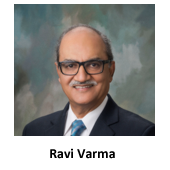 Mr Ravi Varma is a Science graduate from Wadia College and a Master's degree holder in Management from Pune University. He worked as a Marketing Manager for various companies over a span of 12 years before venturing out into his own enterprise. Mr Varma was a member of the managing committee of the Estate Agents Association, Pune for 16 years and the President of the Estate Agents Association of Pune from 2003 to 2009. Later, he became the President of the National Association of Realtors India (NAR-India) in 2009. He has been on the NAR-India governing body for the last 7 years. Currently, he is the Chairman of NAR-India.
Mr Varma is one of the many people instrumental behind the successful and prestigious 8th Annual Convention of the National Association of Realtors in India which was held on August 13th & 14th, 2016 at New Delhi. The two-day event was packed with engaging and enlightening lectures, expositions, panel-discussions and brain-storming sessions for over 1,200 Realtors, developers, architects, investors, corporate real estate heads, venture capital firms, equity fund, project & facility managers, chartered accountants and others from India and across the globe.
ET: What is the current state of the real estate market in India, both for commercial property & for housing?
RV: Most of the data that is available is normally sourced from 7 major cities in the country - Mumbai, Delhi-NCR, Chennai, Bengaluru, Kolkata, Hyderabad and Pune. The commercial sector is doing fine in the sense that whatever inventory exists, is likely to be absorbed by the market in the span of one to two years. Additionally, there is also a steady rise in the prices of commercial real estate across the country. Bengaluru and Pune lead the way as far as the commercial real estate sector is concerned. Regarding the residential segment, there is no dearth of demand for housing in a country of 1.25 billion people. The shortage of urban housing is estimated to be in the region of 22 to 25 million units and it is expected to grow at a CAGR of 6.6% for the next 10 years when it will reach about 35 million, according to a report by the research and consulting firm RNCOS and cited by the Press Trust of India.
Rising inventory levels in a country where housing shortage is such a critical issue, indicates that the supply that is available is overpriced and unaffordable to many. For example, Mumbai has a shortage of about 2 million homes, but is unable to sell half its inventory pile up because of unaffordable prices. This means that sales can improve but at the right price. NCR, on the other hand, does not have a price problem but 52% of housing supply is in uninhabitable areas which do not have adequate infrastructure for people to actually go and live in.
The current unsold inventory level stands at over 690,000 units and it would take close to three years to exhaust it. The NCR is the worst affected residential market in India, where both absorption and new launches declined. It is expected to take more than four years to unwind the existing unsold inventory of 206,000 units in NCR. This is significantly higher than the average time of less than three years that other cities will take.
In terms of new launches, NCR, Mumbai and Bengaluru witnessed a sharp drop of 20%, 36% and 27%, respectively during 2015. While sales grew by just 3% during the second half of 2015 compared to the second half of 2014, launches continued to fall by 13%. The recovery in sales was largely on account of the better-than-expected sales volumes during the festive season.
Steady sales volumes and restricted launches have helped in bringing down the stress level in the residential market by some degree in the second half of the year. While Mumbai leads in this unwinding of unsold inventory, Hyderabad and Pune follow. Pune and Bengaluru continued to be among the best performing residential markets in the country with low quarters to sell unsold inventory and minimal age of unsold inventory.
The Bengaluru residential market remains one of the best performing markets in India. Although the residential market did witness some lows with 13% drop in launches year-on-year (y-o-y), this has in turn helped in bringing down the stress by cutting down the inventory. We presume upward pressure on prices with an expected 7% weighted average price hike in the next six months.
In the Mumbai Metropolitan Region, new launches were down by 23% compared to H2, 2014 and demand shrunk by 6%. Price growth was marginal at 3%, making it a good time for end users to buy a home. The budget housing segment (Rs 30-60 lakh) continued to witness distress with Navi Mumbai, Peripheral Central and Western suburbs witnessing a drastic drop in demand. Thane emerged as the silver lining with demand increasing by 13% with good connectivity to the office market. The Premium South Mumbai market witnessed 108% jump in new project launches to 208 units in H2, 2015.
Outlook for 2016
Encouraged by improving sales volumes, we believe that developers will start pushing new projects in the coming six months. In H1, 2016, new launches and sales are estimated to jump by 8% and 10% respectively, compared to the same period of the previous year.
Our outlook for 2016 remains muted. To further revive the demand, it is important to transmit the benefits of the rate cuts to consumers.
Commercial offices: Office market sees shortage of quality space
- The office market witnessed severe shortage of good quality space with the demand consistently surpassing supply since 2014. Vacancy levels reached an eight-year low of 15.8% in 2015 from 17% in 2008. It had peaked to 21% in 2012. Bengaluru had the lowest vacancy level in the country, at 8%, and Pune followed with 11.3%. Similar to 2014, demand surpassed new completions in 2015 as well.
- While 40.8 million sq ft of office space was absorbed in 2015, only 35.5 million sq ft was delivered. This helped in bringing down the vacancy level in the past year.
- In terms of absorption, 2015 managed to surpass the 2014 numbers. While 38.3 million sq ft of space was absorbed in 2014, it increased by 7% in 2015. Chennai and Pune led in terms of annual absorption growth, at 37% and 15%, respectively. In terms of new completions, NCR and Bengaluru witnessed the fastest growth, at 56% and 13%, respectively.
- Rents in most of the cities have increased steadily since the last two years. Going forward, this trend is expected to continue in the coming six-month period, with Pune and Bengaluru projected to grow at the fastest pace.
ET: Like unorganised small builders, the market in India is also full of independent real estate agents normally called 'brokers'. Your body, The National Association of Realtors, claims to be the credible voice of Realtors in India. Please tell us more about it.
RV: The National Association of Realtors in India is the apex body founded 8 years ago to organise, educate, train, and generally raise standards of the practises of real estate brokerage in the country. Today we have 33 city associations across the country who are our members and a total of more than 30,000 real estate brokerage practitioners as our members. We have a bilateral agreement of partnership with the National Association of Realtors, USA. We also have a bilateral agreement with more than 60 nations to enable our members to directly source business from countries that are interested in coming to India. We have a uniform code of ethics and continuously train our members in best practises of the profession from across the world. Over the years we have always kept the objectives for which we were formed at the forefront of all our endeavours, which is to enhance the practises of real-estate brokerage business through adopting global best practises in our business and promoting ethical, transparent and accountable ways of doing business.
Our members can give multi-city solutions both within the country and internationally to satisfy the changing needs of customers. Platforms such as multi-listing services and the latest in CRM technology are regularly used to provide the right property at the right price. Before and after sale service is the cornerstone of the success of our members. We have bilateral agreements with CREDAI, NAREDCO and other trade bodies to create networking opportunities for our members. We also have bilateral agreements with international trade organisations such as NAR-USA, IRPF, ICREA, FIABCI, MIPIM and FNAIM.
Transparency, accountability and functioning with a strict code of ethics distinguish our members from the rest of the brokers in the country. Being a PAN-India Association of Realtors, we speak in one voice to the Government and other organisations on issues that concern the industry as well as those that impact customer satisfaction.
ET: Some believe that in recent times, power in the real estate sector is slowly shifting from builders to home buyers. Is this so? And, if yes, what will be the role of a professional Realtor in this scenario?
RV: It is true that in recent times the real estate market is gradually shifting from being a seller's market (that is characterized by a regular increase in product price) to becoming a buyer's market which typically offers good products at moderate prices which are stable over a longer period of time. This phenomena has been brought about by a variety of factors:
a) Government making available more urban land for housing development.
b) Regulating real-estate industries and making the builders accountable for giving the product at the right time with the promised amenities and specifications.
c) Increasing FSI available for development in Urban Centers.
d) Making TDR freely available.
e) Scraping the draconian ULC Act.
f) Imposing stiff penalties for defaulters.
In this ecosystem, the professional Realtor can play a vital role in educating customers of their rights and privileges, since the whole process of booking and delivery is transparent and there is accountability. The same has to be conveyed to the market. The professional Realtor should also take the precaution of checking whether the builder whose project he/she is promoting is registered with the regulatory authority and also that the project is registered with the same authority.
ET: Consumers have very high hopes arising from the recent legislation, The Real Estate (Regulation and Development) Act, 2016. As you were part of the consultative process of the government in framing this new law, please tell us the major highlights and how it is beneficial to the consumer.
RV: While there a number of beneficial provisions in the new law, some of the key highlights are:
A. Establishment of Real Estate Regulatory Authorities & Appellate Tribunals:
- All states and union territories (UTs) must establish state level regulatory authorities called Real Estate Regulatory Authorities (RERAs) within one year of the Act coming into force. Two or more states or UTs may set up a common RERA. A state or UT may also establish more than one RERA.
- Functions of a RERA include: (a) ensuring that residential projects are registered, and their details uploaded on the RERA website, (b) ensuring that buyers, sellers, and agents comply with obligations under the Act, and (c) advising the government on matters related to the development of real estate.
- One or more tribunals, called Real Estate Appellate Tribunals, will be established in states and union territories to hear appeals against decisions of RERAs.
B. Registration of real estate projects and agents:
- The Bill requires that all residential projects, with some exceptions, be registered. Promoters cannot book or offer these projects for sale without registering them. Registration is not required for projects that: (a) are less than 1,000 sq metres, or (b) entail the construction of less than 12 apartments, or (c) entail renovation/repair/re-development without re-allotment or marketing of the project.
- State governments can establish a lower limit for the exemption. Where a project is developed in phases, each phase must be registered separately. In order to register, the promoter must provide details such as the layout plan of the project, and the carpet area of property for sale to the RERA.
- Real estate agents must register with a RERA in order to facilitate the sale or purchase of property in real estate projects that have been registered. Registered agents must not facilitate the sale of unregistered projects or mislead buyers regarding services offered.
C. Duties of the promoter and the buyer:
- On registration, the promoter shall upload details of the project on the website of the RERA including the number and types of properties for sale, and quarterly updates on the status of the project. In addition, the promoter must make the site and layout plans of the project, and the schedule of completion of the project available to the buyer. In case a buyer incurs a loss because of false advertising, and wishes to withdraw from the project, the promoter must return the amount collected, with interest.
- 70% of the amount collected for the project from buyers must be used only for construction of that project. The state government can change this amount to less than 70%. The promoter shall not accept more than 10% of the total cost of the property as an advance payment without entering into a written agreement.
- The buyer must make required payments within the term specified in the agreement signed with the promoter. He will be liable to pay interest for any delay in payment. Buyers must participate towards the formation of an association/society/cooperative society.
ET: The government has also announced with much fanfare its 'Housing for All Scheme - 2022'. What are your comments on how this would address the demand-supply gap of the housing sector?
RV: Housing for all Scheme - 2022 is an ambitious initiative and is aimed at creating housing for lower income groups and economically weaker sections of the society. If it works, it will create millions of urban homes and reduce slums which are mushrooming all over the Indian urban landscape. Its success however depends on Public Private Partnerships. If there are enough incentives for participation of private builders, the scheme should take up momentum.
back to top ^
|
|

|
|
China's Disruptors
|
|
- Edward Tse
|
 Over the last few decades, China has transformed from a centrally planned closed economy to a global manufacturing and exporting hub, thereby, making it the second largest economy in the world. Despite a strong State presence, Chinese entrepreneurs have successfully created a new market by combining Western technology and innovative ideas. Over the last few decades, China has transformed from a centrally planned closed economy to a global manufacturing and exporting hub, thereby, making it the second largest economy in the world. Despite a strong State presence, Chinese entrepreneurs have successfully created a new market by combining Western technology and innovative ideas.
Edward Tse is the founder and CEO of Gao Feng Advisory Company, a global strategy consulting firm, and the former Chairman for Greater China of Booz & Company. He has aptly traced back the history of key Chinese entrepreneurial giants as they have contributed in shaping not only the Chinese economy, but also the global economy. For him, "the emergence not just of a richer and more powerful China, but also a more confident, relaxed China" perfectly illustrates the crux of the rising private entrepreneurial spirit in China.
Tse focuses on various Chinese business pioneers such as Alibaba's Jack Ma, Haier's Zhang Ruimin, Baidu's Robin Li, and Huawei's Ren Zhengfei. These pioneers are particularly interesting as they have broken out of the typical mould of a Chinese business executive and are advocates of social and environmental change in a country that is viewed as rigid and inaccessible by Western standards.
The author analyzes important aspects of the Chinese economy and does an accurate job representing the difficulties faced by most companies in China. There are a few anecdotes regarding the difficulties faced by entrepreneurs while dealing with a centralized State, but the most interesting aspect is the role of the consumers. Tse describes the Chinese market as one that has no rules - no brand loyalty and intense competition - making it unlike any other market in the world.
The book is a must for those who are looking to understand China's market and economy. Tse looks beyond the well-known names - Alibaba, Baidu, and Haier - and highlights some of the upcoming giants - Xiaomi, Yihaodian, and Huawei - who have moved beyond China and are making a mark in the global markets.
Tse highlights the role of the internet and its contribution to the rise of some entrepreneurial giants. The internet laws and censorship is one of the most fascinating aspects of China, especially as a majority of the upcoming business in China have a strong link to e-commerce. This further reinforces the undeniable and closely intertwined role of the State to the country's economy.
The book is a good starting point for anyone who wishes to understand the current economic situation in China. With the economy booming, Chinese consumers
are not holding back and with more success stories like those of Jack Ma, Robin Li, and Ren Zhengfei, the Chinese Dream is slowly becoming a reality.
back to top ^
|
|

|
|
Marathwada Gramin Vikas Sanstha (MGVS), Aurangabad, Maharashtra
|
.png) MGVS, an Aurangabad based NGO has dedicated itself to working for the socially weak sections of the rural community. It aims to develop a model village (green, healthy and drought free) in Aurangabad. MGVS believes in the Community Driven Development (CDD) approach in its programs. Through this CDD approach, local communities are encouraged to participate in every stage of the project cycle such as planning, implementation, monitoring, evaluation and sustainability. They are also operational in Nasik, Ahmednagar and Jalna.
MGVS, an Aurangabad based NGO has dedicated itself to working for the socially weak sections of the rural community. It aims to develop a model village (green, healthy and drought free) in Aurangabad. MGVS believes in the Community Driven Development (CDD) approach in its programs. Through this CDD approach, local communities are encouraged to participate in every stage of the project cycle such as planning, implementation, monitoring, evaluation and sustainability. They are also operational in Nasik, Ahmednagar and Jalna.
Activities under MGVS include:
- MGVS has its expertise in health, water supply and sanitation programs especially in the areas of reproductive and child health, STD and HIV/AIDS prevention
- Improving the reproductive and child health status of the rural poor by reducing maternal mortality, morbidity and the STD rate through community based interventions
- Implementation of a control project and education guarantee centres for school dropout children, specializing in peer educator systems and networking to involve the community towards sustainability
- MGVS also works for the empowerment of women in Aurangabad, Nasik, Ahmednagar and Jalna districts
- Promoting community based health care centers in remote villages to have easy access to health care facilities
- Providing shelter homes for HIV affected orphans and beggars
- Creating awareness and building capacity of rural women shelf help groups and other community based organisations
To know more about MGVS, please visit www.mgvsabad.org.
MGVS deserves a Standing Ovation for the cause they work for!
back to top ^
|
|

|

|
| Our very own in-house naturalist, Rupesh Balsara, takes us to the Kaas Plateau (also known as the Kaas Pathar) situated 25 kilometres from Satara in Maharashtra. A UNESCO World Heritage Site, it is a biodiversity hotspot known for various types of wild flowers which bloom annually in the months of August and September. This picture from August 2015, features pink Impatiens Lawii, an annual herb which blooms in groups to form a beautiful bed of flowers at this plateau. |
|
|
|
Empowered Learning Systems
Pvt. Ltd.
http://www.empoweredindia.com
101, Lords Manor, 49, Sahaney Sujan Park,
Lullanagar, Pune – 411040,
Maharashtra, India


|
 The ELS Lotus logo is trademark of Empowered Learning Systems Pvt. Ltd. The ELS Lotus logo is trademark of Empowered Learning Systems Pvt. Ltd.
©2016 Copyright Empowered Learning Systems Pvt. Ltd. (ELS). For private
circulation to clients and well-wishers of ELS. While ELS endeavors to ensure
accuracy of information, we do not accept any responsibility for any loss or
damage to any person resulting from it.
|
|
|
|
| |