|
|
|
THINKING ALOUD
Contentment... Happiness... Balance... and All That
Jay
|
 |
PODIUM
Seemantinee Khot
A Farmer by Choice! & Sustainable Development Professional
|
 |
|
WE RECOMMEND
Psyched Up
Daniel McGinn
|
 |
WONDER WOMEN
Prabha Hariharan
Former Entrepreneur - PSH CORP
|
 |
|
Dear Reader,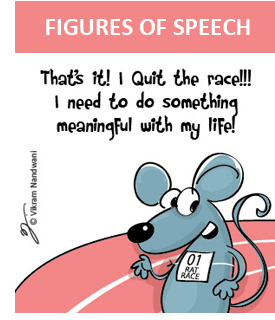
The importance of work-life balance cannot be stressed enough in the times we live in. A number of factors can be blamed for this imbalance (a technologically well-connected world, being a major factor, among others). Today, corporate executives are increasingly heading towards the 'burn-out' phenomena. While there are conventional forms of easing physiological & psychological dimensions of the ailments caused by the lack of balance in life, alternate lifestyle choices are slowly finding its place in this stressful scenario.
While some may get back to the basics and take on farming, away from the hustle and bustle of urban life, others might like to join co-ops groups or native villages for a change of pace and the rural experience. This way of life might not be everyone's cup of tea and one might just be pulled back to the old ways of living. Yet, there is hope in realising the importance of stepping back, taking a breath and re-looking at the way life happens. Why wait in denial when you can make the best use of these alternate lifestyle choices?
This month in ET, we look at the theme Finding Balance: Making Alternate Lifestyle Choices. A farmer by choice & Sustainable Development Professional, Seemantinee Khot, in the Podium section will enlighten you through her personal experience of choosing a different path of life.
In the Thinking Aloud section, Jay speaks about the fact that more and more people are reflecting on their life choices and are deciding to opt out from their respective mainstream lifestyles. For those looking to explore and experiment, various alternate lifestyles are available today.
Meeta Lee reviews Psyched Up authored by Daniel McGinn in the We Recommend section. Drawing on psychological research and interviews, McGinn explains why mental preparation is the key to mastering any challenge in life.
In the Wonder Women segment, former owner of PSH CORP, Prabha Hariharan, shares her challenges and the lessons learnt in taking to a path less trodden on in the world of entrepreneurship.
In Figures of Speech, Vikram's toon quits the rat race of life!
As always, we value your opinion, so do let us know how you liked this issue. To visit our previous issues you can visit the Resources section on the website or simply Click Here. You can also follow us on Facebook, Twitter, LinkedIn & Google+ - where you can join our community to continue the dialogue with us!
|
|

|
|
Contentment...Happiness...Balance...and All That
|
|
- Jay
|
|
Chaplin's Modern Times made a statement when it was released in 1936: industrialization tends to de-humanize the poor individual who is struggling to make a living. The movie is a classic and one would have thought that with the advent of a technology based society, the struggle to make a living should have been history.
Well, not quite so, it seems. Yes, globalization has spread economic well-being to a larger number of people across the world, but the sense of ennui has also grown. A look at the suicide rate in India is illuminating. While there are many ways of interpreting statistical data, official sources indicate that India has about 17% of the world's suicide cases (with about 17.5% of the world's population), in absolute terms that's 135,000 people (figures are for 2011-12). More alarming to note is that the rate of suicides has gone up from 7.9% to 10.3% per 100,000 persons (for the period 1987 to 2007). Whatever happened to happiness in our society?
Is Gross National Happiness (GNH) more important than Gross National Product (GNP), as famously stated by the former King of Bhutan? One can argue that GNH requires a healthy GNP! However, the mindless quest for economic development at the cost of social sustainability has created economic & social imbalances that are now viewed as expensive mistakes.
While this criticism has not deterred central planners in developing economies as they pursue big dreams of 'catching up' with the West, there are many individuals who are making alternate life choices. Not for them the road trodden by the multitude: study long hours in college, compete to get a job in a major organization, join the corporate rat-race to scale the pyramid, while working soullessly to gather more sinecures offered by the job & then waking up one day to the realization that one has become a prisoner of perquisites! This realization is often considered to be the onset of mid-life crisis when many middle managers decide to 'opt-out' and reflect on life choices, while seeking 'work-life balance'.
Is this an urban phenomenon of the rich and the bored? And, is 'opting-out' the choice of the 'loser'? That's a harsh judgement. While there are multiple views of what alternative lifestyles can connote (it could range from becoming a vegan to a nomadic life of global travel!) perhaps a good way of describing it would be to call it 'not becoming a slave of comparative (and competitive) materialism'. This is quite a challenge in the world of social media where you are bombarded with either inane trivialities or profound messages gleaned from pop psychology. And your 'friends' on Facebook keep telling you about the good times in their lives!
However, the very fact that we live in times of plenty also means that for the courageous there are various possibilities to choose from and create a model for themselves. Arguably, it is material abundance in society that not just facilitates the decision to cherry-pick life-styles but also encourages the liberal view to appreciate them.
Be it the preference for organic food or life in the hills, moving away from the mainstream is becoming an attractive choice to the urban elite. The pastoral life is often romanticized and only the committed can actually endure it for long. The rest flirt with it and then wake up to the fact that they are missing too much by being away from the metropolitan comforts. Soon enough they yield to the gravitational forces of the urban world. This too is a choice that they may well exercise and needs to be respected as no longer is there one norm for all times.
Perhaps a generation ago, the concept of seeking 'work-life balance' was alien to India. There is an apocryphal tale of the boss who sternly rebuked his subordinate to choose between 'work' and 'life' when told about HR's new policy. But that was then - valuing differences is culturally more acceptable in today's times. Therefore, it is fine to change one's mind about lifestyle decisions. With growing awareness that one does not have to become a captive of circumstances, today's urban yuppies and the middle-aged professionals (many of whom belong to the 'double income, no-kids' segment) are seriously exploring alternative life models. The learning from various explorations & experimenting with sustainable choices is now more welcome than before. So, let the quest for happiness, contentment, balance, etc., continue to take shape to suit your individual paradigm of life!
back to top ^
|
|

|
|
Interview with Seemantinee Khot
|
|
A Farmer by Choice! & Sustainable Development Professional
|
|
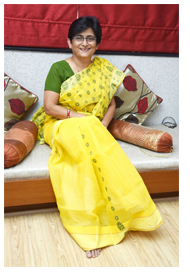 Seemantinee has over three decades of experience in the development sector, 20 years of direct implementation with NGOs, 5 years of bilateral aid and UN assignments and 7 years as Global Head for CSR with a leading wind energy company.
She has completed several professional assignments across various continents. Seemantinee is currently engaged at CHHAYA Strategic Advisors as Partner and guides a number of corporates for CSR and sustainability initiatives. She is also an Independent Director on the Boards of Prabhat Dairy Ltd, Sunfresh Agro Pvt Ltd, Anik Financial Services Pvt Ltd, and Cheese Land Agro (India) Pvt Ltd.
She holds a Master of Arts and Social Work degree from Tata Institute of Social Sciences, Mumbai. While at the peak of a rising career and on having completed a number of successful assignments in India and across the globe, Seemantinee chose to take a break.
Away from the city buzz, she finds peace in remote and greener surroundings, unconnected by mobile phones or public transport. Seemantinee enjoys working with her hands, experimenting with organic farming practices, cow rearing and mentoring local youth. She says growing 'poison free food' for family and friends is the most satisfying job she has ever done.
She could have continued doing international assignments, but is glad she opted for this new life. Now many young professionals are joining her group - 'Farmers by Choice'. There are IT professionals, bankers, technocrats and family business owners who are finding this as a liberating option.
ET: The need for 'work-life balance' is a term often heard in today's society. Why has this becoming a dominant need and gaining importance?
SK: The concept of 'work-life' balance is a term gaining importance for the following reasons:
- Stress at work: Jobs today are rarely the 9 am to 5 pm types. Coupled with this, net-connectivity never lets you off the hook and one is virtually connected all the time. One has lost privacy and work intrudes family life.
- Stress of relationships: More demanding and unpredictable, generation gaps are more with technology with less personal exchanges.
- Stress of social media: Spending more time with unknown people; reactionary and passive recipients both end up having emotional burdens.
- Stress of travel to work has become strenuous with traffic, time and strain of driving, traffic indiscipline.
- No full-time home makers which many are used to while growing up.
- Less stress busting opportunities: Conventional social nets providing solace and support are weakening such as joint families, visiting parental homes/distant family members. Traditional festivals have been replaced by expensive holidays.
- Financial stress: Materialistic life - money is never enough. There are so many more advertisements and online shopping with cashless payment options that can leave one high and dry before you can even realize it. This puts additional pressure to earn more.
- Stress of entertainment: Stressful TV serials make you believe that behind every good character there are five vicious ones.
ET: What could be the possible reasons as to why industry leaders and others are moving towards a lifestyle change and are opting for alternate lifestyle choices?
SK: More and more senior professionals and industry leaders are realizing how futile personal sacrifices for jobs can be. Senior leaders are learning that in being tied down for 10-18 hours at work, they haven't had a chance to spend time or their earnings for quality family time and other activities.
Health shocks make these professional re-think other life options and reflect on better ways of living. Moreover, since many professionals start early and have climbed the corporate ladder by the age range of 35-40 years, they feel that it is possible to come back to their respective mainstream careers if the alternative life option does not suit them. So they choose to step out as they know they can come back.
Some would like to enjoy stark lifestyle differences with their peers in the western world, while others want their children to get an exposure which they couldn't get for themselves. Getting married and having children late makes them more sensitive/serious and they feel responsible as parents.
Many of us would also like to adopt something trendy and a little off course which we can even flaunt through social media! Also, alternate lifestyle choices is not for the masses and is for those looking for creativity, self-realization or just to feel special. After all you just have one life, so live it fully!
ET: It is said that technology can be both, a boon and a bane. In your opinion, has technology helped in striking a balance while exploring alternative lifestyles?
SK: Advancement in technology has certainly helped in striking a balance while exploring alternate lifestyles. Money management through technology is a major enabler. You can be on top of your finances and smartly invest by accessing savings, insurance and markets products, portfolio management services, etc., so you know where you stand today and where you will be years from now, financially.
Further, with the Internet, you can be connected with who you choose to, even when you are physically away. You can create groups of like-minded people who provide mutual support. Mobility has become easy with various online bookings from taxis and flights to Airbnb.
ET: What is your suggestion to our readers who are on a quest to finding a balance between work & life? Could you give us examples of alternate lifestyle choices?
SK:
My suggestions to you:
- Manage your finances seriously and ensure that your dependents and you are taken care of.
- Consult your family and listen to them. If possible convert them, else prepare them!
- Keep a return route/option ready.
- Spend more time with yourself before you plunge - so you can listen to what you really want for yourself.
- Focus on your health. Your body is your only tool for any experience - take better care of it to withstand shocks and enjoy returns.
- Invest time in 'quality' relationships, not quantities. You will eventually need a support system.
- Most important do not be lazy. It can impact your health and mental balance. This is a sure way of becoming cynical!
I know of people who take to:
- Hobbies such as playing the piano, classical music, painting, photography, pottery, collecting artefacts, travel to less explored territories.
- Health pursuits: Power walks, cycling, trekking, etc.
- Start-ups: Opening theme restaurants, IT solutions, disruptive technology.
- Social work: Joining NGOs, adopting children teaching in schools, environmental work,
- Spirituality: Scripture studies, following gurus, etc.
It is amazing to see the sincerity with which people live these alternate lives!
ET: Could you please share more about your professional life and what led to the decision to seek an alternative life as a 'Farmer by Choice'?
SK: I grew up in small villages as my father got transferred from one sugar factory to another. After attending seven different schools, I started working at 16 to support my education. Later, I was engaged in activities related to the students union and in social work and rights based movements. Life was all about balancing studies, part time jobs and activism.
My professional life and marriage coincided. Also, my job responsibilities involved extensive travelling, with motherhood adding some challenges which eventually sharpened my multi-tasking skills. I continued travelling for 15 to 20 days a month for 31 years! Travelling to every corner of India, and under-developed countries in Africa, Asia and Latin America, meant adjusting to different climates, cultures and food. I was also tasked with the responsibility of leading a multi-country team for UN assignments. It was particularly daunting as an Asian woman, with a non-technical background to work on technically oriented projects, in a male dominant environment.
In between my stressful and busy professional life, I lost my very supportive and loving life partner to a stroke. It made me reflect on my choices made in favor of work over life. In retrospect, I regret not having spent enough time with family.
I decided to correct it before it was too late. After making provisions for the necessities of life, I decided to slow down. Farming was a natural choice as I grew up on farmlands. Being away from a fast track life, the traffic, pollution and noise, the green pastures were soothing. Farm work tests your health and improves fitness. After working on intangible outcomes all your life, farming which gives tangible results is very satisfying. One can literally taste the fruits of hard work here!
back to top ^
|
|

|
|
Psyched Up
|
|
- Daniel McGinn
|
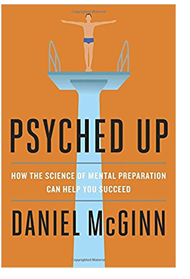 I am sure that all of us grew up learning the old adage that practise makes perfect. And when you apply this learning you find that this works!! So why then, do we feel powerless when we are supposed to feel powerful? Why can we not summon up courage and do what we are so good at doing during those crucial hours when we are supposed to give our best? I am sure that all of us grew up learning the old adage that practise makes perfect. And when you apply this learning you find that this works!! So why then, do we feel powerless when we are supposed to feel powerful? Why can we not summon up courage and do what we are so good at doing during those crucial hours when we are supposed to give our best?
In Psyched Up, journalist Daniel McGinn reveals why the last few minutes before any major challenge can be terrifying. McGinn has interviewed athletes, soldiers, entertainers, and others, who despite years of practice and enviable track records, ultimately get judged on their ability to deliver a solid performance when it is their turn to shine. He talks about the importance of mental preparation over and above the physical practise and has backed it up by giving examples of top professionals who have been putting this technique to work - superstars like General Stanley McChyrstal, National Association for Stock Car Auto Racing (NASCAR) champion driver, Jimmie Johnson, Boston College football coach Steve Addazio, legendary tennis coach Nick Bollettieri, T-Mobile CEO, John Legere, and many more. Interestingly, this book was written by him on Malcolm Gladwell's old keyboard. The author has a strong belief in the research studies on superstition done by a team led by Sally Linkenauger, a research scientist. The studies revealed that a professional's skills, which had rubbed off on a piece of equipment, would benefit anybody else who used the same equipment (called positive contagion).
Contradictory to the belief that one must try to calm their nerves before an important moment or performance, McGinn is of the opinion that instead of aiming for calm, a better strategy is to force yourself to make the more subtle, achievable mental shifts from nervousness to excitement - a process called re-appraisal. Another interesting technique mentioned in this book is a seven-step technique called 'Centering' which help performers manage energy and arousal in the moments before a performance. Clearly, it is not an easy process to read and learn and therefore requires someone to teach it.
The last chapter of the book, "The Psyche up Pill" has very interesting dimensions on whether white collar workers should medicate their way towards high performance. McGinn who himself uses medication during extremely busy periods and rare speaking appearances, is against the idea of getting addicted to them. The book ends with an amusing anecdote of him playing golf extremely well after using the 'magic' pills and how, though the PGA has outlawed the use of beta-blockers, the rule does not apply to him since he is not a PGA player. It is a good book with lots of interesting examples and keeps you glued till the end.
Daniel McGinn is a senior editor at Harvard Business Review and a national correspondent at Newsweek. His writing has appeared in magazines such as Wired, Inc., and the Boston Globe Magazine.
back to top ^
|
|

|
|
Prabha Hariharan
|
|
Former Entrepreneur - PSH CORP
|
|
 Many amongst us harbour aspirations of starting a company at some point in our professional lives. Taking that leap of faith especially when you are making swift strides in a corporate career can be a tough decision! But entrepreneurs seldom see much but the shape of their dreams and the drive to achieve it all. Many amongst us harbour aspirations of starting a company at some point in our professional lives. Taking that leap of faith especially when you are making swift strides in a corporate career can be a tough decision! But entrepreneurs seldom see much but the shape of their dreams and the drive to achieve it all.
That was how it was to be for Prabha Hariharan, as she was getting smug with her job at a top notch retail company. She went on to start PSH CORP, a design and manufacture company for retail brands. Within a year the company boasted of clients such as Walmart, Future group, Dmart stores, Globus Stores, in addition to international designer brands like Freesoul and Pure & Simple.
For an entrepreneur, success can be a double edged sword. With success comes stretched goals and scaling up of the firm. This required multi-tasking from product management to client management, team building and funds. It is a tightrope that one walks on and this is exactly where the magic happens. The entrepreneur learns the nuances of decision making, hiring the right people, networking to get views of experts, financing opportunities and while doing all of this steering the ship so it remains on course. It is here that mentors and programs like Goldman Sachs 10,000 Women Programme (with the Indian School of Business (ISB)) play an important role in nurturing and critically evaluating one's business needs.
For an entrepreneur, it is important that you revisit and review your course from time to time. Evaluating your perspective, vision and aiming higher should be individual aspirations to beckon greater vistas.
In Prabha's case, the capital-intensive nature of her business and the early growth trajectory made her realize that her vision was higher than what she had imagined before she got in. To achieve that scale, it would need financial back up and a longer gestation period. She then decided to sell her company to an export house looking to diversify into the Indian domestic market. Their scale of operations would do justice to her company's vision.
The entrepreneurial stint gave Prabha the exposure and learnings that have held her in good stead ever since. Today as Business Head for Cross Border Trade at eBay Retail Exports (A Flipkart group company), it gives her immense happiness to lead a business that gives a platform to numerous SMEs, MSMEs and entrepreneurs to sell internationally.
Prabha holds a Master's in Fashion Technology from National Institute of Fashion Technology. She has also completed her post graduate studies in International Business from Loyola College. She has over 15 years of work experience in e-commerce and retail.
Here's wishing Prabha the very best for her future!
back to top ^
|
|

|

|
Naturalist, Rupesh Balsara trails the Himalayan path to Spiti Valley located in the north-eastern part of Himachal Pradesh. He beautifully captures this landscape which is spotted with the indigenous Himalayan Foxtail Lily (commonly known as the Himalayan Desert Candle).
|
|
|
|
Empowered Learning Systems
Pvt. Ltd.
http://www.empoweredindia.com
101, Lords Manor, 49, Sahaney Sujan Park,
Lullanagar, Pune – 411040,
Maharashtra, India


|
 The ELS Lotus logo is trademark of Empowered Learning Systems Pvt. Ltd. The ELS Lotus logo is trademark of Empowered Learning Systems Pvt. Ltd.
©2017 Copyright Empowered Learning Systems Pvt. Ltd. (ELS). For private
circulation to clients and well-wishers of ELS. While ELS endeavors to ensure
accuracy of information, we do not accept any responsibility for any loss or
damage to any person resulting from it.
|
|
|
|
| |