|
|
|
|
| |
Dear Reader,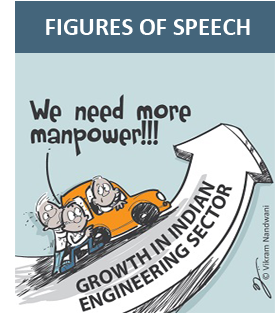
As India runs the race of being at the forefront of one of the fastest growing economies, one cannot under estimate the importance of the country's engineering sector. The Indian engineering sector has witnessed remarkable growth over the years helped by increased investments in infrastructure and industrial production. This sector is closely associated with the manufacturing and infrastructure sectors which in turn have the ability to attract interest from foreign players as it enjoys a comparative advantage in terms of manufacturing costs, technology and innovation.
ET this month looks at the various Growth Challenges in the Engineering Sector Today.
In the Thinking Aloud segment, Jay is very optimistic about the engineering sector and looks at the various strides achieved to make this sector an attractive one. Sharing some nuggets of knowledge on the Podium, CEO of Ring Plus Aqua, V Balasubramanian elaborates on the current state of the engineering sector, leaving readers enlightened about the future growth of this sector. In the We Recommend segment, we have young and voracious reader, Rohan Menon sharing his views on Factfulness, authored by Hans Rosling, which offers a refreshing perspective of the changes that the world has seen. In the Voices segment, Krupali Bidaye offers her thoughts on relationships among transgender persons through real life stories.
In Figures of Speech, Vikram's toons are all set for a good 'start'!
As always, we value your opinion, so do let us know how you liked this issue. To read our previous issues, do visit the Resources section on the website or simply Click Here. You can also follow us on Facebook, Twitter, LinkedIn & Google+ - where you can join our community to continue the dialogue with us!
|
|

|
|
The health of a developed economy is closely aligned to the fate of the engineering & capital goods sector of the country. Globally a bellwether sector, it is closely monitored to understand the state of the economy and challenges here speak volumes of the health of many other sectors of the country.
This is no different in India. Therefore, the Modi government's Make in India initiative was welcomed all round in 2014. As the tenure of the government approaches the last leg - and in the face of the global trade wars - the engineering sector has come under greater scrutiny now.
While critics may cite the recent rise in inflation and the increased concern about the lack of new job creation in the economy, the engineering sector still shows healthy growth. Reports indicate that for the manufacturing sector this fiscal year (FY18) has been promising with the third quarter's Gross Value Added (at basic prices) reporting 10.92% growth.
While the jury is still out on the success of the Make in India program, it is no secret that industry has largely welcomed the new GST regime now that the teething trouble is behind us. The few complaints that still exist come from the small and tiny scale firms who are yet to accept the hard reality that the rules of the business game have changed. No longer is there cover for their unbridled days of cash business - without bills - as the onus is now on them to clean up their act if they intend to grow and run a sustainable business venture. Anyone wishing to participate in formal industry now has to learn that growth comes with responsibilities - and there will be consequent benefits thereafter.
Of course, much more can be done to ease the compliance documentation, but realistically, the choices before the government are not many in the face of years of undisciplined business behavior where tax evasion was the norm. Everyone wants the country to be a solid performer and be counted as a global economic power, yet nobody wants to pay the cost of growth, i.e., taxation for building infrastructure. For decades, this oxymoronic behavior has been given a free hand as the will to enforce tax discipline has been missing. Bad behavior has been liberally rewarded in the past - and naturally industry did not welcome accountability. The reformatory step in the tax regime has been considered bitter medicine and one hopes that it will not be diluted at the altar of electoral politics.
While the debate on the state of the economy continues and statistical interpretations often vary depending on which end of the political spectrum one pays heed to, the sentiment is largely positive in my opinion. Further, going beyond the straws in the wind, the forecasts from most global economic agencies too is that the structural changes in the economy will result in major pay-offs for the future. Some indications include an increase in the turnover of capital goods industry to US$ 11.17 billion by 2025 and major growth in engineering R&D within the next 5 years.
The huge investment needed in the infrastructure sector in India cannot be understated. That by itself is a clarion call for growth and the overall attractiveness of India continues to bring in foreign investment. It is not just the size alone that is appealing - the innovative edge of Indian engineers is also an allure. It is up to us now to capitalize on the opportunity at hand.
back to top ^
|
|

|
|
 Mr. Balasubramanian has over 36 years of industry experience in the field of auto/auto components. He began his career with TVS Group, and later with Kalyani Brakes Ltd, Bosch Chassis Systems and finally was responsible as Managing Director of Eaton Industrial Systems, prior to joining Ring Plus Aqua.
He is a mechanical engineering graduate from University of Delhi and a Post graduate in management from Loyola Institute of Business Administration. He is also Chevening Scholar having done a leadership program with University of Leeds, UK.
ET: What is the current state of the Indian engineering sector and how does it compare to its global peers?
VB: As per the stated government policy, Manufacturing GDP will grow from the current 16.5% (~US$ 350 billion) to 25% (~US$ 1 trillion) by 2024, creating 100 million new jobs. No country in the world offers this opportunity in the next 5 years. At the same time, according to a FICCI report, India had less than 10 million people enrolled in vocational courses, while China had 90 million of them last year! The huge difference clearly signifies a need to have an education system that focuses on soft-skills and value-based training that meets the demands of the industry. If we cannot create an education system that fosters employability (where skills meet requirements), it is only unfair to expect a sector to handle employability by itself. India took 60 years after independence to grow its GDP to US$ 1 trillion. The next trillion took another 7 years. The 3rd trillion will be added in 6 years and the 4th trillion in just 3 years. The engineering industry will play a crucial role in this exponential growth.
At a macro level, the manufacturing sector offers huge opportunities in job creation and reduce the over dependence on the agriculture sector. However, the initiatives of the government have been inadequate to make this sector competitive at a global scale. The services sector has grown far more rapidly than manufacturing. The manufacturing sector has been growing at less than 5% CAGR with the contribution to GDP being in the 14-18% range.
ET: Can you please elucidate the growth challenges of the Indian engineering sector, particularly in the context of the Make in India program?
VB: There are many systemic challenges to the growth of the Indian engineering sector like lack of world class infrastructure (though steadily improving), high cost of capital, relatively lower productivity especially when compared to global standards and high input costs in terms of energy, logistics, taxation, etc. GST was a much needed reform by the government for standardising taxation and its effect will be seen in the coming years. Another big challenge for the growth of the Indian engineering sector, in my opinion, is the low investment in R&D by the industry. India is competing in labour intensive areas across sectors but does not lead the cutting edge technology space, which will be possible only through native research.
"Make in India" is a laudable initiative, but its effect is yet to be seen on the ground. The auto Industry is nevertheless very vibrant, with nearly sustainable double digit growth rates. The technology adoptions are quite in line with the developed markets. The quality of the products and manufacturing practices are also in line with the best in the world. In two wheelers, we have huge potential for exports with our high quality and competitive product line offerings, which are well received in the African and Latin American markets. Similarly, our competitive edge in low cost passenger cars has significant export potential, besides the strong domestic market.
ET: Technology is seen playing a pivotal role in all aspects of industry. How can advancements such as AI and Machine Learning help in enhancing the growth of the engineering sector?
VB: Whether we like it or not, rapid advancements in technology - be it IoT, Industry 4.0 or AI - is set to disrupt the way industry functions quite similar to the way with the advent of the internet, Smart phone and GSM technologies. The potential of these technologies to exponentially raise the productivity and create value is immense.
Technology advancements in the Indian context are both an opportunity and a threat. If we are early movers in its adoption, we can probably leap forward in many fronts. With the major backend work on these disruptive technologies happening in India or with contributions from large Indian technical force overseas, our country has some advantages. But the success will depend on strategic policy initiatives, which should create the eco-system for its early and rapid adoption. Incentivising native research to apply these disruptive technologies to good effect to find relevant solutions affecting our market place, will give us a distinctive edge.
At the same time the unknown effect of these technologies in employment could create negative forces against it. Pro-active policies to develop the skill-sets and investments in high quality education systems are pre-requisites and will be a policy challenge for the country.
ET: In your diverse experience in the automotive and engineering sector, both in the domestic and international markets, how does the future of this sector read?
VB: The automotive sector is highly cyclical. Every 4-5 years of strong growth is normally followed by a slow down for a year or two. Nevertheless, the long term forecast is a strong sustainable growth in this sector as the transportation needs of individuals and commercial goods are highly under served.
Our domestic two wheeler, 3 wheeler and tractor market is already the largest in the world. With a passenger vehicle penetration of less than 30 per 1,000 people, the scope for growth is huge. Considering the employment potential of the automotive industry, the Indian government's Automotive Mission Plan 2026 envisions the industry to grow by 3.5x to 4x in value terms making it among the top three automotive industries in the world. The industry achieved almost all targets set out in the previous plan.
We will also be witnessing completely disruptive changes in power train technology across the world. Competing technologies are in play to replace fossil fuels and meet increasing stringent emission laws. Alternate fuel options such as bio-fuels and CNG will compete with electric, hybrid electric or fuel cell technologies. Relative cost competitiveness of these technologies as they evolve will determine the final winner. The inflection point of volume growth in these alternative power options is however a decade away. All in all, the thrust will remain to move towards cleaner fuel technologies.
As automobiles are becoming more and more intelligently managed in its sub-systems through electronics and software, challenges to the current players have come from the new age technology industry such as Google, Apple, Tesla and so on. As automobiles are becoming more of a computer than a mechanical mobility device, these new players have challenged and seized the lead from traditional players and are working towards autonomous cars. Semi-autonomous cars have already been launched in developed markets in the premium segment. These technologies could take some time to find its effect in India, as we miss the quality of infrastructure needed to support this technology coupled with the realities of lack of driving disciplines. On the other hand, the concept of mobility itself is changing from ownership model to a shared mobility concept. A shared mobility future will require infrastructure, technological and operational developments which will drive employment in these sectors.
ET: Could you please share with us how Ring Plus Aqua manages to sustain global competitiveness and engage with your customers across the globe?
VB: To be a competitive player in the auto-component business, we need to have extremely strong partnership relations with our customers. We have also developed over the years an efficient delivery and logistic chain with flexible manufacturing systems that is agile to market place developments. To almost all our customers in the domestic and overseas markets, we give JIT (Just in time) deliveries. We do continuous benchmarking against our major global competitors with respect to our quality and costs. Pro-active engagement with customers, continuous improvements in processes and cost effective technologies build trustful partnerships with our customers. Two thirds of our sales come from exports to advanced markets. These customers source not only for the price advantage of India, but also for comparable quality and technology in our product and our manufacturing processes. This needs sustained investments in engineering and R&D for better designs and more efficient processes.
We also ensure a high level of transparency and clear communication with customers which helps to build the trust and long term relationships.
back to top ^
|
|

|
|
 It is easy to look at the world today and have a pessimistic view of how things are changing - every day we see more illness, more death, more hate. This constant stream of negativity doesn't seem to relent and as a result we have adopted a negative world view of things, both at home and away. But, as Hans Rosling argues in his book, we need to refresh our perspective and be aware of the changes that the world has seen. Rosling, a Swedish doctor and teacher, lays his arguments clearly and simply - things are getting better, in ways both big and small. He stresses that much needs to be done, as there is plenty to improve, but his expert use of data and personal analogies direct the reader to the numerous beneficial changes that the world has undergone. Optimism and pride fill his words as he discusses the concept of 'Factfulness' and what entails a better world view. It is easy to look at the world today and have a pessimistic view of how things are changing - every day we see more illness, more death, more hate. This constant stream of negativity doesn't seem to relent and as a result we have adopted a negative world view of things, both at home and away. But, as Hans Rosling argues in his book, we need to refresh our perspective and be aware of the changes that the world has seen. Rosling, a Swedish doctor and teacher, lays his arguments clearly and simply - things are getting better, in ways both big and small. He stresses that much needs to be done, as there is plenty to improve, but his expert use of data and personal analogies direct the reader to the numerous beneficial changes that the world has undergone. Optimism and pride fill his words as he discusses the concept of 'Factfulness' and what entails a better world view.
The book begins with a short quiz, containing questions relating to important world issues like poverty levels, populations levels and women's education. These questions were asked as part of Rosling's quest to find out how we perceive the status of the world, and what he found surprised him immensely. Regardless of country of origin, occupation and age, almost everyone managed to get several of these vital questions incorrect and believed that things are worse off than they are. This led him to write this book, to try and correct this seemingly prevalent bias that we seem to have about our lives. He introduces the concept of 'Factfulness' - the idea of being more aware of the world around us, and to visualize and understand the data and to see how the world is improving over the years. As the book's title suggests, Rosling puts forth ten reasons that he believes we are wrong about the world, with each chapter focusing on one reason. A core theme of mistaken outlook runs thorough the book and Rosling's experience as a teacher and academic shines through as he goes about explaining his thoughts. Each chapter references the questions from the introduction, with graphs and charts drawing the reader's attention to the core premise of the book. Together with the data and personal stories from his experiences around the world, Rosling creates a convincing argument, all the while keeping the text simple enough for people of all ages to understand. His ability to highlight and summarize each chapter helps reiterate the topic and ties the topic together into a clear and concise narrative.
Though Rosling passed away shortly before the book could be completed, this book is testament to years of hard work, dedication and perseverance. This book brilliantly and quite simply rounds up all the misconceptions that we may have and guides us through an analytical approach on how to face the issues. I was pleasantly surprised by how many of the introductory questions I got wrong, and when I read that even UN delegates, the very people who were supposed to help govern global activities, were in the same boat, it highlighted a dire need to re-evaluate the way we think. Rosling's final opus stands clear as a shining example of how we must go about changing our ways, and this book is one that I would recommend to anyone looking for a compelling book to read. It is easy to see why even Bill Gates nominated this book as one of the best books of last year, and why it may be one of the best for many years to come.
back to top ^
|
|

|
|
 Relationships are at the core of human nature. Love, being the most raw of all, we experience the ecstasy of these emotions that manifests in various relationships, be it friendship, marriage, motherhood, fatherhood, sibling love, and so many more...! This stands true for every individual regardless of their gender identity or sexual orientation, because though we may be different in the way we relate to another individual, we stand one in the way we feel. In this segment, we explore love, marriage, relationships of three young transgender women interwoven in their struggles. In their strength to accept their identities, in the face of societal resistance, they redefine the meaning to each of these relationships. Narrated by Anupama Easwaran, a Diversity & Inclusion Coach, we bring stories of Paras, Madhuri and Mangala. Relationships are at the core of human nature. Love, being the most raw of all, we experience the ecstasy of these emotions that manifests in various relationships, be it friendship, marriage, motherhood, fatherhood, sibling love, and so many more...! This stands true for every individual regardless of their gender identity or sexual orientation, because though we may be different in the way we relate to another individual, we stand one in the way we feel. In this segment, we explore love, marriage, relationships of three young transgender women interwoven in their struggles. In their strength to accept their identities, in the face of societal resistance, they redefine the meaning to each of these relationships. Narrated by Anupama Easwaran, a Diversity & Inclusion Coach, we bring stories of Paras, Madhuri and Mangala.
 Anupama Easwaran is an ICF and Erickson International certified Executive Coach specialising in Diversity and Inclusion, with 22 years of work experience in diversity and inclusion consulting, employee wellness, business development, client servicing, marketing, brand and event management. She is an advisory board member for TWEET Foundation, an NGO working towards education, employment and empowerment of transgender persons and actively works in sensitising corporates about transgender people with an aim to bring them into mainstream employment. She also mentors young women from the under-privileged community towards sustainable employment. Anupama Easwaran is an ICF and Erickson International certified Executive Coach specialising in Diversity and Inclusion, with 22 years of work experience in diversity and inclusion consulting, employee wellness, business development, client servicing, marketing, brand and event management. She is an advisory board member for TWEET Foundation, an NGO working towards education, employment and empowerment of transgender persons and actively works in sensitising corporates about transgender people with an aim to bring them into mainstream employment. She also mentors young women from the under-privileged community towards sustainable employment.
Paras Abheena Aher, a transwoman living in Malad, Mumbai has been in a relationship with her childhood sweetheart for the last 4 years. As a gender non-conforming young boy, Paras faced a lot of ragging in school. Aman (name changed) was the only one who was kind to her. Despite being ridiculed by other boys for supporting Paras, he stuck by her. At a point when Paras was slowly getting to understand her sexual identity, his support meant a lot. However, she never dared to express her feelings because she didn't know how he felt and so, did not want to risk losing his friendship.
 After class 10, they lost touch. One fine day she received a friend request on a social networking site. Surprised and thrilled, she accepted the request immediately. He insisted on meeting her but Paras was apprehensive. Mustering courage, Paras candidly shared her fears. To her surprise, Aman assured her that nothing mattered more than the meeting. So they met and thus started their courtship days. In the subsequent meetings, Aman admitted his love for her and publicly acknowledged it when he took her to meet his parents and introduced her as the love of his life. For Paras, a transwoman who had faced it all - stigma, transphobia, discrimination, ostracism and who was pushed into sex work - this was the ultimate gesture of love and respect! After class 10, they lost touch. One fine day she received a friend request on a social networking site. Surprised and thrilled, she accepted the request immediately. He insisted on meeting her but Paras was apprehensive. Mustering courage, Paras candidly shared her fears. To her surprise, Aman assured her that nothing mattered more than the meeting. So they met and thus started their courtship days. In the subsequent meetings, Aman admitted his love for her and publicly acknowledged it when he took her to meet his parents and introduced her as the love of his life. For Paras, a transwoman who had faced it all - stigma, transphobia, discrimination, ostracism and who was pushed into sex work - this was the ultimate gesture of love and respect!
 Like any new-age love story, Madhuri Sarode too found her companion on a social networking site. Like any new-age love story, Madhuri Sarode too found her companion on a social networking site.
Madhuri had experienced a few relationship break-ups in the past and so, was vary of the friend request, sent by a Jay Sharma. Despite his persistent efforts, she ignored his request for around 2 months. Finally she gave in after clearly telling him that she was a transwoman. She agreed to meet him more out of curiosity to know about this man who was keen to meet her despite the fact that she was a transwoman, and yes, they clicked from their very first meeting! Soon Jay proposed. Madhuri's only condition was that they should get married with their family's consents and follow all marriage rituals. Little did she realize that this situation would lead to creating a typical Bollywood love story. Needless to say there was strong opposition from both sides of the family, because Madhuri was not, as per them, a 'complete woman'.
After months of cajoling and convincing, on 28th December 2016, Madhuri and Jay got married. Their marriage was a much talked about affair, not just amongst the transgender community, but also in the media.
Madhuri Sarode Sharma is a trained classical dancer, an enterprising jewellery designer and probably India's first transgender LIC agent. Though she was not born a woman, she is living every dream as a happily married woman.
 While love binds romantic relationships and marriages, it is also the emotion that keeps families together. Love for their child comes naturally for a parent and at the core, is indestructible. Abheena's story depicts this bond that she shares with her mother, Mangala Aher. While love binds romantic relationships and marriages, it is also the emotion that keeps families together. Love for their child comes naturally for a parent and at the core, is indestructible. Abheena's story depicts this bond that she shares with her mother, Mangala Aher.
Abheena's mom is a trained dancer. As a young child, Abheena would often accompany her mother on shows, and try to secretly pick up dance steps. Later, in the privacy of her room, Abheena would dress like a girl and practice these steps. Dancing gave her a high like nothing else. Like most parents of gender non-conforming children, initially Abheena's mother also could not accept that her child named Abhijeet, did not identify with his gender. At one of the social events where Abheena was being honored for who she was, her mother realized that when others in the society respected her child in the identity she wanted, she, as a mother, should also be able to do so. Eventually, she not only accepted Abheena, but became a strong advocate of trans rights, and has ever since stood like a pillar besides her. She is a 'nani' to Abheena's junior transgender friends and a mother to others like her who are yet to be accepted by their families. Abheena and her mother's love and respect for each other are fondly talked about by many in and outside the Hijra community.
Many a time, our relationships define our identities. Here, in the stories of these three transwomen, their identities defined their relationships. It only takes a compassionate heart to accept and love, and only love heals, because Love is all it takes!
back to top ^
|
|
| |
|
THROUGH THE LENS
|
|
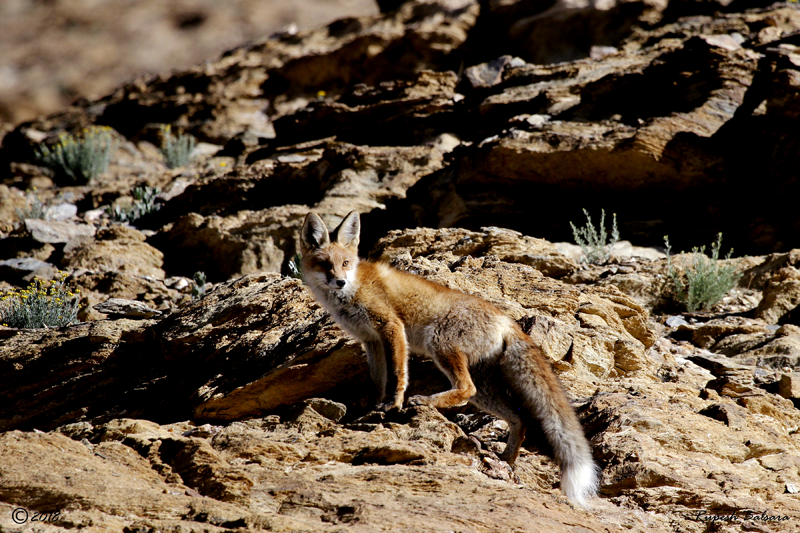
Wildlife photographer, Rupesh Balsara, spots the Himalayan Red Fox on his latest trip to Ladakh. The Red Fox is not a social animal and can be seen during dusk and dawn. A common sight throughout Ladakh, it feeds on birds, rodents, marmots and mouse-hares.
|
|
|
|
Empowered Learning Systems
Pvt. Ltd.
www.empoweredindia.com
101, Lords Manor, 49, Sahaney Sujan Park,
Lullanagar, Pune – 411040,
Maharashtra, India


|
 The ELS Lotus logo is trademark of Empowered Learning Systems Pvt. Ltd. The ELS Lotus logo is trademark of Empowered Learning Systems Pvt. Ltd.
©2018 Copyright Empowered Learning Systems Pvt. Ltd. (ELS). For private
circulation to clients and well-wishers of ELS. While ELS endeavors to ensure
accuracy of information, we do not accept any responsibility for any loss or
damage to any person resulting from it.
|
|
|
|
| |