|
|
|
|
| |
Dear Reader,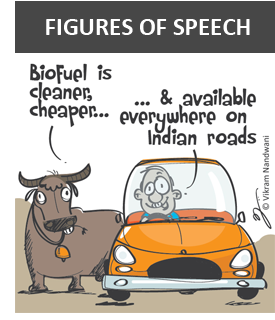
Over the years, developing renewable energy has been on the agenda at many global summits and discussions. Much has been spoken about the importance of developing renewable energy, especially those sources that come with an 'environmentally friendly' stamp. In the overall energy mix, there is only so much that renewable sources, such as solar and wind power, can do to meet the burgeoning levels of efficient, reliable and affordable energy the world requires.
A detailed study by the International Energy Agency revealed that China and India were the world's two largest energy markets and that the 60% growth in energy demand over the last 15 years is likely to continue in the coming years too. Globally, biofuels as an alternative is making its mark and is assuming importance due to growing energy security and environmental concerns. In India, biofuels is gaining importance for ensuring India's energy balance and is aligning well with the ongoing initiatives of the Make in India and Swachh Bharat Abhiyan of the Government. Further, it not only is proving to be an effective tool for rural development but is also playing a pivotal role in generating employment, thereby creating a winning model for people, profit and the planet.
To enlighten you more, ET this month looks at the Energy Sector: the Role of Biofuels.
In the Thinking Aloud segment, Jay shares his thoughts on the pros and cons of biofuels as an alternative source of energy. We welcome the Executive Chairman of Praj Industries, Pramod Chaudhari on the Podium who elaborates on the alternative fuels landscape in the country and his company's initiatives for a green tomorrow. In the We Recommend section, we review HR Here and Now: The Making of the Quintessential People Champion, a book published through the combined efforts of Ganesh Chella, Harish Devarajan and V J Rao. As the name suggests, the read is about the evolving HR function and where it is headed. In the Voices segment, Krupali Bidaye shares her insights from the first ever pilot project for 'gender inclusive sanitation' initiated by the Chhattisgarh government, where she is working as a UNICEF Consultant for Gender Diversity and Social Inclusion to the State Swacch Bharat Mission, Government of Chhattisgarh.
In Figures of Speech, Vikram's toons say it all!
As always, we value your opinion, so do let us know how you liked this issue. To read our previous issues, do visit the Resources section on the website or simply Click Here. You can also follow us on Facebook, Twitter, LinkedIn & Google+ - where you can join our community to continue the dialogue with us!
|
|

|
|
On August 27, 2018, Indian aviation history was made. Spicejet flew India's first aircraft powered with biofuel from Dehradun to Delhi. The fuel mixture was composed of 75% aviation turbine fuel (ATF) and 25% of biojet fuel made from Jatropha plant. This flight marked the continuation of the quest for cleaner fuel that the world has been desperately seeking in recent times. With the growing awareness of the need for reducing carbon foot print (particularly in the global aviation sector) a major step that has been pursued is changing the fuel source. Experts tell us that while the sector contributes 2% of global emissions, by 2050 it is expected to grow to 3%. Researchers at NASA have concluded that having a 50% aviation biofuel mixture can substantially reduce air pollution (up to as high as 70%). Therefore there is an active interest in pursuing the biofuels route though the ground reality is that progress has been slow since the first biofuel based flights of 2008 (by Lufthansa and Virgin Atlantic). The tempo is increasing worldwide with trials even including military planes by the US Air Force using a 50% blended fuel. However, the subject of biofuels is not without controversy. First, let us understand what constitutes biofuel. In essence, it is fuel produced with biological processes. This includes both agricultural inputs and recycled industrial waste as well as anaerobic methods. This is in complete contrast to the classic fossil fuels used from the early days, be it coal or petroleum. Biofuels are not just for the aviation sector. A major application has been for reducing vehicle emission through the use of bioethanol (produced from processing sugarcane, corn, etc.) and through biodiesel, usually as fuel additives. The attention to utilising Algae too has been very evident. The growing interest in these products has been largely witnessed in the United States & Brazil (for biofuels) and in the European Union for biodiesels. Other markets (including China & India) are also waking up to its possibilities, given the rapid growth of the automotive sector in these countries. All this has also created the debate labelled in the media as the food versus fuel dilemma. In essence, the question under examination is whether valuable and fertile farmland should be diverted to growing food crops or for fuel-based crops. Interesting arguments are offered on both sides, particularly in the developing nations where the first claim legitimately is for food crops. However, with greater awareness of environmental issues in recent years (and the steep rise in oil prices), the case for fuel additives through biofuels also has many buyers. In an energy hungry world, one of the most monitored parameters is the price of petroleum. The price of petroleum not just impacts prices of all sectors, it has often been the trigger point for bringing down governments due to people’s agitation. The fossil fuel-based economy has effectively been the driver of the industrial world since the 19th century, and while it has provided invaluable benefits, arguably it is also the root of the multiple environmental disasters that the world has witnessed at an increasing pace over the recent decades. Therefore, the growth of biofuels is inevitable.
back to top ^
|
|

|
|
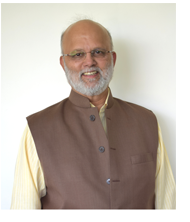 Pramod Chaudhari, is the Executive Chairman of Praj Industries Ltd. As a first generation techno-entrepreneur, he founded Praj in 1983. With strong belief in the principle of triple bottom-line, his business model is inherently scalable, replicable and sustainable. Praj fostered the emergence of advanced technologies in certain Bio-Energy and allied space. As India's biggest Biofuel Technology Company, Praj has in excess of 750 footprints in over 75 countries, across five continents.
Pramod is a Distinguished Alumnus of IIT Bombay (1971) and an alumnus of Harvard Business School (AMP 1995). He has been associated with many eminent organizations holding responsible various positions from time to time.
ET: What does the alternative fuels landscape look like in India and what are the growth challenges in this sector?
PC: Renewable Transport Fuels (RTF) provides a renewable and sustainable alternative that complements conventional fossil fuels. Additionally most RTFs are biodegradable, non-toxic and provide significant carbon savings as compared to fossil fuel. RTFs comprises of bioethanol, Biodiesel, BioCNG, Bio-methanol, Bio-Jet fuels, etc.
The Government of India's clean and renewable energy vision mentions reduction in crude oil imports by 10% in 2022 and 50% by 2030. In the COP21 Climate Change Summit held at Paris, India had committed to a target of reducing CO₂ emission by 33% by 2030 over 2005 levels. For India to achieve these ambitious targets, RTFs will have to contribute significantly to the overall energy mix of the country.
While huge opportunities are opening up for the overall growth of the biofuels industry in India, it comes with a set of challenges, which majorly include:
- Regulatory challenges: The biofuels industry worldwide is contingent on the Government policy mechanism and India is no exception. Since the evolution of biofuels industry in India about couple of decades back, policy regime has been volatile. As a result, the industry has been struggling with associated uncertainties. Sustained favourable policy will certainly help put the biofuels industry on an accelerated growth path.
- Project approvals: Owing to stringent, complex and lengthy statutory approval processes, project gestation periods tend to be longer.
- Feedstock: Being seasonal in nature, molasses availability is a limiting factor to fulfil mandates. Further, ethanol generated using molasses has applications in other competing industries. 2nd generation feedstock like biomass and agri-residue, although available in abundance, has a challenge in the form of aggregation and logistics as the associated ecosystem is at an early stage of development.
- Financing: Attractive funding mechanism and packages is the need of the hour. Balance sheets of sugar industries continue to be stressed and at the same time many of PSU banks have become risk averse with rising NPAs. This is making funding of ethanol projects difficult.
- Technology Commercialization: 2nd generation ethanol technology has already been scaled up to demonstration level, and Govt. has already suggested to Oil Marketing Companies to set up 12 commercial scale bio refineries. Private sector involvement is eminent for the growth of the biofuels industry and they are expected to participate following realization of the first batch of 12 bio refinery projects.
However it may be noted that the Government had earlier this year released the progressive biofuels policy to address and streamline the above challenges.
ET: What role can technology play in the bio-energy and allied space?
PC: Technology is a game changer for the industry and has a big role to play for the development of the bio-energy industry. Among others, the following are major thrust areas:
- Multiple feedstock feasibility: Existing Technologies, e.g. 1G, 1.5G, etc., are being enhanced and new technologies e.g. 2Gen ethanol, etc., are under development to process multi feedstock.
- Multiple products: Advancement in technologies makes it possible to produce multi-products, i.e. Biofuels and renewable chemicals, e.g. Bio-ethanol, Biogas, BioCNG, Bio-Jet fuels, Bio-methanol.
- Process Efficiency: Technology helps in the improvement of the process resulting in Opex and time savings. Development of Microbes and Micro-organisms for yield maximization.
- Quality: Continued research and development helps in enhancing product quality that fetches higher premium and positively impacting revenues.
- Environment: Optimizing Energy and water consumption and further their integration with process technologies help reduce carbon footprints and thus making processes more environment friendly.
ET: How will the recently approved National Policy on Biofuels, 2018, help in addressing the energy needs of the country?
PC: The recently approved National Policy on Biofuels, 2018, is very progressive and it addresses several social, environmental, economic and energy related challenges country.
- Energy: One crore litres of ethanol saves INR 28 crore of forex at current rates. The ethanol supply year 2017-18 is likely to see a supply of around 150 crore litres of ethanol which will result in savings of over INR 4,000 crore of forex. Thus, it will help reduce dependency on imports.
- Environment: One crore litres of Ethanol saves around 20,000 ton of CO2 emissions. For the ethanol supply year 2017-18, there will be lesser emissions of CO2 to the tune of 30 lakh ton. By reducing crop burning & conversion of agricultural residues/wastes to biofuels there will be a further reduction in Green House Gas emissions.
In addition to catering to energy and environment elements, this policy also addresses several social, health and farmer related aspects.
ET: Your company, Praj Industries is committed to develop clean and green technologies. Please tell us more about the initiatives and contributions undertaken by the company for a green tomorrow?
PC: Praj Industries is a leading process solutions company with expertise in integrated offerings for bio-energy, high purity water solutions and engineering led businesses namely, zero liquid discharge solutions, critical process equipment & systems and brewery plants. Sustainability is at the core of Praj's solutions that are driven by technologies emanating from its state of the art R&D Centre, Praj Matrix, and world class manufacturing facilities located in India.
Over three decades, Praj has been a trusted partner for their customers with over 750 references across 75 countries. Technology and innovation are core values at Praj and we believe our strong market positioning is a result of the technology edge that we possess to create value for our customers.
Following are some of the unique technology solutions we offer for a greener tomorrow:
- Process Efficiency improvement technologies:
-
Advanced bioprocess technologies like Liquefaction and Fermentation, Distillation, Dehydration, Evaporation and Biomethanation.
- Energy Optimization:
-
Integrated Distillation technologies -Lower energy & higher quality end product (EcoSmart)
-
Dryer-Vapor integration technologies for energy reduction
- Developing additional revenue streams:
-
Advanced co-product recovery technologies – Biogas, BioCNG, CO2, Dryer distillers grain with soluble (DDGS)
- Effluent Treatment:
-
Innovative technologies for waste water treatment like Zero Liquid Discharge (ZLD)
-
ATFD (Agitated Thin Film Dryer) technologies
-
Process Condensate treatment technologies for process condensate.
- Increasing productivity:
-
Biotech products to improve the yield maximization
- Plant life cycle management through Modernization & upgradation:
-
Capacity expansion to for increased production
-
Water and energy footprint reduction to reduce cost of operations or meet environmental norms
-
Debottlenecking for smooth plant operations
ET: As a first generation techno-entrepreneur, what are your views on the start-up environment in India and what is your advice to budding entrepreneurs?
PC: The start-up environment in India is very vibrant and dominated by technology start-ups from IT and software domain rather than engineering or the manufacturing domain. Unlike in the past, unprecedented opportunities exist. Thanks to the advancement in internet technology, the whole world has become a market place. The mushrooming of seed investors and venture capitalists means that availability of funding is not a challenge any more as several financing avenues exist. Owing to fierce competition in the market not just from home grown but international players, sustainability continues to be a challenge. Technology commercialization, attracting & retaining talent and scaling up continue to be few other challenges that start-ups have to deal with.
Advice
- Dare to Dream
- Take Calculated Risks
- Go the extra mile
- Invest in people
back to top ^
|
|

|
|
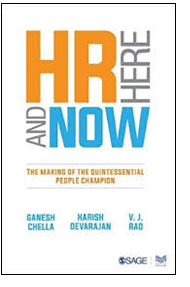 HR Here and Now is the brainchild of HR professionals Ganesh Chella, Harish Devarajan and V J Rao written in the most simplistic style. The narrative speaks about where HR was in the past, and how the HR function has evolved over the years. HR Here and Now is the brainchild of HR professionals Ganesh Chella, Harish Devarajan and V J Rao written in the most simplistic style. The narrative speaks about where HR was in the past, and how the HR function has evolved over the years.
The book is segmented into themes right from bringing people on board, managing them, leadership development to managing relationships among employees, among other subjects. The authors approach each of the key themes by providing their views and offers real-life organisational practices related to these themes.
The formative years of the HR professional can be very impactful in shaping up their confidence, capabilities and attitude towards their profession and its stakeholders. A lot of importance is given to the three modalities of the HR function: 'doing' (calls for actions that require an action and execution bias), 'feeling' (calls for those actions which demonstrate empathy, care & concern) and 'thinking' (refers to HR tasks which calls for strategic orientation, detailed planning and problem-solving). The future belongs to those HR professionals who are able to understand these modalities, embrace them and demonstrate the right orientation at the right time with care and sensitivity.
The uncertain business environment that companies thrive in calls for strategic HR planning. The role of the learning and development professional has also evolved in that, they must now have the consulting skills to partner with businesses and co-create solutions. The HR function manages thousands of 'moments of truth', defined as those moments in which important brand impressions are formed. As organisations grow in complexity, it becomes imperative for the HR professional to manage and create positive moments in the larger scheme of things. Inevitable at times are conflicts that arise from issues of complexity. It is here that HR professionals are constantly challenged to come up with solutions which are aimed at fostering collaborations. The authors also outline how globalisation and artificial intelligence will have an impact on the HR function in the foreseeable future.
Through the collective experience of the authors, the book endeavours to enlighten its readers (and HR professionals) to develop a more balanced view of the HR function and to understand, the real needs, issues and challenges of this people related function.
Ganesh Chella has a career spanning across three decades and has been acknowledged for his contributions in the field of Organisation Development, Human Resources and Executive Coaching. Known for his vivacious style of engaging with people, Devarajan is a Leadership Coach and Consultant. Rao, an alumnus of the Tata Institute of Social Sciences, Mumbai, has been an operational HR professional for 40 years.
The narrative is simple and easy to understand and can serve as a ready reckoner to those who are people champions, young HR professionals or those interested to take on people management.
back to top ^
|
|

|
|
 What if someday you were told that, you could live, but you cannot go to the toilet??? Sounds crazy isn't it? Because, going to the toilet, relieving oneself is a basic need of every single individual. The right to exist, includes the right to do all that it takes to exist, and embedded in the Right to Life and liberty, is the right to live with dignity. But can this dignity come without ensuring an individual's privacy, safety and security? This piece explores the challenges faced by transgender persons while accessing toilets and sanitation facilities. It voices the Right to Privacy, Right to Dignity, and Right to Life and Liberty for transgender persons, in the context of Hon'ble Supreme Court's landmark NALSA judgment 2014, in which it directs state governments to provide for separate toilets for transgender persons. It is in this backdrop that accessible and inclusive sanitation has become a crucial parameter for inclusion for the policy makers, corporate sector, and the larger area of Diversity and Inclusion. What if someday you were told that, you could live, but you cannot go to the toilet??? Sounds crazy isn't it? Because, going to the toilet, relieving oneself is a basic need of every single individual. The right to exist, includes the right to do all that it takes to exist, and embedded in the Right to Life and liberty, is the right to live with dignity. But can this dignity come without ensuring an individual's privacy, safety and security? This piece explores the challenges faced by transgender persons while accessing toilets and sanitation facilities. It voices the Right to Privacy, Right to Dignity, and Right to Life and Liberty for transgender persons, in the context of Hon'ble Supreme Court's landmark NALSA judgment 2014, in which it directs state governments to provide for separate toilets for transgender persons. It is in this backdrop that accessible and inclusive sanitation has become a crucial parameter for inclusion for the policy makers, corporate sector, and the larger area of Diversity and Inclusion.
The society we live in is a gendered space, where gender is a strictly binary phenomenon, and gender norms define cultures. Gender norms define 'toilet taboos' and deviance is reprimanded through mockery, criticism or ostracism. We have grown up being taught that adherence to the gender norm is the culture of the society. So what happens when a man enters a toilet assigned for women or vice versa? Before we even imagine this situation or answer this, we need to address a fundamental question? Is gender only to be understood as men and women? If not, then what about those who are born as 'males' but identify themselves as 'women' or those who are born as 'females' and identify themselves as 'men' - which toilets should they prefer? While we are dealing with this dilemma, let us appreciate that the issue is very sensitive, because it pertains to dignity of individuals, and also addresses our very basic need and neither should be or can be compromised on.
At present in India, public toilets, community toilets, or toilets at public utilities, are gender segregated. In such situations, a transgender person faces tremendous challenges in accessing them. These challenges manifest largely as attitudinal barriers that have emerged out of primarily three things; one is lack of awareness and ignorance on understanding 'transgender' identities, second is cultural gender roles and 'toilet taboos' and the third is exclusion of the minority groups.
A focus group discussion with various transgender persons groups in Chhattisgarh brought out serious issues faced by them while they access public toilets. While verbal abuses, mockery, calling various names that challenge masculinity, were common experiences, physical and sexual abuses, rapes, incidence of violence, surfaced the discussion. Another shocking revelation was that, the respondents of the focus group discussions shared that they had dropped out of schools due to the harassment, abuse, and disrespect they received from their peer groups and also their teachers. Many of these experiences of harassment at the school level were related to sexual abuse that took place in the toilets with gender non-conforming boys, who were often subject to strip tease to prove their gender identities.
While understanding the aspirations of the transgender persons community in the context of the NALSA judgement that has institutionalized the 'transgender' identity, it was realized that the community's diversities needed to be acknowledged, understood and respected. While few respondents strongly felt the need for a 'separate toilet' space which shall ensure their privacy and ensure them due respect and dignity, others felt that having 'separate toilets' will lead to further exclusion. The advocates of 'separate toilets' argue that it would give them the needed visibility in terms of their identity and also send out a loud message of inclusion and recognition of their identities.
The state of Chhattisgarh has been a forerunner in making all its departments 'transgender inclusive' and it has taken a revolutionary step through the first-of its kind pilot project in India on Inclusive and Accessible WASH (Water, Sanitation and Hygiene) for transgender persons along with persons with disabilities. This project shall be a torch bearer in bringing about 'gender inclusive' sanitation in the real sense. Corporates and policy makers have lots to imbibe from the learnings of this pilot.
A significant take-away for the corporate sector which is presently exploring diverse human resources, is to not just voice out inclusion in policies but create practices for holistic inclusion by creating an enabling environment for it. The 'toilet space' is a space of privacy, safety, security, dignity, and in the dignity of its employees lays the dignity of the employer. A more gender neutral and gender inclusive 'toilet space' in the corporate world shall be a significant step for tomorrow towards a creating a truly diverse work force.
back to top ^
|
|
| |
|
THROUGH THE LENS
|

|
Closer to home, Rupesh Balsara captures a splendid picture of the Northern Shoveler at Bhigwan which is about 100 kms from Pune, Maharashtra. The Northern Shoveler has a shovel-shaped bill that sets it apart from other ducks. Despite their heavy-set build, Shovelers are good fliers. Known as a birdwatcher's paradise, Bhigwan welcomes a number of migratory birds, especially during the winter season.
|
|
|
|
Empowered Learning Systems
Pvt. Ltd.
www.empoweredindia.com
101, Lords Manor, 49, Sahaney Sujan Park,
Lullanagar, Pune – 411040,
Maharashtra, India


|
 The ELS Lotus logo is trademark of Empowered Learning Systems Pvt. Ltd. The ELS Lotus logo is trademark of Empowered Learning Systems Pvt. Ltd.
©2018 Copyright Empowered Learning Systems Pvt. Ltd. (ELS). For private
circulation to clients and well-wishers of ELS. While ELS endeavors to ensure
accuracy of information, we do not accept any responsibility for any loss or
damage to any person resulting from it.
|
|
|
|
| |