|
|
|
|
| |
Dear Reader,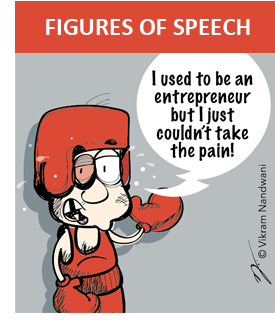
Ritesh Agarwal, Founder and CEO of disruptive hospitality business, Oyo Rooms, is making quite a splash on his plans to double investments in China & Southeast Asia. Tracing back his journey, the restless youth took the plunge into the world of entrepreneurship and was featured in the Forbes under 30 list for consumer technology.
The entrepreneur is a dreamer who readily embraces setbacks and obstacles. Unperturbed by stereotypical thinking, entrepreneurship becomes more of a lifestyle for this genre of people, toiling through the unfixed hours of the day to ensure that the dream becomes a reality. More and more entrepreneurs are coming up with novel ideas, what with angel investors, crowd funders, among other financers, believing that bankrolling novel and risky ventures will pay off. Huge and risky opportunities beckon the restless entrepreneur whose unorthodox leadership will certainly pay dividends. ET this month enlightens you on theme, the Restless New Entrepreneur.
In the Thinking Aloud segment, Jay highlights the characteristics of an entrepreneur and what makes them different and driven. On the Podium, Pramesh Khanna, Founder - Ecoterra Outdoors & Agriventures, serves as a perfect example of an entrepreneur with an indomitable spirit to push ahead. In line with this month's theme, in the We Recommend section, we reviewed Priya Kumar's book, The Inspiring Journey of a Hero, which highlights key learnings of the Founder of Hero Cycles, O. P. Munjal, during his entrepreneurial journey. In the Voices segment, Krupali Bidaye writes about the mental health of transgender persons.
In Figures of Speech, Vikram's toon takes a beating from his entrepreneurial attempts!
As always, we value your opinion, so do let us know how you liked this issue. To read our previous issues, do visit the Resources section on the website or simply Click Here. You can also follow us on Facebook, Twitter & LinkedIn - where you can join our community to continue the dialogue with us!
|
|

|
|
At the risk of sounding political in the present election season, let me say that one of the things that the present government got right was to send out a message that not all of us should look for jobs, but we should also be open to become job-creators. The idea crystallized into Startup India (www.startupindia.gov.in) and as always, the verdict on its success depends on which end of the political spectrum one belongs to. But that is not my point. I want to emphasize that entrepreneurship is a much under-advocated dimension in Indian society and it is wonderful to note that since 2016 (when the government formally launched its program) the idea of start-ups has gained formal respectability in official circles.
Not that entrepreneurs ever waited for this announcement. For truly an entrepreneur, by definition, is one who goes against the established grain and embraces risk to follow an instinct that tells him/her that his innovative idea can fructify and flourish. Not for them the safe harbor of certainty and calm waters. Challenging odds and staying deaf to conventional rationale from traditional quarters is second nature for them. And, even today this means walking away from the standard education of safety that schools drum into students and the customary messaging at home of follow the path of 'good, well-paying and steady job' that well-established and large companies provide. The voice in the head of the entrepreneur tells him to carry-on regardless and emboldens him to accept the tag of the black sheep.
The new generation Indian entrepreneur is not quite the college drop-out of the classic American folklore (Gates, Jobs, Zuckerberg, et al) with perhaps Ritesh Agarwal (of OYO fame) being an exception. Lest you think that the entrepreneurial bug thrives only on young hosts, let me remind you that any age the desire might find expression. Many of the new generation entrepreneurs are those who have had stints in organized sectors and have bided their time to get started after attending to other pressing priorities in their lives. However, all along they have had a certain restlessness that fueled their latent dreams, never allowing it to perish in the comfort of their current setting. When at last they are ready to step out to test their mettle, they do. Such numbers are increasing in India now not just because of greater acceptance of the entrepreneurial spirit but also due to a more favorable eco-system that makes the transition easier than it used to be. The role of technology in this change is interesting: while the disruptions it has caused has led to early career termination of many middle-managers, it has also made it convenient to create smaller enterprises offering value-added knowledge services to a global customer base (often virtual in character). An added feature of today: many women have turned business creators too and with increasing number of support groups, many more are turning their dream concepts to reality, undeterred by the thought of failure.
Angel investors, crowd-funding, private equity, etc. are now new buzz words in the startup domain with many entrepreneurs looking to become the next unicorn. Apart from universities and academic institutions creating incubation centres even well-meaning businessmen too are providing support in different ways. While Indian entrepreneurs may not yet have a Shark Tank like show to pitch their ideas and gain instant stardom, local variations have begun to take shape through media reality shows. Clearly the appetite for risk is growing in a new generation flowing with wild ideas.
The ultimate bane for an Indian entrepreneur still remains a hostile bureaucracy. The Indian bureaucrat's psyche has yet to recognize that businessmen are productive and honorable people who add genuine value to the GDP. The myth of businessmen as social blackguards has been so instilled in popular notion that the just rewards that entrepreneurs deserve for the risk that they take is still not palatable. In a society with great income inequality wealth creation is still suspect and hurdles continue to be placed despite calls for ease for business. The troika of corrupt businessmen, immoral politicians and pliable bureaucrats have not made it any easier to further the cause of entrepreneurship.
Be that as it may, for those with the restless and daring spirit of adventure, such challenges and collateral pain are par for the course. Starry eyed and unperturbed, they walk to Emerson's words, 'Do not go where the path may lead, go instead where there is no path and leave a trail.'
Let's hear it for the entrepreneur! Take a bow, dreamer!
back to top ^
|
|

|
|
 Pramesh Khanna is a professional, experienced in start-ups and scaling high growth organizations as a Business HR Leader. He has over 18 years of experience across Pfizer, IDBI Bank and Yes Bank, covering all verticals such as consumer banking, retail lending, SME/MSME, mid markets, large corporates, sales force management, operations, regulatory and compliance functions, across all management levels.
An entrepreneur since September 2017, Pramesh started his own bootstrapped company, Ecoterra Outdoors & Agriventures. He is an avid adventurist and traveller. Pramesh holds an MBA (HR & Personnel Management) degree from MILS, Mumbai, and a MSc (Mycology & Plant Pathology) degree from Mumbai University.
ET: What made you venture in to the world of entrepreneurship?
PK: Right from my early childhood days, I was fascinated with the outdoors. This passion led me to choose my vocation and I ended up becoming a qualified Mycologist, Plant Pathologist (doctor of plant diseases) and a horticulture specialist in 1998. Post my MBA in HR and IR in 2000, I entered the corporate sector as an HR Executive with Pfizer. With almost 17 years in the high growth corporate sector, and my various roles of increasing responsibilities creating significant institutional impact, with no career breaks and having worked almost 24x7, I started feeling monotonous and missing the start-up action days.
I realized through introspection that starting up and scaling excited me more than being in a steady role. One thing I had ensured in my career - I kept my passion for the outdoors alive and it graduated into adventure too. As a banking professional and a certified agriculturist, I also studied for almost 14 years in various emerging industry sectors, especially the travel & tourism and food and agriculture sectors with a focus on the evolving India story. I also continued to take short and quick weekend breaks and explore offbeat locations around India and select countries around India. It is through these short travels and experiences as a solo off-beat traveller that I came closer to my next calling - a start-up in the outdoor, adventure space in an off-beat location. Thus my start-up venture, Ecoterra Outdoors & Agriventures was spiritually and mentally born. I started investing my weekends to put a structure to my dream, travelling to various Indian states including lesser known Uttarakhand, sourcing long term leased land, putting together a ground team and organically building our 2 resorts. Once my vision took shape, I took the bold step of resigning from the corporate world and formally started managing my venture personally.
ET: As an entrepreneur, what is it that motivates and drives you?
PK: With Ecoterra, we are attempting to bring in a positive disruption in the largely orthodox, unregulated and disorganized outdoor/adventure travel & tourism industry in Uttarakhand and India.
Being an entrepreneur allows me to follow my passion and hobbies, gives me freedom to think and actualize my vision, being responsible for all my actions and outcomes, including failures. It gives me the opportunity to be myself, be in direct touch with my strengths, weaknesses, to experiment with the stretch of my imagination and my capability to realize and execute the same, without any major interferences or hindrances.
As an entrepreneur, I am responsible to make money for my organization, development and remuneration for my team who are sole earning members in their families. I am also responsible for creating, building and expanding the brand - Ecoterra. It has to remain respectable, fresh and impactful, and to continue to grow and deliver on its promise and the organization's mission. Most importantly, I get to be always in the midst of nature, travelling to some of the most scenic, including many unexplored places. I have to constantly build and maintain good PR and keep myself challenged at all times. I unassumingly play the role of the Head of the Ecoterra family, in addition to my own immediate and extended family back home. It is also about the thrill, excitement and experience of venturing into the unexplored/unchartered territory, unlearning the past, learning and re-learning new survival skills.
ET: Please tell us what made you choose off-beat outdoors sector as your business idea. What challenges did you face in setting up this venture and how did you overcome the same?
PK: The domestic travel industry in India and specifically the outdoor/adventure and off-beat tourism industry are growing at a CAGR of 15-20% y-o-y at least for the last decade. Off-beat locations like Uttarakhand, which offer some of the best outdoor, adventure, spiritual, religious, wellness and cultural/heritage travel experiences, not only in India but on a global scale, have a huge potential and the market is largely untapped or unorganized. With Ecoterra, we have attempted to bring in a positive disruption in this largely disorganized outdoor/adventure tourism industry in Uttarakhand and India.
A lot of working professionals today prefer economical and shorter but more number of holidays with family and friends at unexplored or newer Indian off-beat destinations. Adding to this, there is an ever increasing millennial population who are joining the employment market every year. They are tight on budgets, but enjoy travelling to off-beat locations, and invest some part of their time and earnings into travelling in the outdoors/adventure/exploring nature, mountains, trekking, etc. Corporates have always been big and constantly growing on various outbound learning, development and employee R & R experiences. They are constantly looking for newer destinations/resorts for their programs. There is also an emerging private schools/colleges and educational institutions segment, who do a lot of organized or personal travel to off-beat locations for recreation, skill based and experiential learning, but there are very few professional outbound learning companies and professionally managed camps/resorts like Ecoterra, which are high on safety, compliance, hygiene and hospitality, providing such experiential travel.
Challenges: The Ecoterra story, even when backed with all the passion faced lot of antagonism and rejection by almost everyone we spoke to. The only support, constructive criticism and conviction came from my mentor, Mr. Ulhas Deshpande. Having overcome the cynicism, then it was the lack of our collective knowledge of starting a company, market scoping and research, understanding consumer patterns, behaviours that will drive this product/market, finalizing our marketing/sales and branding strategies. Funding was another challenge. Raising debt from banks or investors was a challenge as a resort venture is categorized as a quasi-real estate sector, and Indian real estate markets have been going through its own challenges over the last decade. The next big challenge was to put all paperwork together, and run around various government offices, lawyers, etc.
The biggest challenge came when the actual construction of the resorts started. From the actual construction across two different locations, working with a diverse group of migrant labour, procurement of construction material in high altitude terrains, to handling the task of designing the resort ourselves due to the lack of availability of professional structural architects and engineers in Uttarakhand, etc. were some of the challenges that we encountered.
Notwithstanding any of the above, we continued our journey, and today, Ecoterra is showcased in the state administration and tourism department as one of the most compliant companies/resorts in Uttarakhand. There continues to be challenges like lack of good infrastructure, red tapism, etc. in the industry. But there is definitely good work happening in improving infrastructure, boosting tourism, ensuring/enforcing statutory compliances, organizing and government oversight in outdoor/adventure tourism, and promoting a hospitable atmosphere in the tourism industry in Uttarakhand and in India overall.
ET: Can you please tell us about the unique offerings of your company Ecoterra and what is your plan for the future?
PK: Ecoterra Outdoors & Agriventures was co-founded by a team of highly qualified and experienced professional entrepreneurs on 2nd April, 2016. We have built and operated 2 leisure glamping (glamour + camping) resorts near Rishikesh, Uttarakhand. Both our resorts are located in the midst of nature's best sights and scenery, and have some very unique features (like 2 attached western washrooms per cottage), unmatched by any other property in this segment. We are also pioneers in introducing and popularizing the concept of glamping in India.
Ecoterra specialises in offering off-beat destination experiences, providing leisure stays and multi-cuisine meals at our eco-friendly glamps, and various outdoor/adventure activities specifically for family & friends, corporate & school/college and educational institution groups. We are also listed on all top Indian and global travel portals, including The Lonely Planet, and are amongst the favoured safe, hygienic, compliant and pleasant destination outdoor/adventure resort for travellers around the globe.
Future Plans: We have segregated our future plans into 2 parts - becoming operational in the first 36 months (our first 1,000 days of operations) and the next 36 months (1,000 days).
Our first target is to achieve operational breakeven and make Ecoterra self-sustaining.
We are parallelly approaching investors to motivate and invite them for long term equity participation and are open for interests from reputed strategic investors in Ecoterra. We have also recently associated ourselves with 2 companies for co-sharing/co-marketing of their village homestay products. We are for the first time also launching organized summer camps for students and young people. This has been one of the most popular products and experiences responsible for the rise of the outdoor adventure and skill based learning industry in Uttarakhand. Ecoterra is now associated with India's top 5 Outbound Training and Experiential Learning Companies for hosting their Young People's Programs in Rishikesh, Uttarakhand.
We further plan to expand our footprint/associations with few more off-beat properties in Maharashtra (near Mumbai), Himachal Pradesh and the fast emerging North East Indian market.
ET: What is your advice to our readers who would like to venture on a path less trodden?
PK:
- Every passion cannot be turned into an entrepreneurial venture. But every entrepreneurial venture needs undivided and relentless passion.
- Be clear in your thoughts before you venture out. It does not hurt to take advice from those who you trust, irrespective of whether it is positively in your favour or not. It is a perspective and learn to appreciate and respect differences in opinions and perspectives. This is what market opinion and feedback looks like whenever you start your venture.
- Thoroughly research your subject. Leave no report, write up, web search, even small articles unread, as everything will provide some tactical input or idea to refine your though process.
- Continuously test your market - who are your customers/clients, buyer groups, what are their spending/investment/consumption patterns, etc.
- Use tools and technology to make your hard work give you smart results and outcomes. Learn new skills.
- Manage your finances well. Be 100% debt/liabilities free before venturing on your own. Do not treat your money or investment as a cheap or easily available commodity because neither your clients nor your investors will treat their money that way.
- Work, rework, and keep re-working on a solid financial projection and RoI plan. This will be an ongoing process, but will be less cumbersome if you have done it in detail in the beginning itself.
- Take help from professionals and experienced people wherever required.
- Keep yourself motivated always. Your company, your team, your family, friends - everyone will be constantly watching you.
- Be transparent, compliant and professional in all your dealings.
- Take care of yourself - your physical, mental, spiritual well-being is of utmost priority for your venture.
- There will be bad days, even worse, than you could ever imagine. All your meticulous scenario planning from A to Z may fail. This is the constant struggle most self-made entrepreneurs go through. It is up to your grit, determination and strength of character which will help you tide over.
- Remember - Seizing the opportunity everyday (Carpe Diem) in adversity, is what true entrepreneurship is all about.
- Last but not the least - Work in your venture like an employee, not like you own it. Lead by example. Experience is the best teacher. The more you know, the more hands on you are, better for you.
back to top ^
|
|

|
|
 Om Prakash Munjal is the name behind Hero Cycles, the world's largest integrated bicycle manufacturer and is the mother company to Hero Honda (motorcycle manufacturer), and the numerous other enterprises under the Hero Group. The narrative is an account of the fifty seven year old journey of the never dying grit and perseverance of four brothers, who started off with a humble bicycle component business. They had an ambition to create an inexpensive mode of transport for post-independence India. The book adds various dimensions to Munjal's entrepreneurial journey spanning generations, business environments and the formation and separation of nations.
Even in those days, O. P. Munjal stressed on the concept of home-grown components (what we know as Make in India, today) and emphasized on the people-driven style of management over the process-driven Western systems. A true entrepreneur, O. P. Munjal would often quote that failure was only a stepping stone towards success and is a hint towards improvisation in order to match one's own vision for the future. Like any other business, this venture was not without its own set of challenges: labour strikes, stalled payments from customers, among other business hindrances. Yet, the visionary O. P. Munjal would stick by the fact that challenges were meant to be defeated. Interspersed with anecdotes, O. P. Munjal's love for his family and the love for creating a brand name in the Indian market are very clear throughout.
Management guru, Ram Charan, who speaks his thoughts in the Foreword, cites the values that went behind the creation of O. P. Munjal's enterprise. Every chapter is crisp and starts with a positive quote from well-known thought leaders. It answers various management questions such as: “Can an enterprise truly transcend the core purpose of maximising shareholder wealth?” and “Can a business enterprise operate on the premise that financial success is a by-product and not the ultimate goal?” The read reiterates the fact that the basic path to success remains the same: hard work, smart, timely and opportunistic moves, diligence and a threshold cash volume to declare a success.
Author Priya Kumar is a columnist for leading newspapers and she also does several radio and television shows on motivation and peak performance. She is a sought after motivational trainer and the CEO of Priya Kumar's Training Systems. The author has attempted to write about O. P. Munjal, even though the entrepreneur himself had no interest in being written about. Due recognition is also given to O. P. Munjal's son, Pankaj Munjal, who is now entrusted to take his father's legacy forward. The book is simple and easy to understand; readers can sense the positivity despite the odds and failures that entrepreneurs have to endure.
back to top ^
|
|

|
|
 The subject of mental health is in itself a taboo, and conversations stay behind closed doors. The crossroads where being 'trans' is understood as having a psychological problem or referring to it as a 'mental disorder' brings in the stigma to a gender identity and sexuality that is in fact a matter of choice. This month we bring to you the story of Rishu to demystify the mental health myth related to transgender persons. (Rishu is a hypothetical character portraying issues of various transgender persons that I have come across in the past years). The preferred pronouns used for Rishu are 'feminine' pronouns, and at some places where the need was felt, a gender neutral pronoun 'they' has been used. While seeing Rishu's story through her mother's eyes, 'masculine' pronouns have been used. This is an attempt to not misgender 'trans' persons in literature. The subject of mental health is in itself a taboo, and conversations stay behind closed doors. The crossroads where being 'trans' is understood as having a psychological problem or referring to it as a 'mental disorder' brings in the stigma to a gender identity and sexuality that is in fact a matter of choice. This month we bring to you the story of Rishu to demystify the mental health myth related to transgender persons. (Rishu is a hypothetical character portraying issues of various transgender persons that I have come across in the past years). The preferred pronouns used for Rishu are 'feminine' pronouns, and at some places where the need was felt, a gender neutral pronoun 'they' has been used. While seeing Rishu's story through her mother's eyes, 'masculine' pronouns have been used. This is an attempt to not misgender 'trans' persons in literature.
Rishu reached home disturbed and distressed. She had been in distress for more than 2 years now. She lay on her bed, deeply dug in her pillow. Her mother banged on the door, ''Rishikesh open the door, will you? You have been behaving weird for the past few months. What is the matter? And for heaven's sake, will you stop that 'girly' nonsense of yours? What the hell has been wrong with you? Do we need to see a psychiatrist???” Rishikesh's mother was under distress as well. She was unable to handle the fact that her son was aloof for the past six months. He had been showing more interest in all the things that girls do. Rishikesh was barely 19 years old, and had just begun going to college and exploring his sexuality.
Rishikesh loved being called Rishu, because Rishu was a gender neutral name that did not bring masculinity along with it; he had very recently discovered his sexuality and accepted it. Rishu had begun identifying as a 'female' and wanted to express and grow into a beautiful woman. But Rishu's physical attributes and their gender assigned at birth was that of a 'male'. So did this mean that Rishu had a 'mental problem'? Rishu had heard her parents say to each other that she had a mental 'issue' and it needed to be treated by a psychiatrist, and this is how Rishikesh can again start behaving 'normal'. Rishu was hit had by this and the constant censure of her behaviour by her mother had led to distress.
It was an usual day at college. Rishu was a student of psychology, and their teacher in college was discussing the topics under gender, sexuality and mental health. However, when the teacher began discussing about 'Gender Identity Disorder' (GID), another student had made a pass at Rishu. The teacher and the others around her heard it, but the teacher ignored it and continued the lecture. This left an impact on Rishu who realised that she was being perceived through the lens of a 'mental disorder' not only be her friends and family, but also by her teacher. This feeling pierced through her already sunken emotions, and she returned home believing she had a 'mental issue' which needed to be treated.
There are many like Rishu who constantly face the distress of being misunderstood, misgendered and belittled by the people around them. The distress of being 'different' is lesser than the distress of not being understood by the world around or of not being placed in the right context.
Gender Identity Disorder (GID) or gender incongruence or gender dysphoria as it was known, brought in stigma to sexuality and gender identity by limiting 'gender' to a binary lens and terming all kinds of gender variance or diversity as a 'disorder' making it a mental health condition. Terming Right to life and liberty, Right to self-expression as a 'disorder' is not just a misplaced context of freedom, liberty, and a rights-based approach but also a gross violation of human rights.
The World Health Organisation's (WHO) International Statistical Classification of Diseases and Related Health Problems (ICD) maps the human condition from birth to death: any injury or disease we encounter in life - and anything we might die of - is coded. As per ICD 11 that was released mid-2018, WHO moved out 'gender incongruence' or the desire to express oneself as gender variant or diverse from 'mental disorders' to 'sexual health conditions' with the rationale that there has been enough evidence to suggest that it is not a mental condition. With this welcome change in the perspective of health care providers, a lot still needs to be done to sensitise, educate and make aware healthcare professionals, with appropriate sharing of knowledge and experiences in order to transform the conversations related to gender and sexuality.
For employers, the corporate world and entrepreneurs who are eyeing 'gender diversity and inclusion' with respect to LGBTQ, this change brings in a thrust in the movement that shall be guided by rights, freedom, choices and dignity, but can sustain only when there begins a change in attitudes where we move from 'they have a psychological issue' to 'they have a right to choice'.
back to top ^
|
|
| |
|
THROUGH THE LENS
|

|
Bird watcher and naturalist, Rupesh Balsara, spots the white-browed Rosefinch while trekking in Tungnath, Uttarakhand. The Rosefinch is generally found in Afghanistan, Bhutan, India, Nepal, and Pakistan. Its natural habitats are temperate forests and temperate shrub lands.
|
|
|
|
Empowered Learning Systems
Pvt. Ltd.
www.empoweredindia.com
101, Lords Manor, 49, Sahaney Sujan Park,
Lullanagar, Pune – 411040,
Maharashtra, India


|
 The ELS Lotus logo is trademark of Empowered Learning Systems Pvt. Ltd. The ELS Lotus logo is trademark of Empowered Learning Systems Pvt. Ltd.
©2019 Copyright Empowered Learning Systems Pvt. Ltd. (ELS). For private
circulation to clients and well-wishers of ELS. While ELS endeavors to ensure
accuracy of information, we do not accept any responsibility for any loss or
damage to any person resulting from it.
|
|
|
|
| |