|
|
|
|
| |
Dear Reader,
Science has the potential to change the world. It is an unquestionable fact that science has been instrumental in solving most, if not all global concerns - it has a solution to battle diseases, poverty, hunger and other economic concerns. Nations are embracing science and technology and are investing in R&D to improve health systems, tackle societal challenges, upgrade education and infrastructure, which will eventually underpin economic development.
ET this month throws light on the theme Challenges of Building a Scientific Ecosystem in India. The growing Indian economy is making strides in the world of science. Case in point is the recent news of the Indian Space Research Organization's (ISRO) Gaganyaan programme which is indicative of the country's capabilities in Space technology and technical know-how. However, the Indian scientific ecosystem has not been given the due importance that it deserves. To enlighten us, Dr Shahid Jameel, CEO of The Wellcome Trust/DBT India Alliance explains the concerns impacting the Indian scientific ecosystem and the importance of collaborations in the Podium section.
In the Thinking Aloud segment, Jay echoes that the Indian scientific ecosystem needs to change in order to stand out. In the We Recommend section, avid reader, Rohan Menon reviews Gene Machine, authored by Nobel Prize winner, Venki Ramakrishnan where the author recounts his scientific research journey. Krupali Bidaye, in the Voices segment shares her views on the political participation of transgender persons.
In Figures of Speech, Vikram's toon experiments away!
As always, we value your opinion, so do let us know how you liked this issue. To read our previous issues, do visit the Resources section on the website or simply Click Here. You can also follow us on Facebook, Twitter & LinkedIn - where you can join our community to continue the dialogue with us!
|
|

|
|
The recent announcement by ISRO that they intend to launch India's own space station by 2030 has predictably created both excitement and cynical criticism. ISRO's many 'wins' have been acknowledged globally and their roadmap for the next decade includes Chandrayaan-2 (second lunar mission) in July 2019, Aditya L-1 (a mission to the Sun) by mid-2020, a mission to Venus by 2022 and most important of all, a manned space mission - Gaganyaan - also in 2022.
Exciting as all this sounds, don't ignore that there many others in the world around us who have set similar (and even more) ambitious goals. The Americans are returning to the Moon with Artemis (including sending the first woman to the Moon) having announced last year a new Moon to Mars exploration plan. The Chinese too have a space station lined up. Well, outer space will be crowded soon!
While the race to space is a scientific feat by itself, one of the avowed aims is to accelerate scientific research from the space station. Studies done in Space is no longer science fiction as the International Space Station (ISS) has been used for nearly two decades as the base for research on a number of subjects ranging from Human Immune system to animal and plant biology, to protein crystallization, fluid physics, etc. Truly, low earth orbit is a dimension that promises much for researchers.
Indian scientists, however, have some mundane, earth-bound challenges which are more compelling. While Space ignites public imagination, and Indian Scientists are well-regarded for their work in overseas laboratories, the reality is that scientists based in India have routinely been ignored. A few years ago, the convocation address by N R Narayana Murthy at the Indian Institute of Science had attracted much attention as he bemoaned that: '... let us pause and ask what the contributions of Indian institutions of higher learning, particularly IISc and IITs, have been over the last sixty-plus years to make our society and the world a better place? Is there one invention from India that has become a household name in the globe? Is there one technology that has transformed the productivity of global corporations? Is there one idea that has led to an earth-shaking invention to delight global citizens? Folks, the reality is that there is no such contribution from India in the last sixty years...'
Murthy's stinging words are a harsh indictment of India's science & technology specialists, both academic and bureaucratic. While much of the blame is often placed on the door of government - short-sighted and self-serving bureaucrats cannot be excused - the reality is that in a developing economy with multiple claimants for budgetary allocation, money will always be tight. Expecting the government to constantly provide large funds is an unrealistic expectation, in my view. A look around the country shows that there are many institutions created over the years which can become the platform for good scientific work. Money alone is not the issue: the lack of substantial, consistent and meaningful output from these academic bodies is a reflection of the lack of visionary leadership. Not all men of science are able to articulate an exciting roadmap and unleash the creative juices in their scientific teams through inspiring leadership, as Abdul Kalam could. Scientific centres have been reduced to schools of rote academics with lesser emphasis on quality, break-through research. Ask the young scientists in many places, and you will hear their woes of working under myopic and self-serving senior leaders. Expecting science to thrive in such hostile environment is a difficult task.
Industry leaders too cannot escape blame as they have not invested in deep funding for breakthroughs that would serve consumers and the community at large. Under the pressure of quarterly results, even the best of firms tend to work with short horizons in mind, though some are attempting to think longer term.
What is necessary therefore, is bodies or Foundations - funded from independent sources - organized under the supervision of eminent scientists and respected individuals who are devoted to the cause of science. Such an independent body can take the long view that science truly requires while addressing issues that pertain to the unique problems of India, be it in the areas of sanitation, agriculture, health, environment, etc. It is time now to envisage the creation of such an institution so that the burden of finding solutions does not lie solely with the government.
Besides, science thrives in an ecosystem where scientists are respected, feted and well-rewarded. This not only will attract a new generation of students to pure science (rather than just engineering or computer science) but will send home a message that science and fun are not mutually exclusive!
The challenge of creating this environment is now upon us.
back to top ^
|
|

|
|
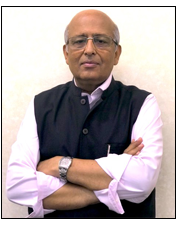 Dr Shahid Jameel is the Chief Executive Officer of The Wellcome Trust/DBT India Alliance since 2013. Prior to this, he was instrumental in setting up and leading the Virology Group at the International Centre for Genetic Engineering and Biotechnology (ICGEB), New Delhi for 25 years where his research focused on human viruses.
Dr Jameel is an elected Fellow of the All Science Academies of India. His research has also been recognized with many awards and grants, notably the BM Birla Science Prize in Biology (1995), the Shanti Swarup Bhatnagar Award in Medical Sciences (2000) and an International Senior Research Fellowship of The Wellcome Trust, UK (2001-2006).
He serves as a member and Chair of many national and international bodies and has also been active in science policies and administration for over two decades. Dr Jameel writes articles on science and higher education, enjoys travel and aspires to be a better photographer.
ET: Can you please throw some light on the current scientific landscape in India? How does India compare with the rest of the world specifically for Life Sciences research?
SJ: The scientific landscape in India is a mixed bag, going from institutions that are world class to those that are pedestrian.
Scientific research is intrinsically linked to higher education where universities and research-focused institutes train the next generation of researchers. The Gross Enrolment Ratio (GER), which is the percentage of 18-23-year olds enrolled in a college or university, is 24.5 for India. India's higher education ecosystem grew from 27 universities, 578 colleges and 4 lakh students in 1950-51 to 789 universities, 37,204 colleges and 296 lakh students in 2016-17. Higher education has expanded quickly to meet the demands of nation building and the aspirations of a young population. Rapid expansion rarely maintains the quality of faculty, teaching programmes, research, infrastructure, processes, etc., and creates a situation that is inimical towards the same young population. This critically affects the scientific landscape as well. India has very low numbers of researchers - 156 per million population, compared to 1,113 for China, 4,231 for USA and 8,255 for Israel (2015 data).
The Gross Expenditure on Research and Development (GERD) for India has quadrupled in the last decade from ~24,000 crores in 2004-05 to ~104,000 crores in 2016-17. However, the public spend on R&D has stagnated at 0.6-0.7% of GDP over the past two decades. Compare this to most developed and transitioning economies which spend 2-4% of their GDP on R&D. This is reflected in the output, measured as publications (knowledge advance) and patents (innovation). While the number of publications in India increased from ~12,000 to ~36,000 annually between 1990 and 2011, those from China increased from ~6,000 to ~122,000. In 2015, India registered ~45,000 patents compared to China (~1 million), USA (~0.6 million), Japan (~0.3 million), South Korea (~0.2 million) and Germany (~90,000). These numbers reflect the low number of researchers and sub-optimal funding of R&D.
Even with this scenario, Indian researchers produce good value for money in terms of research publications. An analysis by Web of Science over the past 40 years shows India's global rank in publications to be 3rd in Chemistry, Computer Science and Telecommunications, and 4th in areas such as Engineering, Material Science, Agriculture, Pharmacology and Energy Fuels. In Life Sciences research, India ranks 6th globally in Biotechnology, 10th in Biochemistry/Molecular Biology and 16th in Neurosciences.
ET: What are the challenges of building a scientific ecosystem in India?
SJ: Beyond the challenges of low GER and GERD, sub-critical institutions pose a big challenge for the R&D ecosystem. There are the usual challenges of a skewed education system that places more importance on rote learning than problem solving, due to which the preparedness of students entering higher education is poor. What they face at colleges and universities is more or less the same, with outdated syllabi, uninspiring teachers and low use of technology. There is also parental and peer pressure to go into professional streams such as engineering, medicine, banking/finance, etc. All this contributes to poor intake in science streams and an even poorer output.
Almost four decades back, research in India started shifting from large universities to smaller specialized and stand-alone institutes. While this provided short-and medium-term boost to research, the longer-term benefits are questionable. Each of these institutes, and there are about 50 that cater to Life Sciences, are the size of a department at a leading western university. Since these institutes focus in narrow areas, they are populated by faculty with similar training, thus offering little opportunity for cross-cutting conversations or inter-disciplinary thinking and research. Translation of research is also affected by this narrow focus. Ideally these specialized, autonomous and nimble institutes should have been set up within (or next to) large universities. While that would have helped the institutes with a broader student base and inter-disciplinary reach, the universities would have benefitted from specialized teaching, and undergraduate and graduate research. It is still possible to create clusters of neighbouring institutions - universities, specialized institutes, medical and engineering colleges - with low walls and common funding, to enhance the research ecosystem.
India's research ecosystem is also held back due to sub-optimal research management structures. Most institutions provide no or very little support to their faculty for securing and managing research funding, creating and managing intellectual property, and translating lab findings into useful products or processes. A researcher spends far too much time on these activities, which is not the best utilization of his/her time. Consequently, Indian researchers are not very competitive at the international level.
Biomedical research is mainly done at basic science institutes with little input from physicians, who have clinical insights that can help frame suitable questions and put research findings into practice. However, the culture of research is non-existent at most medical institutions and hospitals. The lack of MD/PhD programmes in India leaves a big gap in training physician scientists.
The bottom line is that education in India is siloed and risk averse. It encourages unidirectional thinking and its effects are felt throughout one's career, including that of a researcher. This is the most fundamental challenge to a scientific ecosystem that aims to chart new paths and solve real world problems.
ET: How are collaborations important to the growth of the scientific community and specifically for scientific research?
SJ: Collaboration is very important for science and scientific research. It brings together people with similar goals and interests but complementary training and thinking. It fertilizes new ideas, which is critical for the process of discovery. Scientific research has also become both technology driven and technology intense. It is not possible for one person to be an expert in all the approaches and technologies required to address a scientific question, and collaboration fills that gap. It also allows researchers to evaluate and cross-check each other's data, so what is reported is accurate.
ET: Diversity in the workforce is gaining importance in all economic sectors. Is there a gender gap in science? If so, how can this be tackled?
SJ: There is a serious gender gap in Indian science. Women make up 37% of PhDs in science, technology, engineering and mathematics (STEM) but only 15% are STEM faculty in Indian universities. A 2013-14 survey of 69 science academies worldwide showed only 12% of their Fellows to be women. Of a total of 230 Fellows the Indian National Science Academy (INSA) elected only 30 women during 2010-16. Women fall out of the STEM workforce as they progress in their careers due to various cultural and social reasons and for the lack of support. This "leaky pipeline" can be fixed by developing policy that adequately addresses the problem. For example, the childbearing age coincides with the time when most attention is required as a PhD student, postdoc or junior faculty. This can be addressed by extending the time to tenure for women faculty. Other steps include providing training to identify and address bias to both men and women early in their career, for more women to be included on interview panels and decision-making committees, and to effectively project women as role models.
ET: Can you please tell us something about the Wellcome Trust/DBT India Alliance? Under your leadership, what are your future plans for India?
SJ: The Wellcome Trust/DBT India Alliance (or India Alliance) was set up in late 2008 as a partnership between the Wellcome Trust, a UK based charity and the Department of Biotechnology (DBT) in the Ministry of Science and Technology, Government of India. The India Alliance is a public charity, which was funded generously and equally by the two partners for the first ten years. The purpose was to strengthen India's biomedical research ecosystem, stem the brain drain and expand places in India where high-quality research could be carried out, by way of highly competitive fellowships that provide generous and flexible funding. In its Phase 1 (2008-09 to 2018-19), India Alliance made 351 fellowship awards at early, intermediate and senior career levels for a total commitment of about Rs. 970 crores. These Fellows are based at 99 institutions in 37 cities across India. The fellowships are highly competitive, with a funding rate of about 10%, and have supported the best researchers often enabling them to shift their research activity to India from overseas.
While our Fellows have made important advances in basic, clinical and public health research, and have won the most coveted awards, it is their leadership that is likely to make the most impact. Over 1,300 young researchers have been trained in their laboratories, they sit on important national and international research committees and journal editorial boards and drive the development of evidence-based policies.
I took over as CEO of India Alliance in 2013. My emphasis has been to expand the programme's reach, make it more competitive, open and transparent, connect it better to society, improve the clinical research ecosystem and bring in better research management practices. I believe we have done well on all counts.
In March this year, the Union Cabinet approved DBT's proposal to double its funding to India Alliance. In the next 5 years, India Alliance would receive about Rs. 1,100 crores in a 2:1 ratio from DBT and Wellcome Trust. The plan is to continue the Fellowships in two streams (basic and clinical and public research) at three career stages (early, intermediate and senior). Additionally, we would invest funds into two other programmes. The Team Science Grants (TSG) would fund high-impact, inter-disciplinary and multi-institutional teams to address important health challenges for India. The Clinical/Public Health Research Centers (CRC) would be virtual centres that would find ways to enhance clinical research in India.
Phase 2 would also see an increased emphasis on improving Research Management at institutions, building other international partnerships, and a deeper engagement with society, media and policymakers.
back to top ^
|
|

|
|
 'Gene Machine' by Venki Ramakrishnan tells a tale not just of the academic trials that the author faced during his career but also paints a vivid picture of the people undertaking some of the most gruelling and complex scientific research, all to answer a single question - what can we learn about the ribosome? From his early beginnings as a physics student, right up to the culminating moments in 2009 when he shared the Nobel Prize for chemistry with his fellow academics, Ramakrishnan does a brilliant job in explaining the science behind his work and how his quest to uncover the secrets behind the ribosome soon led him to a tense race to be the first to crack the code. Coupled with his personal tale of his family and academic life, Ramakrishnan provides an amazing insight into the development of the science behind much of his research in such a way that even the casual reader is able to follow and grasp the subjects. Gene Machine makes for a great read, inspiring the reader in more ways than one.
We all know that DNA is what defines our various traits, but for quite a long time in the late 1900's scientists were unable to understand how DNA was converted to protein in the cells. The ribosome, a small organelle found in large numbers in a cell, was soon found to be the key to this process but the specifics remained largely shrouded in mystery. This organelle was to be the topic of focus for Venki Ramakrishnan who begins the book by talking about his move to the US after completing his physics degree in India. He describes his journey into biology as one filled with hope and apprehension, but one guided by many helpful peers and colleagues. Soon he found himself in a race to be the first to uncover the structure of the ribosome, pitting himself against friends and mentors alike. Over the many years, his resolve and commitment to the research is what stands out in the book, as he was always ready to try new techniques and meet new people in hopes to learn more. While the journey may have taken many different routes over the thirty-plus years of his career, he looks back fondly on those moments of uncertainty as key events in his life that helped shape him into a better scientist than before. While most of this book focuses on his journey, Venki also does a brilliant job in expanding on bits of scientific history and knowledge that have shaped the academic landscape. As expected with a book that looks into a key scientific discovery, Gene Machine is full of academic jargon that may seem daunting to the casual reader, but Ramakrishnan expertly introduces the topics to the readers, never letting them get lost. With his careful and measured use of terminology, he creates a brilliant landscape that tells us how his team worked hard to finally publish those important papers in 2000 that would earn him, Ada Yonath and Tom Stietz their Nobel Prize nearly a decade later.
The book is a brilliantly written account of one of the many scientific breakthroughs that we have seen within the last century or so. But just as important as the discovery, is the determination and resolve of the author and his team that worked tirelessly to achieve what some thought was impossible. Dedication both in terms of academic success and personal resolve sets the tone for this book, making it one of the best scientific autobiographies in modern times.
back to top ^
|
|

|
|
 India voted for a new Government and once again it has been a wave that swept the whole country. It brought issues of national security, dignity of the nation to the forefront, while it side-lined economic issues and development parameters. The sentiment that gripped the country largely echoed one question - 'How's the Josh??' and the answer was 'High Sir!' The platter of political offerings was deliciously decorated. There were farmers’ issues, common man’s economic issues, apart from what seemed to be a realisation that development issues needed to be taken seriously. Some of the most progressive Judgements made way in the last five years including abolishing of IPC 377 decriminalising gay sex, and the intent to move the Transgender Persons Bill to make it into an Act. In the last issue, we attempted to go back in time and trace the entry point of political representation of transgender persons in Indian politics. On the political front the offerings look attractive. In this issue, we analyse how meagrely the trans community has been represented. We also bring to the table the aspirations of some young transgender persons who casted their votes for the first time after being officially recognised as 'transgender' persons by the Election Commission of India. India voted for a new Government and once again it has been a wave that swept the whole country. It brought issues of national security, dignity of the nation to the forefront, while it side-lined economic issues and development parameters. The sentiment that gripped the country largely echoed one question - 'How's the Josh??' and the answer was 'High Sir!' The platter of political offerings was deliciously decorated. There were farmers’ issues, common man’s economic issues, apart from what seemed to be a realisation that development issues needed to be taken seriously. Some of the most progressive Judgements made way in the last five years including abolishing of IPC 377 decriminalising gay sex, and the intent to move the Transgender Persons Bill to make it into an Act. In the last issue, we attempted to go back in time and trace the entry point of political representation of transgender persons in Indian politics. On the political front the offerings look attractive. In this issue, we analyse how meagrely the trans community has been represented. We also bring to the table the aspirations of some young transgender persons who casted their votes for the first time after being officially recognised as 'transgender' persons by the Election Commission of India.
For the first time in the history of independent India, transgender persons came to be officially counted in the Census figures in 2011. The 15th National Census Survey put the number of transgender persons in the country to be 4.88 lakh persons. It further mentions, "the data of 'Transgender' being clubbed with 'males' in the primary data released by Census Department and for educational purposes, separate data of 'Transgender' has been carved out from that.” As per official figures, Uttar Pradesh has the highest number of transgender persons which is approximately 1.30 lakh persons, while Maharashtra, Andhra Pradesh (undivided) and Bihar have approximately 40,000 transgender persons. It is significant to note here that the methodology used to enumerate transgender persons has not been spelt out appropriately; the enumeration could account for only those persons who were aware and could come out in the open with their preferred gender identity. Further, since the Census document also mentions that all such data was earlier clubbed with the 'male' category in the primary data release, there may have been a possibility that only those transgender persons who were assigned as 'male' at birth and who identify as 'females' or as 'transgender' have been enumerated. This left out other variant gender identities that have now been defined under the term 'transgender' by the Hon'ble Supreme Court in the National Legal Services Authority (NALSA) judgement, 2014.
A newspaper report in the Hindustan Times (dated 27 April, 2017) mentions that, 'According to Election Commission of India (ECI), despite the approximate population of the third gender in Maharashtra being pegged at more than 10 lakh persons, only about 1,700 are registered voters.' Another recent newspaper report in the Economic Times (dated 17 March, 2019) states that, 'According to data provided by the Election Commission, the number of voters enrolled in the "other" category now stands at 38,325, an increase of 15,306 in the last five years...' The poll panel allowed registration of transgender persons as 'others' in the electoral rolls. Despite an increase in voter registrations, the turnout for voting of transgender persons has been low throughout the country as per the preliminary data in the Election Commission's Voter turnout app. The highest turnout of transgender voters was in Mumbai (North) Constituency with 167 votes, followed by Bengaluru (North) constituency.
The sheer discrepancy in the numbers across different data sets to account for transgender persons in India draws attention to the point that a lot needs to be done at the primary level itself, which is the identification of transgender individuals and granting Government recognition to their identity. Unless this is done, the actual numbers will always remain underestimated and insignificant for policymakers to take crucial action. In the parliamentary system of democracy, the decision making is a process and result of the number game in politics. Therefore, a tilting of decision making towards those who are represented or represented better is part of the game. In the present Government, while both the binary genders are represented, there is no representation of any transgender individual. The Constitution of India recognises Social Exclusion and provides for affirmative action to be taken by the State to address it. However, for transgender persons, in the big politics of number games, where different communities compete to be represented, they remain unaddressed. There is a need to be appreciated that critical mass is not, and should not be important when it comes to a Rights Based Approach since every individual's right is a right which cannot be compromised and undermined.
While we feel affirmative action is crucial to address historical social exclusion, community voices echo dignity, rights and spirit of freedom. Diana Dias, a transgender activist from Goa shares - "As an individual Indian citizen I need my country to let me experience freedom of speech without any hindrances and limitations. Safe housing, basic education, employment opportunities, and most importantly, I want to feel free and safe in my own country and share civil rights like others. I don't need any special categories, I just need to feel safe as an individual and empowered woman, only then I will also be able to contribute to my country." Suzi Bhowmick, a transgender activist from West Bengal shares - "I have only one request to the Government to please save our life as an Indian citizen, let us have our basic necessities - food, clothing and shelter with dignity and respect for my community. In the next ten years, I want to see my community walking with heads held high in the mainstream of the society. I want equal opportunities for my community for education, employment and if need be also appropriate reservations for the same, so that our next generation is not forced into begging or sex work."
Diana and Suzi are the young voices of the community, who have struggled through human trafficking, lived minimal existence, and are striving to reach their voices to people. People's representatives need to realise that they are representing diversity and not just limit themselves to their affiliations. Political awareness and sensitisation should be on the agenda of the new Government to start with along with appropriate mapping of the transgender persons.
The 'Freedom Now' slogan of the black movement was soon replaced by 'black power' which signified various ideologies that aim at achieving self-determination for the black people in America and stated that you create your own identity despite other life factors, that society puts you in. It is maybe now the right time to call a similar force in India that attempt to bring the voices of gender minorities together as 'Transgender Power'.
back to top ^
|
|
| |
|
THROUGH THE LENS
|
|
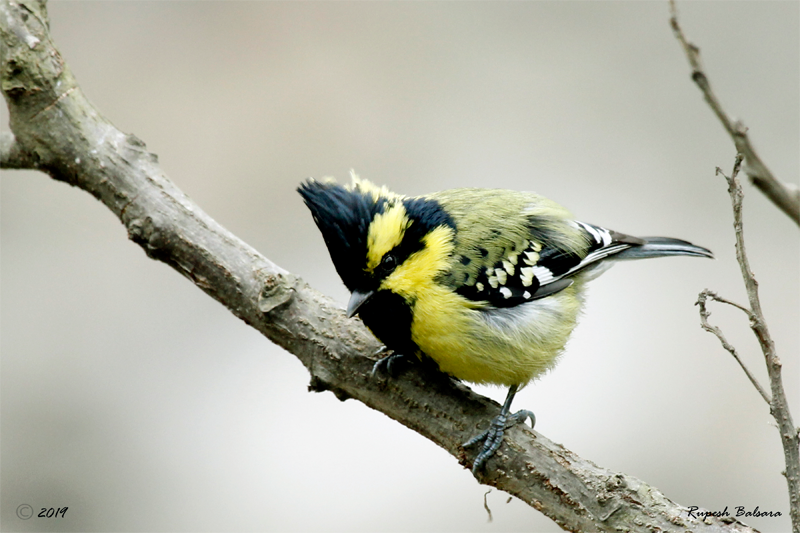
Another brilliant click from our in-house nature photographer, Rupesh Balsara! This month he captures a close-up of the tiny, yellow-cheeked, Himalayan black-lored tit. Resident of the Himalayas, the bird feeds on insects and spiders and uses woodpecker holes for nesting.
|
|
|
|
Empowered Learning Systems
Pvt. Ltd.
www.empoweredindia.com
101, Lords Manor, 49, Sahaney Sujan Park,
Lullanagar, Pune – 411040,
Maharashtra, India


|
 The ELS Lotus logo is trademark of Empowered Learning Systems Pvt. Ltd. The ELS Lotus logo is trademark of Empowered Learning Systems Pvt. Ltd.
©2019 Copyright Empowered Learning Systems Pvt. Ltd. (ELS). For private
circulation to clients and well-wishers of ELS. While ELS endeavors to ensure
accuracy of information, we do not accept any responsibility for any loss or
damage to any person resulting from it.
|
|
|
|
| |


