|
|
|
|
| |
Dear Reader,
According to estimates published by the World Health Organization (WHO), around 466 million people across the globe suffer from hearing loss. The health organization goes further on to estimate that by 2050 over 900 million people will have disabling hearing loss. WHO estimated that around 6.3% of the Indian population suffer from some hearing impairment. While various causes lead to hearing impairment, the numbers have been gradually increasing in India. In view of this, the National Programme for Prevention and Control of Deafness (NPPCD) was launched by the Government of India to eliminate preventable deafness, reduce the total burden of deafness to less than 1% and empower the hearing-impaired to lead a socially and economically productive life by 2030. ET this month looks at the 'The Challenge of the Hearing-Impaired in India: The Neglected Dimension'. World Hearing Day is held on 03 March each year to raise awareness on how to prevent deafness and hearing loss and promote ear and hearing care. This year, WHO highlighted that timely and effective interventions can ensure that people with hearing loss are able to achieve their full potential. To help understand this theme better, we have Shalini Sethi - Chairperson, Sethi Foundation, on the Podium, who shares her industry knowledge of how these challenges impacting the hearing-impaired can be tackled especially with the help of technology.
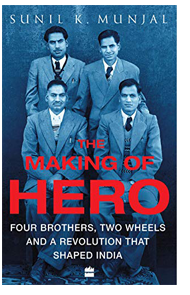
In the Thinking Aloud segment, Jay shares some nuggets of knowledge to heed the call of the hearing-impaired and the current scenario in India. In the We Recommend section, we review The Making of Hero by Sunil Kant Munjal, the Chairman of Hero Enterprise, who recounts the story of the Munjal brothers and the business empire they built.
In Figures of Speech, Vikram's toon tunes out from the sound pollution!
As always, we value your opinion, so do let us know how you liked this issue. To read our previous issues, do visit the Resources section on the website or simply Click Here. You can also follow us on Facebook, Twitter & LinkedIn - where you can join our community to continue the dialogue with us!
|
|

|
|
What is common between Bill Clinton and Ronald Reagan (apart from the fact that both are former Presidents of the United States)? Strikingly different as both may be, the one thing that is common between them is that both were hearing-impaired and used hearing aids while in office, and yet were amongst the most popular leaders of their times.
Unlike blindness, the challenges faced by those with hearing impairment is not easily appreciated. The reasons are not far to seek. You know when someone is blind, but it is different when it comes to those with hearing challenges. Until you closely interact, you cannot quickly realize that a challenge exists. Yet, data shows that there are more people with hearing impairments than the number of people with visual challenges. Clearly, this is a subject about which not much is known even though with age all of us are more than likely to be the ones with the affliction.
So how many hearing-impaired people are there in India? The decade old census number will not be accurate, pegging it at 1.3 million and perhaps the 1.8 million (or 1% of the population) number suggested by the National Association of the Deaf (NAD) could be indicative of the size of the problem that we are dealing with. Also, the skew between the urban and rural populations makes accurate numbers an impossibility. Besides, the definition of the hearing-impaired (deaf, deaf-mute, percentage of impairment, etc.) itself has caused many to be counted out.
However, the real story is not in the numbers. The challenges faced by Maniram Sharma to be appointed in 2009 as the first deaf officer in the Indian Administrative Service (IAS) after a battle with the bureaucracy over 15 years (a story worth a biopic by itself), is illustrative of the issues that bewilder those with hearing impairment. The social stigma apart, there is a deep psychological and emotional scar that embattled disabled persons encounter. It takes immense personal will and strong family support to raise oneself from the depths of despair when a youngster begins to lose his hearing (remember, not everyone is born with the disability). Consequently, educating a deaf child or a deaf-mute child presents a huge challenge in our society as not all parents have the wherewithal to tackle this mountain. Reports indicate that only very few (5%) of the hearing-impaired get access to basic schooling and there are only 388 special schools in India equipped to teach these children, obviously a wholly inadequate number given the size of the issue at hand.
Communicating with the deaf brings its own challenges. While the United Nations has designated September 23 as the International Sign Languages Day as part of their advocacy of the rights of the people who are deaf, this quest has miles to go. While there is an International Sign Language used for global interaction, there are multiple variations across the world to suit the local culture, history and environment. The Indian Sign Language (ISL) is emerging slowly as a common medium of communication across the country and the establishment of the Indian Sign Language Research & Training Centre (ISLRTC) in 2011 was a big leap forward to unify and create common ground. In this context, the publication of the first dictionary in 2018 of 3,000 words was significant progress and greater ground has been covered with the second edition published last year with 6,000 words from a wider set of 5 categories including academic, legal, medical and technical.
Reports indicate that with only about 250 certified sign language interpreters, India is woefully short of people who educate and help bridge the gap between those who are deaf and the others in the mainstream. Lack of education converts in to lack of employment opportunities too. Also, this also creates low-value employment as many are engaged in cottage and small-scale industries, etc. The rising awareness of the need for inclusion and diversity has meant a few positive steps and we are beginning to see urban corporate India (with its emerging services sector) opening itself to hiring the hearing-impaired in retail, hospitality, and other sectors. Also, the emergence of technology in the medical world has opened new vistas in addressing challenges of the hearing-impaired too. If caught early, many cases can be medically addressed, though costs continue to be a hurdle. Non-governmental organizations are stepping into this arena to provide a very welcome and positive change. Likewise, providing IT-enabled education too can be a fillip for life. All this needs resources,organization and commitment from many sections of the community (and not just government). While a few individuals and non-governmental bodies have taken the lead, more is expected from all of us in this battle.
A wonderful case study of an enlightened employer focused on providing avenues for the 'opportunity-deprived Indians' (their term) is the story of Lemon Tree Hotels. With a large number of hearing-impaired employees, the firm has won recognition for its unique approach to hiring disabled staff, reportedly of over 12% of their nearly 5,000 staff. Not only have they trained all their staff in sign language to seamlessly assimilate the hearing-impaired colleagues, it has also provided learning investment to groom potential talent for promotion to higher level jobs. All this has meant additional benefits to the firm too as they have found that attrition of hearing-impaired staff (at 25-30%) is lower than the average employee attrition rate of over 50% in the industry.
Yes, there are other such firms too, but not in enough number. But all this is proof that given the right breaks, heroes can emerge from the ranks of the hearing-impaired. Take the case of Rajeev Bagga, who was India's National Badminton champion in 1991 and1992, and has scaled unbelievable heights in the world of sports, capping his career with 12 golds and being named the 'Deaflympian of the Century'. Bagga's career is a tribute to what is feasible given the right family environment, technology support, and of course sheer personal calibre.
Time now to remove the stigma attached to the hearing-impaired and use technology to liberate them of the challenge and offer opportunities of employment and growth to many more to truly tap their abilities to be productive and happy citizens. Can we heed this call?
back to top ^
|
|

|
|
 Shalini Sethi is Chairperson of Sethi Foundation which is focused on the theme of Technology Enabled Philanthropy.
The key program funded by Sethi Foundation is the 'First Sound' Program which provisions hearing aids and cochlear implements for those who are hearing-impaired partially or fully.
Shalini is a serial entrepreneur and founded Emploi Globale, Career Profiles and Job Curry in her previous avatars after working with ISB and HCL Group.
She is an MBA from FMS University of Delhi. Her interests include Wildlife Photography.
ET: According to WHO, globally it is estimated that by 2050 over 900 million people will have disabling hearing loss. What are the causes of this?
SS: The world around us is increasingly getting noisier. To put it into perspective, anything above 85dB significantly harms the human ear and a continued exposure to 105-110dB witnessed in personal music devices and loud entertainment venues can lead to a possible hearing loss. Noise exposure is the cause of approximately half of all the cases of hearing loss, due to which WHO has also called environmental noise an underestimated threat.
Apart from noise induced hearing loss, another acquired cause is ageing. Age is a major predictor of a person's ability to hear. The prevalence of hearing loss increases from 7% among adults ages 20 to 29 to 68% among those 60 to 69, according to the Centre of Disease Control and Prevention. Apart from this, there are several congenital causes that may lead to hearing loss being present at or acquired soon after birth. It can be caused by hereditary and non-hereditary genetic factors or by certain complications during pregnancy and childbirth as well.
ET: What are the challenges impacting the hearing-impaired in India, and how can it be tackled?
SS: People with impaired hearing experience significant challenges. They experience the world and their day to day activities much differently than most of us. For instance, loss of hearing directly impacts the development of spoken language leading to loss of speech, considerably impacts the process of learning and in turn the person's employability. Corporates need to establish a more inclusive environment for these individuals where they can be nurtured.
Also, we have witnessed that they are emotionally isolated, psychologically disturbed, and socially marginalized that overall impacts their mental well-being. Looking at the sheer scale and effect of the problem on an individual, it demands immediate and actionable steps that can tackle the issue.
We believe that screening of children needs to be adopted at a large scale in a cost-effective manner as timely intervention at birth can solve for the hearing impairment if any. Broadly in India, these individuals are deprived of quality healthcare, surgical intervention, speech therapy, hearing aids and implants due to their cost. Cost effective solutions need to be made available through technological advancements and local manufacturing to ensure ease of availability and affordability.
ET: Technology plays an important role in medical science. Can you elucidate how technology is benefitting those who face challenges in hearing?
SS: Over the years, there have been considerable technological advances in this domain with respect to advanced hearing aids, cochlear implants, and various devices under Hearing Assistive Technology (HAT) that can dramatically improve the lives of people with hearing loss.
However, I believe that the main challenge lies in making these technologies available at an affordable cost in India as most of them are imported today making them inaccessible to a large segment of people in need. Fostering entrepreneurship in these areas and promoting local manufacturing can go a long way to reach the masses with advanced tech solutions.
ET: What is your advice to readers on caring for our hearing especially at the workplace?
SS: Loss of hearing is one of the most common workplace injuries. Although it can occur in any industry, people employed in certain industries and positions are usually more prone to suffer from hearing loss because of the nature of their work. According to the National Institute for Occupational Safety and Health (NOISH), the mining sector had the highest prevalence of hearing impairment followed by the construction sector and the manufacturing sector.
I believe both employees and employers need to play an active role in reducing the effects of occupational noise. Common practises and preventive measures should include reducing exposure time to high noise levels along with noise exposure monitoring, acoustic barriers installation by the employer, use of earplug, earmuffs, and other personal protective equipment.
ET: Can you tell us about Sethi Foundation and the strides achieved so far?
SS: I established the Sethi Foundation in 2016 with a mission of helping hearing-impaired children regain their confidence and improve their quality of life through our flagship program, 'First Sound'. Sethi Foundation is one of the few Indian philanthropic foundations which supports comprehensive cochlear implant surgeries, hearing device provisioning and speech therapy of children in need at scale.
Over 63 million in India suffer from significant hearing impairment of which profound congenital hearing loss affects 3 to 4 per 1,000 live births. We have also seen that these children experience speech loss and are often psychologically disturbed, emotionally isolated, and educationally marginalized. Through 'First Sound 1.0', the Foundation was able to equip and enable over 100 children suffering from mild hearing loss, with high-quality hearing aids after thorough examination and audiometric procedures.
However, we realized, every year in Karnataka alone, over 2,500 children are born with complete hearing loss and currently at least 15,000 children need cochlear implants to be able to lead normal lives as substantial damage to the inner ear cannot be treated using any available hearing aid. This led us to 'First Sound 2.0' where we facilitate cochlear implants and speech therapies in children with profound or complete hearing loss. Till date, the Foundation has facilitated over 30 cochlear implants. The Foundation is supported by various corporate entities including a major pharmaceutical player, organizations like Chiratae Ventures, Divyashree and other individual families who have displayed keen interest in global disability solutions.
Over the past few months, I was working on scaling the 'First Sound' program to reach over a million people. Hence, the Foundation along with The Disability NGO Alliance (DNA), Dr. Sunil Narayan Dutt and Vani Pradan Kendra have launched the program, 'Hearing for a Million' with a vision to benefit a million Indians over the next 5 years and we hope that through this we are able to empower lives and ensure that people are not deprived of equal opportunities.
back to top ^
|
|

|
|
"To dream beyond your means takes imagination and courage."
- Sunil Munjal
In the January 2019 edition of Empowering Times, we reviewed a book authored by Priya Kumar - The Inspiring Journey of a Hero which encapsulated founder, Om Prakash Munjal's journey in establishing the home-grown Hero cycles and motorbikes brand.
Drawing close parallels to Priya Kumar's book, The Making of Hero, written by the company's Chairman Sunil Kant Munjal, documents his family's journey of building the Hero brand. Amid the current turbulent times of uncertainty that we face now, the Hero Group's story stands as a perfect 'Make in India' example in supporting the country's cause for being self-reliant and the importance of local manufacturing.
Sunil Munjal is the youngest son of Brijmohan Lall Munjal, Founder of the Hero Group. Besides setting up many new enterprises and providing strategic inputs for the Hero Group, he was previously joint Managing Director of Hero Motorcorp and is now the Chairman of Hero Enterprise, with interests across diverse service and manufacturing businesses. He is also the Co-Founder of BML Munjal University, and sits on the boards of IIM Ahmedabad, International School of Business, University of Tokyo, Escorts, Indian Angels Network Fund, and LIC.
Hero Cycles was born out of a desperate attempt by the author's father, Brijmohan Lall Munjal and his uncles (Dayanand, Satyanand and Om Prakash) to survive during India's partition. Sunil Munjal echoes his thoughts about how the company revolutionised Indian transport. He highlights how the rural poor in an agrarian economy with limited means experienced freedom through Hero bicycles. This slowly moved to an emerging middle-class population which gradually experienced economy and high utility value for their Hero motorcycles. The author's father built the company with patience and ethics. The well-travelled Founder inculcated German and English best practices for manufacturing. It was during the time when brand Hero had become a household name that Japan's Honda was looking for an Indian partner to make motorcycles in India. Hero Honda was formed in 1984 and the first motorcycle rolled out of the factory at Dharuhera in Haryana. Under this visionary Munjal, Hero Cycles was also recognized by the Guinness Book of World Records as the world's largest maker of bicycles in 1986. Hero wanted to expand its reach globally, but the alliance with Honda did not allow it to compete against each other and at the end of 2010, Hero and Honda separated and Hero MotoCorp was born.
Brijmohan Munjal's perseverance helped him to carry on. In 1991, he launched Hero Honda Finlease to finance its customers. Two years later, Hero Exports emerged as India's largest exporter of two-wheelers. One year down, Honda also came back and reaffirmed its partnership with Hero for the next ten years to manufacture scooters with Honda's technology. With one milestone after the other, Hero had to deal with failures too. Case in point was the tie-up of Hero with BMW and plans to produce the three-series in India. But neither the partnership nor the plan worked.
The Munjal brothers were supporters of the Arya Samaj movement, and were against untouchability, child marriage, and bias against women. They continue to support the community through their social initiatives; in April 2020, the Hero Group engaged in social welfare work, setting aside a corpus of Rs. 100 crores for the relief efforts towards the pandemic. The company also donated over 2,000 motorcycles to authorities, and developed engineering solutions for public safety. Amid operational shutdowns, the canteen kitchens at the manufacturing facilities of Hero Motorcorp across the country have been involved in preparing meals for the community too.
The book is easy to read and can come across as a management book whose seven-decade old practices are timeless. As in the foreword penned down by Dr. Manmohan Singh, the book is written in the form of multiple stories that flow into each other and epitomizes the entrepreneurial spirit of Independent India. Hero's cycles and two wheelers combined quality with economy to an India aspiring for growth. In the words of the former Finance Minister of India, the late Arun Jaitley, who pens his thoughts in the foreword, "the book now forms part of a collective legacy of wisdom that can power the dream of a new India, and many Indians and non-Indians in the future."
back to top ^
|
|
| |
|
THROUGH THE LENS
|

|
As always, our in-house nature photographer, Rupesh Balsara, mesmerises us with a beautiful picture of the Pin-Tailed Green Pigeon. Belonging to the family of doves and pigeons, the Columbidae, this species largely feeds on fruits and berries. It is found in Bangladesh, Bhutan, Cambodia, China, India, Laos, Myanmar, Nepal, Thailand, and Vietnam. Although the International Union for Conservation of Nature (IUCN) has categorized and listed it as "Least Concern", habitat alteration and destruction, ecosystem modifications and human intrusions are the main threats that are endangering the survival of this species.
|
|
|
|
Empowered Learning Systems
www.empoweredindia.com
101, Lords Manor, 49, Sahaney Sujan Park,
Lullanagar, Pune – 411040,
Maharashtra, India


|
 The ELS Lotus logo is trademark of Empowered Learning Systems The ELS Lotus logo is trademark of Empowered Learning Systems
©2020 Copyright Empowered Learning Systems (ELS). For private
circulation to clients and well-wishers of ELS. While ELS endeavors to ensure
accuracy of information, we do not accept any responsibility for any loss or
damage to any person resulting from it.
|
|
|
|
| |