|
|
|
|
| |
Dear Reader,
Herbal medicine as a study of botany and the use of medicinal plants has come a long way. The usage of herbal medicines has stood the test of time and traces back to the Mesopotamian period, in ancient Egypt, India, and China. In fact, many of the pharmaceuticals we rely on today are derived from plants first discovered in these indigenous communities.
According to the World Health Organisation, 80% of the global population rely on traditional herbal medicines for primary health care. In recent times, these herbal medicines have garnered significant attention in global health debates. Case in point is when these medicines were considered in the strategy to contain and treat severe acute respiratory syndrome (SARS) in China. In India, more than 70% of the population use herbal drugs to ensure good health. The country boasts of a number of institutes and universities carrying out research on herbal drugs and medicinal plants. Amid the various challenges, the Indian herbal pharma sector has immense potential waiting to be tapped.
ET this month looks at the 'The Unsung Herbal Pharmaceutical Market'. In the Thinking Aloud segment, Jay shares his thoughts on the growing herbal medication market and how Indian companies will have to overcome the challenges of this unsung sector. On the Podium, industry veteran and the Managing Director of Pharmanza Herbal, Dr. Lal Hingorani enlightens readers on the progress of the herbal pharmaceutical market and the way forward. Reviewed by Vijayan, in the We Recommend section, we check out John Doerr's Measure what Matters which explores a management system based on objectives and key results.
In Figures of Speech, Vikram's toon promotes his 'tried & tested' brand of herbal products!
As always, we value your opinion, so do let us know how you liked this issue. To read our previous issues, do visit the Resources section on the website or simply Click Here. You can also follow us on Facebook, Twitter & LinkedIn - where you can join our community to continue the dialogue with us!
|
|

|
|
Pseudoscience or real therapy? The jury is still out while the debate rages loud in the media and in the scientific community. The world of 'western medicine' with its well-accepted publications platform have always taken a position that alternative medicine has not met its standards of scientific rigor. Those from the world of alternative therapies have scoffed at this demand for proof, claiming that traditional history is their witness of success.
While the arguments offered vary depending on which side of the spectrum you belong to, it is widely known that ancient civilizations like India, China and the Arab world have widely practiced methods not only of medical therapy but also had a significant body of knowledge on surgery. While Hippocrates is the Father of Modern Medicine, Charaka's treatise (Charaka Samhita) is the acknowledged source of ancient Indian Ayurveda. While both schools have their votaries, as far as patients go, they will accept whatever works. While allopathic medicines are the go-to for most ailments today, ayurvedic cures are also sought for issues considered to be long-term problems.
The government's ambivalence has been prominent over the decades when it has promoted modern medication but also created courses in Homeopathy, Ayurveda, Unani, etc. In recent years, however, the tilt towards Ayurveda has been pronounced including a full-fledged ministry called AYUSH (Ayurveda, Yoga and Naturopathy, Unani, Siddha and Homeopathy) since 2014.
Herbal medicines are caught in this crossfire between the two schools. While ancient medicines were largely plant based, today laboratory based chemical compounds have replaced many of them, though not all. Herbal extracts are popular common remedies today and have seen a new lease of life thanks to the back-to-nature movements that has swept the United States and Europe.
While herbal medicines have continued to be used across India since centuries, large natural pharmaceutical firms have not been many as the industry is fragmented through a spate of small regional players sprinkled across India. While the well-known names like Dabur (started in 1884), Himalaya (started in 1930), Zandu (started in 1910), Baidyanath (started in 1917) are known in every household, today a large part of their business volumes come from non-medical products. Clearly, even though they have been present in the consumer's mind for decades, being a focused herbal medicines company is not an appealing proposition from a market survival perspective.
The revival of interest in natural products has been driven by the phenomenal rise of Baba Ramdev's Patanjali pharmaceutical products. However, he too has been allured by the promise of big bucks and he has now diversified his business into personal care, foods, and associated lines to emerge as a key player in the fast-moving consumer goods (FMCG) industry. The promise of natural goodness has attracted not just consumers, it has also charmed large global players too. Colgate and Unilever India - with their Ayush range of products relaunched in 2016 - have all seen the benefit of taking this new positioning in the market to appeal to the rising class of customers who see value in going green and natural. Globally too natural herbal brands have caught the attention of consumers in the beauty and personal care space (think Body Shop, Natura, etc.).
The rise of herbal medication across the world has been the good news for Indian herbal firms. Despite being vilified for not being verified products - and yes, there are some firms who make exaggerated claims - there are those who have FDA certified plants who stress that they have a quality and research orientation. They see a big export opportunity for their plant extracts both as ingredient suppliers and for their formulations. Reports indicate that the Indian ayurvedic products market is worth over Rs. 5,000 crores now and set for growth at 14% during the five-year period leading up to 2024; exports alone are worth over Rs. 500 crores it is projected. With Herbal products market worldwide at US$ 80 billion and growing at 7% CAGR (it is expected to grow to US$ 6 trillion by 2050), there are immense opportunities for Indian firms if they get their act right.
This sector too faces its share of challenges, chiefly the availability of herbal plants, including sourcing of plants grown in protected forests. Contract farming of herbs and medicinal plants can be a promising business for agriculturists but farmers face constraints typical to those in agriculture business. Perhaps the new wave of agricultural reforms announced by the government last month in the wake of the Covid-19 crisis could pave the wave for contract farming of medicinal plants too.
With its special focus on Ayurveda and to develop Kerala as one-stop destination for superior quality herbal products, the Kerala Government has created a special body called Confederation of Ayurvedic Renaissance- Keralam Limited (CARe KERALAM). This is a good example of what state intervention can do as a facilitator between private bodies and the state to give the power of cluster production and marketing for a traditional industry trying to emerge from the market challenges of modern times. Other states like Uttarakhand and Himachal too have taken steps to support growth of medicinal plants. Much more is expected from them as well as the North-Eastern States because the reality on the ground is quite different from government pronouncements.
Measures such as the above are positive portents for the herbal sector but the current reality is that the players in the sector are ploughing a lonely furrow given the challenges they face against the might of Big Pharma.
back to top ^
|
|

|
|
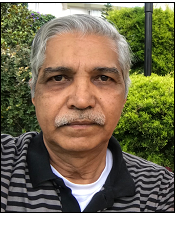 Dr. Lal Hingorani completed his academics at the National College in Bandra, affiliated to Mumbai University and went to pursue a PhD in Chemistry from IIT, Powai, Mumbai. After two years of teaching students at Mumbai University, Dr. Lal joined the modern pharma R&D segment where he excelled in various capacities for over two and half decades. In 1997, he took over the Directorship at Pharmanza (India), a leading veterinary pharmaceutical manufacturing company in India. In 2005, Dr. Lal spearheaded the foundation of a Pharmanza Herbal Pvt Ltd which provides a total package for new herbal products from concept, selection of ingredients, formulations, analysis methods, manufacturing to marketing strategies with strong R&D backing.
As Managing Director of Pharmanza Herbal, Dr. Lal has collaborated with various universities and academic institutions in India and abroad for research in nutritional supplements and herbal extractions. He is a reviewer for several reputed biomedical, herbal, and traditional medicine publications and is on the editorial board for two journals. He has to his credit over 40 scientific publications in peer reviewed journals.
ET: Plants have been used for health and medical purposes for years. Can you tell us more about the herbal pharmaceutical industry?
LH: Plants have been used for their medicinal properties for over 6,000 years. Even today, most allopathic medicines, such as aspirin and metformin, are either extracted from plants and purified as phytochemicals or are synthesized after their structure has been identified.
In India, the herbal industry is mainly divided into three main segments: Nutraceuticals, Cosmetic and Ayurvedic. A new segment which is becoming popular today is Phytopharmaceutical. Even though regulations for each of these segments are well defined, they are not being followed or implemented properly by the regulator. Nutraceuticals are supposed to be used as supplements for their overall health benefits and not for controlling diseases but there are players in the industry who are advertising their use for controlling diseases without strong data backing them. The Cosmetic segment has its own challenges. There are cases where market players are claiming that their formulation has certain ingredients when truly it does not. In Ayurveda, the quality of the products is being maintained by mature companies who are dominant in this segment as they continue to follow Ayurvedic pharmacopeia. We are witnessing new entrants in this segment who are producing Ayurvedic proprietary due to tax benefits provided by the government.
The overall herbal market is in the range of Rs. 30 billion and the good news is that it is still growing fast as people around the world are realizing the health benefits of nutraceuticals and using them as supplements. However, per capita consumption in India is far less compared to the western world; in India most of the herbal sales are still driven by doctor's recommendations/prescriptions instead of over the counter. Additionally, the quality of the products available in the Indian market is not at par with what is available in the western markets. However, this will change as the herbal market in India matures and there is more consumer awareness.
Even though Ayurveda has been practiced in India for centuries, the multi-segment herbal industry as we know it today, started developing in India about 30 years ago when the demand for nutraceutical products started growing in the west. It coincided with Active Pharmaceutical Ingredient (API) manufacturing moving to China from India and therefore the Indian API manufacturers shifted their focus and started making herbal extracts for the western market. This shift was easy for the API manufacturers as there was little to no regulation in the west with regards to quality, product registrations, etc.
ET: What are the key drivers of growth of India's herbal pharmaceutical industry?
LH: There are many drivers that have fuelled the growth of India's herbal pharmaceutical industry:
- Opening of markets in the west: With no regulatory control in the dietary supplements segment in the west about 25 years ago, Indian companies manufacturing herbal extracts had a head start. The demand kept on increasing 10-15% year-on-year. Regulators only intervened when the safety of the product was compromised. Even products having dual usage in nutraceutical and narcotics were being exported during this period. It was only after 9/11, under the Terrorist Act, that the US FDA implemented stronger registrations and inspection controls. However, in these 25 years Indian companies have evolved and learned from the west and are better prepared for the regulatory requirements. This is clearly demonstrated through our numbers - last year, India's pure herbal product exports, accounted for US$ 1.4 billion excluding spices and formulations.
- Vast Ayurvedic knowledge base: India was one of the largest manufacturers of APIs and dyes in the 1970s and therefore we had the manufacturing infrastructure and experience to be successful in the herbal market. Additionally, our vast knowledge of Ayurveda gave us a head start in the herbal extracts market. In the beginning, we were not ready to conduct modern research on Ayurvedic plants and make plant-based medicine mainstream, whereas China took the risk and opened up their Chinese traditional medicinal products which paid-off for them. Today, China has 10 times more exports as compared to India. However, the good news is that we are catching up. In the last few years, Indian companies and US universities are conducting extensive research on two Indian herbs, Turmeric and Ashwagandha, which has helped them appear on the top 10 products in the global nutraceutical market.
- FSSAI implementation in India and deregulation of license for nutraceuticals after Supreme Court intervention: FSSAI came up with the FSSC Act in 2006. This regulated the licensing of herbal products which were to be taken from the directorate in New Delhi. After a lot of litigation, the Supreme Court intervened and directed FSSAI to deregulate licensing of herbal products. Following this judgement, in September 2015, FSSAI listed approximately 400 vitamins, minerals and herbs that could be sold in the over the counter market by any manufacturer that had a facility to manufacture nutraceutical products. This helped the local nutraceutical market to boom and allowed a lot of new entrants to offer their products to Indian consumers.
ET: What are the challenges impacting the unsung herbal pharmaceutical industry in India?
LH: The biggest challenge today is the interpretation of the Biodiversity Act. This came into existence in 2002 but is being implemented now without any clarity. The interpretation of each State board is different. With litigations, the industry does not have any clarity of the outcome and impact this will have on their finances.
Another problem under this law is the pre-approval of any research being carried out by companies in India by the Biodiversity Authority which makes it venerable to leakages of research ideas to competitors and failure to get patents. This will make India less competitive and the value addition of Indian products in the international market will be low.
Besides that, as I said, India is still an ingredient supplier not formulator of nutraceutical products, so value addition is still low. For this, infrastructure is to be built which will require a lot of investments. Those products which are being sold in the international market and being imported in India as nutraceuticals are not allowed to be manufactured in India due to lengthy processes of registrations and approvals of the product from New Delhi. Even if you have to re-export the product, you must undergo the same process.
Raw material availability is another reason as prices fluctuation is extremely high for agricultural products in India. Contract farming is still in the development stage.
Infrastructure for manufacturing finished nutraceuticals fails to cater to international demand. No one has dared to build a big capacity plant. Few have started coming up, but they are not of international standards. Some MNCs have also started up plants for captive consumption for the Indian and Asian markets.
ET: At a time when climate change is impacting the world, how will plant based therapy play out and isn't synthetic medicine the future?
LH: I would not say that one of them is either superior or inferior. Both are to be taken at the sole discretion of the user. In case of chronic diseases where you have to take medicines for a longer period of time, consumers prefer to use herbal medicines as they feel it is natural, has lower side effects and is generally less harmful. In case of acute conditions, a prompt solution is required and therefore modern medicine and surgery are recommended by doctors and preferred by patients.
When it comes to climate change, in my perspective, a 100% shift towards synthetic drugs is not recommended because synthetic drugs make their way into the environment and have a devastating impact on natural resources especially water in the long run.
ET: Can you tell us about your company Pharmanza Herbal and the strides achieved so far?
LH: In 1997, we started manufacturing herbal extracts at our group company Pharmanza India which is located in Khambat, India. Pharmanza India, mainly a veterinary allopathic formulation unit, was used to manufacture herbal products such as Garcinia Cambogia, Commiphora Mukul and Withania Somnifera from 1997 to 2004.
In 2002, we started the first clinical trial on Boswellia Serrata for osteoarthritis. In 2003, we conducted few more clinical trials and the company was known for its research in chemistry and clinical trials. As the business flourished, we started exporting our products to countries such as the US, Japan, and Germany, and in 2004, we started Pharmanza Herbal in Dharmaj, India.
Over the years, we have invested in:
- Research & Development unit
- Formulations unit
- Strict quality control and standardization
- Human and animal trials for most of our products
- Strong licensing partnerships with US universities and CDRI-CSIR and IIIM-CSIR labs in India
Pharmanza Herbal is one of the few companies which focusses on standardizing and proving the efficacy of herbal products. Our strong supplier base, fully equipped R&D facility, US FDA compliant manufacturing facility, infrastructure for conducting human trials as well as our formulations unit provides a one-stop solution to our valued customers. Today, Pharmanza Herbal is a global company, following the regulations of most countries.
back to top ^
|
|

|
|
 The acronym, OKR, remained a mystery for the first few pages, but not for long.
John Doerr, the author, has masterfully captured the essence of the core principles, as to why organisations should Measure What Matters. He has painstakingly reviewed the existing body of knowledge while gleaning out insights from the rich conversations with entrepreneurs and CEOs across industries, including Not for Profit.
The rainbow of organisations John has studied include Google, Intel, Intuit, Microsoft, while also including not so well known (in this part of the world) Bono's One Campaign, Nuna, MyFitness Pal, Zuma Pizza, etc.
The power of the book lies in the intimate conversations John has had with brilliant leaders/rainmakers, like Andy Grove whom he calls as the Father of OKR, Sunder Pichai, Steve Jobs, Bill Gates, etc.
OKR stands for 'Objectives & Key Results' (what is to be achieved: no more and no less). OKR strives to drive varied organisations forward.
Part 1 of the book has been well structured around the 4 OKR superpowers. Chapters 4, 5 and 6 emphasize on focus and committing to priorities. Examples include pairing of quantitative results with that of qualitative while setting goals. Sunder Pichai, CEO of Google is quoted: 'there are single OKR lines on which you can spend an hour and a half thinking to make sure we are focused on doing something better for the user.'
Alignment and connect for teamwork are elucidated in Chapters 7, 8 and 9. Scaling on a shoestring and setting an audacious goal of building a new Medicaid data platform from scratch are some of the gems hidden here. Brad Smith, CEO of Intuit, displays his own goals in his office for anyone to see as an evidence of commitment to goal setting.
Employees should know the resources and constraints involved in setting a goal. Building consciously and strength in the organisation's horizontal connections are other high-fives.
Shifting gears, Chapters 10 and 11 look at tracking for accountability. The examples of visual tracking of key goals is useful (green for continuing, yellow for attention and correction). Google uses a scale method to track the same three intervals...(.7 to 1), (.4 to .6) and (0 to .3).
While the overwhelming ethos of the book is to measure as much specific and quantifiable, John Dewey is quoted as saying 'we do not learn from experience...we learn from reflecting an experience.' Hence, reflection is an important component during OKR closing cycles.
Chapter 12 elucidates the superpower around 'stretch for amazing'.
OKR is meant to move people out of their comfort zones. An example from Google refers to their combination of OKR's - one for committed goals and the second for aspirational/stretch goals. The latter goals are set for 60-70% success which also sends the message that it is fine to fail on the others.
On a different note, Satya Nadella, CEO of Microsoft is quoted as 'The true scarce commodity is increasingly human attention', while computing power and speeds are infinite. While elaborating this 'super power', the author has leaned on Intel, Google, Microsoft, while explaining different frameworks, concepts, etc.
Part 2 of the book is enveloped in Chapters 15 to 21 (referred to as the second set of 'super powers'). This section focuses on CFRs(Conversation, Feedback, Recognition), continuous improvement and the last three chapters examines the importance of culture. The author examines the CFR framework in the context of the changing dimensions in the new world of work.
The subtle difference between annual performance management and continuous performance management has been beautifully shared based on Adobe's experience. The value of 'check-ins' has been highlighted.
The book winds down with concepts of Liquid Planner (a waterfall methodology), Project Aristotle at Google, the Five Questions of Affirmation (Structure and Clarity, Psychological Safety, Meaning of Work, Dependability, and Impact of Work) are wonderful learning moments for the readers.
The importance of organisation culture change is also addressed. Examples from the pop music world rounds off the wonderful voyage I had in reviewing this masterpiece book.
It should be on everybody's bookshelf, at work or/and at home.
back to top ^
|
|
| |
|
THROUGH THE LENS
|

|
Nature lover, Rupesh Balsara, spots the Black-Tailed Godwit, which finds its origins in Iceland, and flies through Europe and Siberia to parts of central Asia. In India, wintering Black-Tailed Godwits are distributed in Mizoram, Manipur, Tripura, West Bengal, Odisha, Bihar, Uttar Pradesh, Uttarakhand, Haryana, Rajasthan, Gujarat, Madhya Pradesh, Chhattisgarh, Maharashtra, Telangana, Tamil Nadu, and Karnataka. These Godwits feed on seeds, grains and berries and the main threat for this species is habitat loss from wetland drainage and agricultural intensification.
|
|
|
|
Empowered Learning Systems
www.empoweredindia.com
101, Lords Manor, 49, Sahaney Sujan Park,
Lullanagar, Pune – 411040,
Maharashtra, India


|
 The ELS Lotus logo is trademark of Empowered Learning Systems The ELS Lotus logo is trademark of Empowered Learning Systems
©2020 Copyright Empowered Learning Systems (ELS). For private
circulation to clients and well-wishers of ELS. While ELS endeavors to ensure
accuracy of information, we do not accept any responsibility for any loss or
damage to any person resulting from it.
|
|
|
|
| |