|
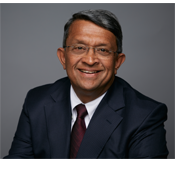
Ramesh Ramanathan is the Chairman and Managing Director of Sterling Holiday Resorts Limited, a leading leisure hospitality brand in India.
An alumnus of the Indian Institute of Management-Calcutta, he has a rich experience of over 4 decades spanning across a range of industries, out of which, he has spent more than 25 years, leading organizations in the leisure hospitality space.
Mr Ramanathan's career in the leisure industry began with Sterling Holiday Resorts in 1991, where he worked to successfully position the company in the Global Vacation Ownership market. Also, as the founder of Mahindra Holidays and Resorts, Mr. Ramanathan is responsible for the establishment of the Club Mahindra brand.
Between these two organizations, Mr. Ramanathan has brought tremendous focus on leisure in general and domestic tourism in particular - and has been instrumental in putting many exotic destinations on the Indian tourist map: Munnar, Coorg, Yelagiri, Ashtamudi, Karwar, Kumbalgarh, Kufri and Binsar, to name a few.
Returning to Sterling in 2011, Mr. Ramanathan has transformed the company from being a Vacation Ownership company to one that straddles the leisure hospitality business - with two strong verticals: The Membership Business and the Hotel Business that includes individual guests, corporates (MICE), Destination Weddings, Reunions and Picnics. Under his leadership, Sterling re-launched its brand in December 2017.
The advancement of the company under him was furthered by its acquisition by Fairfax Financial Holdings Limited - a global investment and insurance holding company, headquartered in Toronto, Canada with global assets worth more than USD 74 billion.
Mr. Ramanathan is the Founder, Member and an Ex-Chairman of the All India Resort Developers Association (AIRDA) and has served on the National Committee of Tourism, Confederation of Indian Industry (CII). Outside of the business world, Ramesh is also a connoisseur of art and Carnatic music.
ET: The Covid-19 pandemic has suddenly turned the world upside down. The hospitality sector perhaps felt the biggest brunt. How has the sector coped?
RR: This has been a singular year for all of us due to the Covid-19 pandemic. Our country's economy was the fastest growing one in the world - but last year, our GDP contracted by nearly 8%. The hospitality industry was perhaps the worst affected, taking a hit in excess of Rs. 1.3 Lakh Crore in revenue due to the pandemic.
However, different segments within the hospitality industry were impacted to different extents. Typically, business hotels that depended more on business travel and foreign guests were impacted severely and are taking longer to recover. The continued restriction on inbound arrivals and the increasing trend of work-from-home policies among corporates impacting business travel, has meant that business hotels are seeing a "U" shaped recovery and are having to resort to reductions in average room rates (ARRs) and value-added products like staycations to try and increase occupancies.
On the other hand, resorts in the leisure hospitality segment, located in holiday destinations have seen a "V" shaped recovery. After the first lockdown there was a quick resurgence of tourists - as a consequence of people being confined to their homes for a prolonged period - what can be called 'revenge tourism.' The continued restrictions, especially for inter-state travel and the overall worry that people had about public transport, meant that most holidaying was to drive-to destinations.
The travel and tourism industry is known for its resilience. Even though it bore the brunt of direct impacts of the on-going pandemic, the sector has been quick to adapt and modify according to the latest practices and align itself to the priorities of its guests. By quickly adapting new and stringent measures of hygiene and safety, the larger companies have been able to give the guests reassurance and confidence to holiday post the lockdown.
Smaller companies with stand-alone properties are finding the going tough, while we can expect larger chain-properties based companies to be able to withstand the impact better and come back strong.
ET: Globally, the rise in vaccinations has created a surge called 'revenge vacations'. Is the Indian hospitality sector also seeing a revival? What is your prognosis?
RR:
After the first lockdown, there was a lot of confusion, both in people's minds and in the way states were imposing travel restrictions. While the pent-up need did see an upsurge in 'revenge tourism' most of it was restricted to drive-to holidays within the state. There was also a clear trend of people making last minute bookings, 1 or 2 days before the start of the holiday, owing to the fluid situations prevailing.
On the other hand, post the second lockdown, there has been much better clarity. The lifting of lockdowns and the gradual relaxation of travel restrictions was smoother, and the people too were clear on how to handle the restrictions and were sure about what to do. The booking window is once again going up to 5 to 6 days and there is booking a month earlier for the post-Diwali high season periods.
For the first time, we are seeing bookings during the festival season which are comparable to pre-Covid times.
The increasing coverage of vaccinations has had a clear and positive impact on the confidence of people to holiday. Most larger players in the industry too have taken active steps to ensure their staff are fully vaccinated.
Some trends are continuing though. We are seeing guests preferring to travel to destinations that are away from the hustle and bustle of the cities, but are not wanting to travel too far. They are preferring to travel to destinations that are 3 to 4 hours from the city.
Sterling has observed that guests are cautious and more aware and prefer going to resorts with all the safety measures and necessary precautions in place. And it is important that hotels and resorts closely work with the local authorities and health departments in implementing the latest practices and processes.
ET: Please share your thoughts on the use of technology in the hotels & tourism sector. How will this shape your industry?
RR:
With the onslaught of the pandemic, technology has seen increased use over the last one year, right from QR code embedded menus for dining experience to seamless pre-arrival check-ins and check-out procedures. Communication options for sharing and updating the e-pass to the hotels directly also has assisted in travellers securing their holidays before they start their journey. Digitalization in the hospitality industry will always be a welcome move. Automation improves productivity and customer satisfaction enabling increasingly efficient, minimal-contact service delivery. Digitalization has provided guests with the perfect mix of impeccable service without compromising on the Covid protocols.
ET: Can you tell us about your company, Sterling Holidays? How has your firm adapted and modified its business model to meet the demands of the post-pandemic travellers?
RR:
Sterling Holidays is one of the leading brands in the leisure hospitality segment. Sterling currently has over 35 resorts, across the country, aimed at meeting the multiple holiday needs of the Indian customer - from leisure holidays in the hills, beaches, waterfronts and jungles to quick breaks in drive-to destinations, to visiting heritage locations and pilgrimage destinations. It also owns a subsidiary company - Sterling Nature Trails with 4 adventure resorts.
Our aim is to continue expanding and come up with more resorts across the country. With the recent announcement of 5 new resorts at Alleppey, Gir, Kalimpong, Madurai and Tiruvannamalai, Sterling's inventory will move to 2,400 rooms in 38 destinations. This is in line with the brand's aggressive strategy to double our room inventory to 5,000 rooms by the year 2025. The approach will be to continue to expand using an asset-light model of taking up resorts on Management Contract.
31 Sterling resorts are rated greater than 4 [on a scale of 5] on Trip Advisor. 2 resorts were recognized by Trip Advisor as the Best of the Best and featured in the top 25 Hotels for families in India and Asia.
Sterling has a unique hybrid model: It has a membership business and also sells holiday packages like a regular hotel. In the membership business, Sterling was a pioneer, introducing the concept in the country and has more than 100,000 families as members. It has two types of memberships: The flagship 25-year membership and a 10-year membership primarily targeting Millennials.
Along with selling regular holiday packages, Sterling also caters to conferences, destination weddings, reunions and more recently to picnics too.
Sterling also was impacted by the pandemic but recovered smartly. While following guidelines on lockdowns and adhering strictly to safety protocols set forth by the State & Central Governments, Sterling used the lockdown periods to change its strategies and took up several measures to cope with the situation.
Sterling adopted several digitalization measures in order to make changes in the processes followed in the resorts enabling: minimal contact check-ins, food ordering through digital means and QR codes. All resort staff were vaccinated to protect them and the guests. Staff were multi-skilled to optimize manning during the low occupancy periods.
The entire Member Acquisition process, which used to happen face to face, was made virtual in line with the Covid norms. Sterling also introduced a lighter version of the membership - Vantage - a 10-year membership, aimed specifically at Millennials, which proved highly successful.
Sterling has launched several sub-brands that add new experiences for the guests and are revenue generating opportunities within the resorts:
"Sterling LOCAL" - is our new signature Resto Bar with a unique concept. True to its tagline "Celebrate. Desi." - LOCAL celebrates everything desi, highlighting the local flavours, using local ingredients to give international favourites a unique twist. While the concept is constant across resorts, the menu changes from resort to resort.
"Sterling Subuthi" - is our re-launched Spa where customers can "Discover Good Living." With therapies ranging from 10-minute mini-treatments to 90 or 120-minute deep therapies, the Spas pro-vide a set of signature therapies unique to Subuthi.
"Sterling Swirl" are weekend specials. Saturday night barbecues and Sunday morning brunches that provide the guests with fantastic gastronomic experiences to enjoy with the family.
Recently, Sterling has launched "Pet friendly resorts" for its members to bring along their canine pets on holiday - with special packages, treats and services aimed at the pets.
Sterling is also launching "Sterling Picnics" for guests to escape from the city and pamper themselves while they spend quality time with family and friends in the resorts. The resorts are well spread out with a lot of greenery and naturally lend themselves to social distancing. Further, the resorts are equipped with unique Discoveries and Experiences to keep guests engaged within the safety of the resort.
To make sure the post-pandemic traveller has a worry-free vacation, Sterling Holiday Resorts introduced Sterling CARES - a 360-degree hygiene and sanitation protocols, in association with Apollo Clinics to reassure its promise of safe and hygienic holidays. The norms and procedures that have been introduced are in line with guidelines from the Government and institutions like WHO and ICMR. It encompasses various practices for the staff and guests to be followed at all times within the resorts. SOPs such as mandatory temperature checks, self-health declaration forms, availability of masks for purchase and frequent sanitisation of high-access touch points have been made a part of our daily hygiene standards. The resort staff have also been fully vaccinated to ensure maximum safety for our staff and our guests.
The brand is also the first and only one to design and offer an exclusive 'Holiday insurance' as a free opt-in feature during booking, which covers guests up to Rs. 3,00,000/- per person in case of cancellations, medical emergencies, etc.
ET: While the uncertainty still remains in this space, what advice would you like to convey to our readers who would like to pursue a career in the hospitality sector?
RR:
Many industries are seeing a sea-change as an impact of the pandemic - with virtual connect becoming a reality. We expect leisure hospitality to adapt itself and grow out of this pandemic. As more and more people get vaccinated, we can expect them to start travelling freely once again. The work-from-home culture will also see more people opting to spend the weekdays doing "work-from-resort" or staycations. We are also seeing a clear trend of increasing Destination Weddings - as an alternative to the "Big Fat Indian Wedding" in the cities.
The best thing going for leisure hospitality is that there is no digitalization of the "actual vacation" - people still want to go on "real holidays" and hence this sector will continue to grow.
Leisure hospitality will come back and strongly at that. In the current scenario, a lot of importance will be given to employees who are multi-skilled or have the ability to stretch and assist other departments. Hence up-skilling while having expertise in your specific area is needed.
back to top ^
|





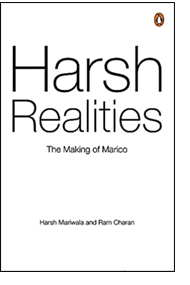
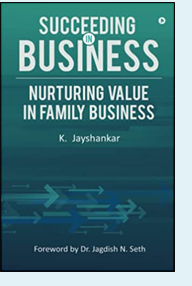 What is common between Walmart, Reliance, Toyota, Samsung, Ikea, WIPRO? They are all Family Businesses. Many of the world's biggest businesses are owned by families, and many have thrived over decades, generating employment, and contributing immensely to their country's GDP.
  This book offers answers to the vexatious issues that families face in their growth journey. The pointers provided can be used as a guide for nurturing the business and to leverage the traditional strengths that family businesses possess. The pitfalls that can derail a business are well illustrated to serve a cautionary lesson against value destruction of family wealth. The emerging role of women in family business is also highlighted. The book is replete with real examples to make the principles and practices come alive for a reader. This book will be a powerful guide to a family that intends to perpetuate its business and navigate a wise path to the future.







 The ELS Lotus logo is trademark of Empowered Learning Systems