|
|
|
|
| |
Dear Reader,
Leading an organization is challenging even in the best of times. Add in disruption and uncertainty and the task to manage everything around becomes herculean. During such times, leaders need more than just strategic thinking and problem-solving skills. To be calm in an otherwise chaotic environment is the need for the hour. Here is where coaching as a powerful tool for leaders comes into the picture. Coaching provides leaders with the much needed space to step back and reflect on the chaos around them in a constructive way.
Leadership coaching has evolved to the most sought-after mediation to prepare leaders for the future. The demand for executive coaching sessions are expected to rise in the new normal as leaders try to normalize and adapt to the new settings & challenges ahead.
ET this month looks at the 'Why coaching matters for developing leaders.'
On the Podium, Life & Executive Coach, Rajiv Vij shares his perspective thoughts on the transformative powers of coaching and the difference it has made to leaders. Despite the difficulty in measuring the impact of coaching, Rajiv drives home the message that coaching can help managers through the inner journey of change to greater leadership.
In the Thinking Aloud segment, Jay shares his thoughts on how the coaching function has evolved and continues to play an important role in moulding leaders.
In the We Recommend section, Jay reviews Rajiv Vij's book – Inside-Out Leadership. The book is an account of the author's personal journey of transformation from a successful corporate leader to embark upon his true calling of becoming a life coach to lead others.
In Figures of Speech, Vikram's toon is with you all the way up!
Please also Click Here to check out our Special issue of ET, which is a collation of selected themes that were featured over the years highlighting the changing landscape of the business world. This special edition has been well received and can be Downloaded Here for easy reading and is a collector's item.
As always, we value your opinion, so do let us know how you liked this issue. To read our previous issues, do visit the Resources section on the website or simply Click Here. You can also follow us on Facebook, Twitter & LinkedIn - where you can join our community to continue the dialogue with us!
|
|
|
|
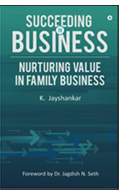
Out Now!
Succeeding in Business: Nurturing Value in Family Business
What makes some family businesses grow from strength to strength? How do you ensure that value is created and not destroyed when a business passes hands from one generation to the next in the Indian context? How can old families incorporate new ideas to revitalize themselves? Is there a role for professional management in Indian family business?
This book offers answers to the vexatious issues that families face in their growth journey. The pointers provided can be used as a guide for nurturing the business and to leverage the traditional strengths that family businesses possess. As a counsellor and trusted advisor, the author, K. Jayshankar (Jay), has had a ring-side view of how family businesses have functioned. The practical insights drawn from his experience of four decades has been combined with conceptual elements to become a valuable primer for a family that wishes to succeed in the competitive marketplace that is India.
|
|
Click below to order your copy now


Special offer for Empowering Times readers. Get 30% discount by using coupon ETSPECIAL on the Notion Press online store.
Click here to connect with Jay.
|
|
|

|
|
It's lonely at the top, is a common saying used to describe the anecdotal plight of the Chief Executive Officer (CEO). But there are CEOs today who have decided that the old mold is inappropriate to current times and choose not to be secluded and lonely. These are the ones who operate by the dictum, 'I can see far, but with a coach I can see farther'. That pithy line, to my mind, summarizes the central value that is provided by a coach. Such benefit is in essence very personal, and is not amenable to blind duplication, as needs vary between two individuals.
From the early days of remedial coaching ('fix this problem in this manager') to a developmental approach ('groom her for bigger roles'), the nature of coaching has undergone major change. With organizations populated by large numbers of management graduates, the need for inputs related to business knowledge has reduced, and Learning and Development departments are leaning more towards individualized coaching. True managerial development is a process that involves unlocking potential by enhancing confidence to push personal limits in the quest for business growth. At the highest echelons in a firm, the leadership challenge is multifold. Senior managers find it difficult to acknowledge their vulnerability in public, as organizations do not view failure kindly. In a competitive world where others look at them for answers, few are willing to state that they are seekers too. Often there is a projection of outward calm but deep within the person, there is a sea of insecurity that is waiting to be navigated. Very few people are given a glimpse of these stormy waters, one of whom is the coach who becomes the guide to enable the leader to handle the choppy waters.
Leadership is less of a burden when a team has been created and common commitment has been generated amongst members. Even if this has been done, the skipper needs someone to speak to. Recognizing this, it is no longer heresy to admit that the CEO turns to someone from outside the firm to have candid conversations. Confidentiality apart, the deep, empathetic, and non-judgmental listening that the coach provides is invaluable in enabling the leader to unwind, reflect and reorient himself. While the coach may nudge and suggest ideas to arrive at solutions, readymade answers are rarely, if ever, provided. The philosophy of coaching is to enable individuals to look within and generate resolutions themselves.
However, it is not about mollycoddling managers. If necessary, the coach is prepared to challenge the manager. The words of the famous Aussie Hockey coach, Ric Charlesworth, ring true that, 'The interesting thing about coaching is that you have to trouble the comfortable, and comfort the troubled.' Personal growth demands creative ideas and a willingness to push boundaries. Having a coach with you ensures that it becomes a calibrated exercise where your goals are accomplished without compromising on the essentials. The pressure of quarterly targets has tempted many CEOs to cut corners, as is well documented, and having a coach to gently keep you on the straight and narrow, is priceless.
However, the reality is that coaching is not a panacea for corporate leadership shortcomings. At the individual level, it takes two to tango, and unless there is eagerness to learn and apply new ideas, behaviour shifts will not occur, and no coach can compel change. Further, it is simplistic for firms to expect a transformation in individuals if other organizational support systems are not in place. If the firm has too many hurdles, and a toxic culture which rewards wrong behaviour in its quest for quick returns, expecting change in managers is an exercise in futility. Lack of authenticity of senior management, coupled with mere HR rhetoric – not unknown in many firms – creates a false expectation of transformation through the coaching mode. The seasoned coach is willing to call the bluff of management by explaining the boundary conditions for effective results, including patient investment of both time and financial resources. These aspects are best negotiated before-hand to avoid post-purchase regret.
The coaching business has grown rapidly in recent times, and quantity does not automatically create quality. The principle of caveat emptor is worth remembering, as the growth of the certification industry has flooded the market with many wannabe coaches, flirting with psychometric assessments, and masquerading with templates that promise rapid solutions to the growing number of challenges, both at the workplace and at the domestic level. If only the world operated on mechanistic principles that could be resolved with an Ikea d-i-y approach!
The psychological contract in organizations that the well-known organizational theorist, Harry Levinson, spoke about is under tremendous strain as employees limp back into the post-pandemic workplace. Leaders are clutching at straws for effective responses, as the bottom-line demands need to be balanced with the sudden surge in attrition that threatens them, with employees seeking greater flexibility after tasting the benefits of months of work-from-home.
If ever leaders needed support, it is now, and smart firms will proactively provide coaching as a tool for development at this hour.
back to top ^
|
|

|
|

Rajiv Vij is a life and executive coach, author and speaker. He works with senior leaders of several Fortune 500 companies and other large organizations across Asia and India and has been a coach to industry leaders like Arun Nanda (Chairman, Mahindra Holidays), Harsh Mariwala (Chairman, Marico), Rajesh Jejurikar (Executive Director, Mahindra & Mahindra), Raman Ramachandran (former Chairman, BASF India) and Sanjay Gupta (former Chairman, American Express India). He also voluntarily coaches a number of founders and leaders of social sector organizations.
He is the author of two books, including his latest book, Inside-Out Leadership: 16 radical insights successful leaders wish they had discovered sooner. Prior to finding his calling and starting his coaching practice in 2006, he served as Managing Director, Asia for Franklin Templeton.
ET: Let's begin with the eternal question: can leaders be truly developed or is the temperament or qualities inherent in their persona?
RV: Over the past fifteen years, I have had the privilege of working with hundreds of leaders across Asia and India. Through all this experience, two things stand out for me: one, that all good leaders have the potential to be great. And two, the journey to greater leadership, and for that matter a richer life, lies in the work we do with our inner selves.
Most leaders I work with are already successful - they have the necessary industry know-how and business acumen. But what they benefit the most from is the work they do in deepening their self-awareness, understanding and regulating their emotional triggers that make them insecure, agitated or stressed, learning about their limiting beliefs and creating a healthy mindset, going beyond numbers and outcomes and being inspired by a sense of purpose and taking greater personal responsibility of their actions.
It's the extent of the self-work they do and the inner transformation they experience that makes all the difference to the quality of their external leadership. In this background, and in my experience, those who are willing to do the inner work can grow their leadership irrespective of their starting point.
ET: As organizations transform, the journey of change for managers can be challenging. How can coaching help in this regard to develop leaders and how do you measure the impact of coaching?
RV: Even though inevitable, change is difficult for all of us. Besides the visible changes that organizations expect and drive, each leader goes through a very personal and inner journey of change. Leaders experience their own emotional roller coaster – from excitement to nervousness, from hope to doubt and from appearing calm to dealing with a storm within. Coaching can support leaders in the inner journey of change. Coaches can help leaders become more self-aware of their physical, emotional, mental and spiritual being – not only how they are being in different situations, but also how they would like to be. Coaches also support leaders in enhancing their sense of personal responsibility in driving these personal changes within.
The impact of the work can be measured in two direct and experiential way. The first is the change that the leader going through the coaching journey experiences. They are clearly able to establish correlation with their coaching work and their altered effectiveness. The second measure relies on the change in how the leader is experienced by their ecosystem (manager, peers, team members) before and after the coaching engagement.
ET: Coaching offers a positive dimension & increasingly companies are waking up to it. What are some of the pain points that keep organizations from engaging with external specialists?
RV: I would say there are a few reasons that hold organizations back from embracing coaching as a significant developmental tool for leaders.
First, it's not easy to measure the impact of coaching. There can be reasonable lag between the leader internalising the changes they need to make, making the effort to manifesting those changes and finally for those changes to be perceived by others. Even then, it's not easy to quantify the monetary value of the positive shifts that a leader makes. If an organization is overly focused on ROI, this could be a concern.
Secondly, each Coach tends to have their own methodology and it becomes challenging for organizations to find the right match between what they are looking for and what individual coaches offer. Thirdly, coaching is an unregulated industry and there's a significant range of capability possessed by coaches. Sometimes, an unhappy experience by an organization or a leader can lead to a poor impression of what coaching can deliver. Lastly, experienced coaches can be expensive.
ET: Please share from you experience how business leaders at the highest level have been coached to become risk-takers.
RV: I am not sure if I have coached a senior leader to specifically become more of a risk-taker – as in, this hasn't come up as a stated opportunity for development for any of them. However, it's possible that some of the work leaders have done with me in their becoming more secure, confident, assertive and courageous might play out with their ability to take more risks.
Separately, I have worked with a number of leaders who are looking to find their 'next innings' but are sometimes hesitant to pursue it. Considerations like financial security, status and fear of failure often crop up. However, the work they are able to do with identifying their true selves, connecting with their core values and needs and discovering their life purpose, often inspires them to commit to a new path that's a better expression of them and that serves others in a more meaningful way.
ET: You gave up your corporate career to begin to teach how to lead a holistic life as a Life and Executive Coach. How has your journey been so far and what are some of the challenges you faced along the way?
RV: It's been a wonderful journey and I feel blessed every day. From a professional perspective, what started as a personal passion, like a vocation, has become a successful business practice. I am working with a number of senior leaders from a spectrum of organizations across the region, from Fortune-500 companies and large Indian multinationals to independent businesses and NGOs. More importantly, seeing clients experience deep shifts is hugely rewarding for me.
At a personal level, I have been very disciplined. While coaching is my primary passion, I restrict it to six hours a day, so I can have time to meditate, exercise, spend time with the family, read and write. I write a blog and recently had my second book published. I lead a simple life but try to pursue things that I find most fulfilling.
One key challenge is to stay deeply connected with my purpose. When I started and my practice was small, it was important to remind myself about why I was doing what I was doing, even if it was small. As the practice has grown, I notice, it's easy to get sucked into the numbers and the measurables; and I need to keep reminding myself of the larger purpose – the primary reason I am pursuing this path which is to continue on my journey of personal and spiritual growth and help others in theirs.
back to top ^
|
|
|
 |
Mumbai Roti Bank, a non-profit, food rescue organization initiated by Roti Foundation, Mumbai, bridges the gap between hunger and excess food. Started in December 2017 under the able mentorship of former Director General of Police, Maharashtra, Mr. D. Sivanandhan, the organization aims to eliminate hunger, malnutrition and food wastage, many meals at a time. Help make a difference by calling +91 86555 80001 to donate food or by making a contribution.
|
|
|

|
|
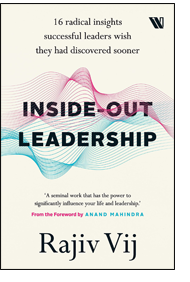
Books on leadership are par for the course for most business leaders for they adorn corporate (and personal) bookshelves as they make good backdrops for photo ops. So when you come across another one, you may be tempted to ignore it. But, Rajiv Vij's new offering, Inside-Out Leadership, merits different handling.
To understand why this should be so, I would urge the sceptical reader to begin with a quick read of the first few pages of Insight 12, where Rajiv recounts his own personal journey of transformation. From a super-successful corporate leader in the financial sector to finding his true calling of becoming a life coach to serve others, this has been a journey which has been a fulfilling odyssey, as Rajiv narrates in the book. And, as in such intensely personal explorations for a true seeker, the journey is the destination.
The book's strength lies in the collection of ideas and concepts that Rajiv has researched and tested, both with himself and with his clients, over his years as a coach to high-powered executives, and many others. From distilling them into a framework - the Inside-Out approach in the author's words - the focus is to accentuate the application of well-known self-help principles through personal actions that are simplified at the end of every chapter for the reader's use. Peppered with various examples from his coaching practice, the sixteen insights that are offered together address the key leadership challenges that today's business executives are grappling with. The issues by themselves are not a mystery to the business leader, but in the hurried quest to deliver the maximum impact, the individual's cognitive brilliance becomes the hurdle in many ways. The resultant frustration sometimes trigger a series of missteps that can flame out an outstanding performer at the workplace, or sadly generate collateral damage at home. The book invites the reader to examine where the faults could lie, in particular by going beyond the workplace symptoms (be it aggression, stress, workaholism, etc.) to the underlying limiting notions that are the root cause of behaviours in such persons.
If there is one big take-away from the book, it is Rajiv's emphasis that there is a need for balance to enable a wholesome life. In a fast-paced world where myriad tasks compete for our attention, the tendency to multi-task is normal for most of us. Not being trained jugglers, the net result is ineffective outcomes, leaving many us under greater stress than before. Amongst various suggestions that Rajiv offers, he underlines the importance of mindfulness for leaders, for instance, and shares ideas to develop the skill. A believer in active reflection to enable one to pause, savour the moment and learn from experience (rather than mechanical reaction to situations), the book lays down a route to a fulsome, purposeful and truly satisfying path by harnessing the trifecta of heart, mind and soul.
To the cynic, the ingredients of the Inside-Out framework may sound cliched at times, as Rajiv insists that 'the universe is evolving perfectly at all times'. However, let us agree that blind pursuit of mammon has created dangerous precedents not just in the world of business but also raised questions of sustainable growth of the planet. In that context, the message of authenticity and humility that Rajiv exhorts to leaders is worth heeding for creating a balanced and happy workplace, nay society.
For those who seek inputs to become great in their leadership role, this book would be an excellent road map as it offers powerful ideas in a simple manner to guide personal action. Use the framework, create your personal pathway and practice the principles – and reap the rewards of a balanced and fulfilling life.
back to top ^
|
|
| |
|
THROUGH THE LENS
|

|
Our in-house nature enthusiast, Rupesh Balsara shares a picture of the Red-backed Shrike, an inhabitant of woodlands and bushy areas. These tiny birds are found in Europe, central and west Asia with their Autumn migratory passage occurring in Gujarat, Pakistan and northern Africa. Their diet mainly consists of insects and small vertebrates.
|
|
|
|
Empowered Learning Systems
www.empoweredindia.com
101, Lords Manor, 49, Sahaney Sujan Park,
Lullanagar, Pune – 411040,
Maharashtra, India


|
 The ELS Lotus logo is trademark of Empowered Learning Systems The ELS Lotus logo is trademark of Empowered Learning Systems
©2021 Copyright Empowered Learning Systems (ELS). For private
circulation to clients and well-wishers of ELS. While ELS endeavors to ensure
accuracy of information, we do not accept any responsibility for any loss or
damage to any person resulting from it.
|
|
|
|
|
|
| |