|
|
|
|
| |
Dear Reader,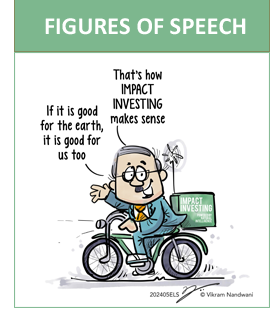
Impact investing is the new concept on the block and another important way of thinking about money. Unlike traditional investments that focus only on financial returns, impact investing aims to generate positive social and environmental outcomes alongside economic gains. This approach is more than a trend; it is a vital response to the pressing challenges of our time.
Impact investing helps tackle big issues like climate change, poverty, and inequality. This approach attracts a diverse group of stakeholders, including millennials and Gen Z, who are particularly driven by values-based investing. Companies that prioritize social responsibility often perform better in the long run because they are better at handling risks and saving costs.
Additionally, the rise of impact investing promotes transparency and accountability. Investors demand measurable outcomes, leading to better reporting standards and practices. This transparency fosters trust and ensures that funds are genuinely making a difference.
Empowering Times (ET) this month looks at 'Impact Investing: Why it Matters', exploring its significance in today's world.
In the Thinking Aloud section, Jay looks at the rise of conscious capitalism and impact investing, highlighting how these approaches aim to balance financial returns with social and environmental benefits, contrasting them with the failings of traditional capitalism and socialism. On the Podium, Eric Savage - Co-Founder and CEO of Unitus Capital, discusses the principles and challenges of impact investing, which aims to generate both financial returns and positive social or environmental outcomes, and explains the metrics used to measure these investments, including financial metrics like internal rate of return and social impact frameworks aligned with the UN Sustainable Development Goals. In the We Recommend section, we review 'Impossible to Possible' by R.C. Bhargava which details the history and success of Maruti Suzuki under his leadership, highlighting effective management practices, strategic partnerships, and the adoption of Japanese techniques that transformed the Indian automobile industry.
In Figures of Speech, Vikram's toon rides the impact investing wave.
Please also Click Here to check out our Special issue of ET, which is a collation of selected themes that were featured over the years highlighting the changing landscape of the business world. This special edition has been well received and can be Downloaded Here for easy reading and is a collector's item.
As always, we value your opinion, so do let us know how you liked this issue. To read our previous issues, do visit the Resources section on the website or simply Click Here. You can also follow us on Facebook, LinkedIn, X, Threads & Instagram - where you can join our community to continue the dialogue with us!
|

Order Now!
Succeeding in Business: Nurturing Value in Family Business
Click below to order your copy now


Special offer for Empowering Times readers. Get 30% discount by using coupon ETSPECIAL on the Notion Press online store.
Click here to connect with Jay.
|
|
|

|
|
Adam Smith's invisible hand did not quite steer the market in an equitable manner, as we now realize. The violent Marxist tried to correct the societal discrepancies but only ended up creating its own class of privileged leaders proving Orwell's words, 'all animals are equal but some animals are more equal then others'. But when all is said and done, the Pigs do rule in every country, and can justify their actions by spouting ideology (religious, economic, gender, history, or a heady mix of all of them) to sustain their claims of first (and often, best) access to resources in the world.
A cynical view of the world, one might say, but realism is a hard drink to swallow. However, there is hope. A counterculture has arisen around the world that has seen the damage done by rapacious and unbridled capitalism and the equally depraved socialistic approach of wallowing in equalized poverty. A new breed of conscious capitalists has arisen who have built firms of endearment (see the book by Jagdish Sheth, David Wolfe and Raj Sisodia). To them, building a company is not just about money – not that the financial metric has ever been ignored – but they have never lost sight of the interdependencies that goes into making the system whole. To them, providing a fair deal to stakeholders is as important as ensuring returns to shareholders. Radical though this idea seemed a few decades ago, thankfully its message of conscious capitalism is growing. With the rise of Environmental, Social and Governance (ESG) as a framework for creating a sustainable business, the values espoused by a forward looking firm makes them an attractive investment option for a class of investors who subscribe to these principles.
The concept of impact investing is one such growing phenomena. Loosely termed as 'purpose driven profit', the intent is to generate decent profits (not obscene returns) while playing one's part in creating a just society where the needs of the under-funded, under-developed, socially backward players (amongst others) is not forgotten. Cognizant of the reality that typically funds flow only to those who monopolise the means of production (thereby ensuring superior financial returns), impact investors are willing to be satisfied with sub-optimal or average financial returns if there are measurable benefits on other social fronts. A case in point is whether the firm which is funded is taking measures to address the United Nation's Sustainable Development Goals (SDGs) of 2030. An inequitable distribution of income (and misuse of natural resources) across the globe is not just unfair from a moral sense but also dangerous to the planet as it could trigger events that can be catastrophic in multiple ways.
Arguably, the financial industry is no poster boy of moral righteousness and clean conduct. Popular media has not hesitated to present Bankers as 'wolves' and tales of greed and malfeasance abound. Painting them as villains and devils is not difficult when you consider that global damage has been created through market collapses in repeated cycles of history. Financial innovation, however, has continued over decades, and recent years have seen microfinance, crowd funding, use of digital technology, crypto currencies, etc., as game changers in society. Another notable one has been the emergence of Impact Investing.
There is some debate still whether this is genuinely the application of money with conscience or a clever attempt to 'green wash' the true intention of investment bankers. But the wider consensus is that it is not a passing fad, fraud, or sharp practice. The excesses of financial lenders and the plush lifestyles of bankers has caused a lot of comment in society. However, let's not grudge the financial expert who deploys capital well and earns a good living. After all, a poor banker is essentially a bad banker – and your credentials don't include being a plain socialist Joe.
The scenario in India, according to various reports, is that the benefit of impact investing is rising. Amongst the reasons offered is the role of the government's Atal Innovation Mission which intends to give a push to start-ups in fields like energy, health, agriculture, etc., using the best of modern technology. Apart from the role played by private funds, government agencies are also in the fray. Case in point, the Samridhi Fund from the Small Industries Development Bank of India (SIDBI) which targets social enterprises in eight low-income states that are laggards on various economic and social yardsticks. And, the latest innovation is the Social Stock Exchange which promises to provide a platform for both for-profit and not-for profit social enterprises to raise capital.
There is no dearth of projects that are crying out for funding. The popular ones continue to be Clean Energy, Affordable Housing, Healthcare, etc. But one glance at the SDGs show that there are many domains that need support, be it through equity or debt. Admittedly, the world of finance can be a springboard for global change.
Time for Bankers to shed their diffidence and tell the world that their preferred route is Impact Investing: making good while being good!
back to top ^
|
|

|
|
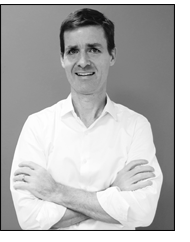 Eric Savage is the Co-Founder and CEO of Unitus Capital (UC), and a Partner of the UC Impower Fund. Eric moved to India in 2007 to help set up UC, an impact-focused investment bank and has led the company in raising over US$ 4 billion for various high-impact businesses. He has had the privilege of working with many innovative companies that do life-changing work in climate solutions, financial inclusion, affordable education, women empowerment, and agritech. UC has been repeatedly ranked #1 most active Indian investment bank by Venture Intelligence and VCCircle since 2013. Eric is also a Founding Partner of UC Impower, an impact equity fund. He is also a Co-Founder of UC's impact private credit business, UC Inclusive Credit which is scaling rapidly and profitably. Previously, Eric ran Citigroup's Asian investment banking franchise in the power and infrastructure sectors and helped secure and execute multiple landmark equity, debt, and M&A transactions, totalling many billions of dollars. Eric was based in NYC and Hong Kong for 14 years with Citigroup/Salomon Brothers. He also headed Salomon's utilities sector equity research and was selected for Institutional Investors' All-Asia research team.
Eric is a graduate (cum laude) of Duke University and Harvard's Kennedy School, where he received the Lucius N. Littauer Fellow Award, the program's top honor. Eric serves on the boards of several leading companies, funds, and educational institutions. He was a member of the Duke Alumni Board and serves on the Board of the Duke/Fuqua Impact Investing Initiative. Eric was named the Indian Expat Entrepreneur of the Year by Expat Entrepreneurs Circle. He is a Fellow of the inaugural class of the Aspen Institute's Finance Leaders Fellowship Program.
ET: How do you define impact investing and what sets it apart from traditional investment approaches. In particular, what are the metrics to measure these investments?
ES: Impact investing is investing to generate both financial returns and positive social and/or environmental impact. Of course, traditional investing typically focuses solely on financial returns. Impact investors place capital in businesses and funds that harness the power of markets to create positive economic and social gains.
Measuring financial returns is straightforward through an internal rate of return (IRR) and/or the return multiple on invested capital. For example, for our UC Impower fund, we are confident of generating a net IRR of at least 20-25%.
Measuring social impact is very important but is considerably more complicated. There are multiple frameworks, and they aren't as intuitive as an IRR calculation. Cathy Clark at Duke University has done incredible work on impact management and measurement (IMM) that has informed our UC Impower approach. We adhere to the IFC's Operating Principles for Impact Measurement so we measure, manage and report the impact created by the portfolio companies and their contribution towards the UN Sustainable Development Goals (SDGs). The fund uses the IRIS+ core metric sets to embed IMM into its investment process from investment through to exit. We have a detailed Impact Policy that lays out the vision, impact goals, tracking, governance and reporting mechanism that the fund employs.
For each investment, we have impact goals that are in line with the company's targets and our targeted SDG outcomes. Naturally, these impact goals will be different if one company is an affordable housing finance company and a second company converts seaweed into a plastic substitute. These goals are tracked throughout our investment period and reported to our investors. The fund produces an annual impact report in addition to its financial report to provide a comprehensive view of its performance.
ET: With your extensive experience, what do you see as the primary challenges facing the growth and adoption of impact investing globally?
ES: The impact investing sector has gained significant momentum but remains relatively small compared to the mainstream, legacy capital markets. In 2022, the Global Impact Investing Network (GIIN) estimated the size of the worldwide impact investing market to be ~US$ 1.2 trillion. While that is a massive number, it is less than half the market capitalization of individual companies like Apple or Microsoft. Moreover, it represents only a fraction of the investment needed to achieve the Sustainable Development Goals (SDGs). For instance, Standard Chartered Bank estimates that India alone requires US$ 2.6 trillion in investment by 2030 to address the SDGs.
One of the primary challenges facing the growth of impact investing is the misconception that it cannot generate strong financial returns. Demonstrating that impactful investments can also be financially rewarding is key to attracting more investors to the sector. For example, Unitus Capital, our impact-focused investment bank, has published data on over 50 exits facilitated in recent years, showing a median internal rate of return (IRR) of over 40%, which is notably high. While there is some bias in the data, it illustrates that impactful investments can indeed deliver superior financial returns.
Another significant challenge is the lack of a universally accepted and intuitive method to measure impact. Having a standardized approach would enable investors to target maximizing social impact in a way similar to how traditional investors aim to maximize financial returns. Furthermore, if a universal impact investment measurement framework were developed, it could potentially allow Corporate Social Responsibility (CSR) funding to be directed towards impact investing, unlocking a substantial pool of capital. Thoughtful government regulations, such as priority sector lending (PSL) regulations in India, have demonstrated the ability to channel significant amounts of capital towards impactful companies, including catalyzing the growth of the world's largest and most successful microfinance market.
ET: How do you navigate the balance between financial returns and social/environmental impact when making investment decisions?
ES: For the past 16 years, Unitus Capital and other impact investors have demonstrated that strong social impact and financial returns can be achieved simultaneously. This alignment is crucial, as achieving strong financial returns attracts more capital, which in turn drives significantly more social impact.
At UC Impower, we have developed a clear impact thesis centered around the principles of affordability, accessibility, inclusivity, and environmental sustainability. This focus aligns with making an impact on several UN Sustainable Development Goals, including Gender Equality (#5), Affordable and Clean Energy (#7), Decent Work and Economic Growth (#8), Industry, Innovation and Infrastructure (#9), Responsible Consumption and Production (#12), and Climate Action (#13). We rigorously screen potential investments to ensure they align with our impact thesis. From the hundreds of companies that match our impact criteria, we select those that maximize our financial returns. We believe that generating very strong financial returns is crucial for attracting more capital to the impact investing sector, ultimately maximizing impact in the long run.
While UC Impower follows a strategy that prioritizes financial returns alongside impact, it's important to note that other impact investors may take a different approach. Some investors are "impact-first" and prioritize social or environmental impact over financial returns. This diversity in approaches is beneficial, as it allows for a broad spectrum of impact investment strategies to address the wide range of challenges that need to be tackled.
ET: Looking ahead, what trends do you anticipate shaping the future of impact investing, and how do you see the field evolving in the coming years?
ES: Impact investing is increasingly becoming mainstream, with large traditional investors such as TPG, Bain Capital, Partners Group, KKR, and Apollo launching impact investing funds. For the leaders of large investment funds, having an impact-focused fund is now a priority, similar to owning a professional sports franchise. Their established credibility and investor trust make setting up impact funds relatively straightforward. If these investors can deliver significant impact alongside strong financial returns, it could revolutionize capitalism.
At the time, we should be careful that impact investors, including the world's largest asset managers, don't partake in "impact washing" by exaggerating the social impact of their investments. An extreme example of this would be that if an impact investor backed a company that sells cocaine, there would be some positive social impact in that they are employing a sales force. The positive impact of the company would be more than outweighed by the negative consequences of selling large quantities of a toxin that often destroys lives. To mitigate this, investors must have a clear impact thesis and use third-party auditors to document and verify social impact.
Clearer standards for measuring impact are essential for the industry's growth. Carbon accounting, for instance, is gaining traction, with many businesses reporting their carbon footprint alongside financial statements. Governments may eventually mandate this practice and even impose taxes based on emissions, further incentivizing companies to reduce their environmental impact.
Overall, the future of impact investing looks promising, with the potential to drive significant positive change while delivering attractive financial returns.
ET: Please share your journey into impact investing and what initially sparked your interest in this field after your early years as an equities researcher and Wall Street Investment banker.
ES: That's a long story. My journey into impact investing began with a strong desire to make a direct and meaningful impact. After graduating from Duke University, I initially envisioned working in Africa to help villagers produce goods for the global marketplace, but found myself underqualified for programs like the Peace Corps. Needing a job, I was fortunate to land a position at Salomon Brothers, a top investment bank on Wall Street. After gaining valuable experience there, I moved with the same firm to Hong Kong as the Asian markets were opening up, providing me with an exciting opportunity to explore a new region and witness transformative growth.
During my 12 years in Hong Kong, Salomon Brothers became part of Citigroup, where I led two Asian businesses in equity research and investment banking. I also was able to participate in one of the first initial public offerings (IPOs) out of China, large privatizations in Korea and Thailand, the financing of the Sky Train in Bangkok, a 100-year bond, and many other transformational transactions. While these roles were exciting, I had a persistent urge to do something more meaningful and directly impactful.
After leaving Citigroup, I spent a year at the Harvard Kennedy School in their mid-life crisis program (a one-year, full-time, mid-career Masters program). It was a wonderful time to reflect upon and research how I can make a difference for the people who need it most. I wanted to leverage my finance experience to make an impact at scale. I spent the year studying poverty alleviation, microfinance and impact investing and networking with as many people as possible in these spaces. I did a lot of work for Professor Guy Stuart, and he connected me to the people at Unitus Labs who were looking to start an impact-focused investment bank in India. It sounded like a challenging adventure that had the potential to positively impact a lot of low-income families.
My wife, Phyllis, and I and our three young kids moved to Bangalore in 2007. Before moving here, my only friend living in India told me, "Every day when you wake up in India, you know you are alive" and that has proved to be prophetic. I've been blessed to have truly amazing co-founders and colleagues in building this platform. Our team is now more than 80 people, and we have delivered over US$ 4.5 billion of capital into high-impact businesses, and positively impacted many millions of lives.
While the journey has been fulfilling, challenging and enjoyable, I recognize that there is much more to be done, and we are just scratching the surface of what is possible in the realm of impact investing.
back to top ^
|
|

|
|

R.C. Bhargava's book, "Impossible to Possible," is a captivating narrative that delves deep into the fascinating journey of Maruti Suzuki, a cornerstone of India's automotive industry. As the iconic Chairman of Maruti Suzuki, Bhargava himself emerges as a central figure in the company's narrative, offering invaluable insights into its transformation from impossibility to infinite possibilities.
In a country marked by a blend of challenges and opportunities, Bhargava sets the stage by portraying India's industrial landscape as a canvas waiting to be painted. Amid this backdrop, Maruti Suzuki emerges as a beacon of hope, defying sceptics and rewriting the rules of the game. The author guides readers through the company's tumultuous beginnings, showcasing how bold vision and strategic partnerships paved the way for success.
Central to Maruti Suzuki's narrative is the theme of leadership. Bhargava sheds light on the pivotal role played by visionary leaders like V. Krishnamurthy and Osamu Suzuki, whose foresight and determination propelled the company forward. Bhargava himself emerges as a guiding force, steering Maruti Suzuki through turbulent waters with unwavering resolve and a commitment to excellence.
Through a series of captivating anecdotes and insightful observations, Bhargava unveils the inner workings of Maruti Suzuki's success. From revolutionizing workforce management to fostering collaborative partnerships with suppliers, every aspect of the company's operation is meticulously dissected. What emerges is a portrait of an organization driven by trust, innovation, and a relentless pursuit of excellence.
Beyond the confines of the boardroom, Bhargava delves into the broader societal impact of Maruti Suzuki's ascent. By championing inclusive growth and cooperative labor-management relations, the company becomes a catalyst for change, reshaping the fabric of Indian society. Bhargava's narrative underscores the transformative power of industrial leadership in fostering equitable development and societal progress.
The read transcends the realm of a mere corporate chronicle; it is a testament to the indomitable spirit of India's industrial pioneers. Bhargava's narrative serves as a guiding light for aspiring leaders, offering timeless lessons in resilience, adaptability, and visionary stewardship. As India embarks on its journey towards global manufacturing prowess, "Impossible to Possible" stands as a beacon of inspiration, illuminating the path from impossibility to infinite possibilities.
Through Bhargava's masterful storytelling, readers are not only treated to a captivating narrative of Maruti Suzuki's evolution but also bestowed with invaluable insights into the essence of effective leadership and sustainable growth. At its core, Bhargava's narrative is a celebration of the human spirit and the boundless potential of individuals and organizations to effect meaningful change. As readers journey through the pages of "Impossible to Possible," they are invited to witness first-hand the transformative impact of visionary leadership, collaborative partnerships, and unwavering commitment to excellence.
back to top ^
|
|
| |
|
THROUGH THE LENS
|

|
|
Our in-house nature enthusiast, Rupesh Balsara spots the White-naped Yuhina, a Himalayan bird species found in India, and is recognized for its active foraging habits within forest canopies, feeding on insects, berries, and nectar. Typically seen in small groups, it encounters challenges from habitat loss, stressing the need for conservation initiatives to safeguard its environment and ensure a stable food source.
|
|
|
|
Empowered Learning Systems
www.empoweredindia.com
101, Lords Manor, 49, Sahaney Sujan Park,
Lullanagar, Pune – 411040,
Maharashtra, India


|
 The ELS Lotus logo is trademark of Empowered Learning Systems The ELS Lotus logo is trademark of Empowered Learning Systems
©2024 Copyright Empowered Learning Systems (ELS). For private
circulation to clients and well-wishers of ELS. While ELS endeavors to ensure
accuracy of information, we do not accept any responsibility for any loss or
damage to any person resulting from it.
|
|
|
|
|
|
| |