|
|
|
|
| |
Dear Reader,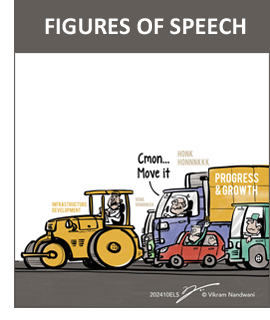
India's infrastructure sector is undergoing a dynamic transformation, positioning itself as a critical driver of economic growth and social development. With ambitious national goals like becoming a developed nation by 2047, infrastructure plays a central role in bridging the gap between aspiration and reality. The sector spans both "hard" infrastructure - roads, bridges, ports, airports, and railways - and "soft" infrastructure, including education, healthcare, and digital connectivity.
In the last decade, there has been a surge in private sector participation, particularly in telecom, airports, and highways, resulting in increased efficiency and technological advancements. The government's push for modernization through initiatives like the National Infrastructure Pipeline (NIP) and Gati Shakti has further accelerated growth by creating a robust policy framework and fostering public-private partnerships.
However, challenges persist. Quality concerns in public sector projects, coupled with political tendencies toward excessive welfarism, slow progress. To truly unlock its potential, India must deepen private sector involvement, streamline regulations, and maintain a focus on sustainable, long-term growth strategies.
The infrastructure industry in India stands at the threshold of a significant breakthrough, with the potential to not only transform the nation but also inspire global economic shifts. Achieving this requires a balance of innovation, investment, and visionary leadership.
Empowering Times (ET) this month looks at 'Infrastructure Industry in India: Dimensions of Growth'.
In the Thinking Aloud section, Jay highlights that the quest for India to become a developed nation by 2047 hinges on addressing the complex infrastructure challenges, requiring visionary leadership, increased private sector involvement, and a shift away from socialist tendencies that hinder economic progress. On the Podium, A S Kumar - Founding Director, Fortress Envira Climate Change Technology emphasizes India's diverse infrastructure sector, with growing focus on green projects, while noting challenges like high costs and integrating new technologies into traditional practices. In the We Recommend section, we review The Maruti Story by R.C. Bhargava who narrates the evolution of Maruti Udyog Limited from a government project to a market leader, emphasizing key challenges, foreign partnerships, and strategic leadership that shaped India's automotive industry and economic transformation.
In Figures of Speech, Vikram's toon is honking for faster infrastructural progress!
The team at Empowered Learning Systems would like to wish our readers a bright and joyous Diwali season, filled with moments of happiness and the warmth of cherished connections.
Please also Click Here to check out our Special issue of ET, which is a collation of selected themes that were featured over the years highlighting the changing landscape of the business world. This special edition has been well received and can be Downloaded Here for easy reading and is a collector's item.
As always, we value your opinion, so do let us know how you liked this issue. To read our previous issues, do visit the Resources section on the website or simply Click Here. You can also follow us on Facebook, LinkedIn, X, Threads & Instagram - where you can join our community to continue the dialogue with us!
|
| Succeeding in Business: Nurturing Value in Family Business |  |
|
 |
Click below to order your copy now


Special offer for Empowering Times readers. Get 30% discount by using coupon ETSPECIAL on the Notion Press online store.
Click here to connect with Jay.
|
|
|
|

|
|
The national quest now is to become a developed nation by 2047, a century after our independence. The cynics (who abound our intellectual world) are already scoffing at the idea. They do not understand the power of vision. By definition, vision is an inspirational and aspirational destination which beckons us and provides strength to our sinews when all seems lost. It is a destination in the horizon and cannot but be a tough challenge, teasing us to make a bold bid for it, and reminding us that not attempting to tackle it is the biggest failure ever. Achieving this goal is not just important for the teeming billions in India but also would be a significant turning point in the history of mankind as it would be a transformative step for the global economy and enable other developing nations to emulate it. What makes this even more special is that never before has a democratic form of government taken on this humongous task of social transformation without the dominating power of state control over people's lives.
Interestingly, the concept of a developed economy itself has come under fire from the advocates of sustainability. While the notion of development has a strong economic bias in their definition (GDP, GNP, per capita income, etc.), there are others who stress that the indicators of development need to also examine the variables of the Human Development Index (which has considerations of health, education, etc.). In the words of Mathis Wackernagel, an extreme critic, who calls this binary labelling of countries 'neither descriptive nor explanatory. It is merely a thoughtless and destructive endorsement of GDP fetish. In reality, there are not two types of countries, but over 200 countries, all faced with the same laws of nature, yet each with unique features.' And, what of the quest for Gross National Happiness – an indicator that Bhutan has chosen to measure its people's well-being?
Be that as it may, without us getting into a sematic trap, let us agree that development models may vary but you can see (and sense) a developed society from one not so. This is primarily because of the infrastructure that is evident in the nation. Arguably, the term infrastructure is a broad brush that considers both 'hard' infra (bridges, roads, transportation, etc.) and 'soft' infra (education, health, crime, treatment of women, etc.). In both aspects, much remains to be done in our country. Official data indicates that only 2.2 per cent of people live below the World Bank's poverty line, with over 25 crores of people no longer impacted by multidimensional poverty. This point is always contentious depending on where you belong on the political spectrum but there can be no denying that the doomsayers who have been predicting unimaginable calamity of the Indian economy both during Covid and later, have mud on their face. Possibly, the indices used to measure the health of a nation perhaps are not too appropriate at all times. When even the International Monetary Fund, the World Bank and the United Nations have different definitions and measurement standards, one must take all the global rankings with a skeptical dose of salt.
What one cannot deny is that hard infrastructure in Indian has grown rapidly in the last decade or so. The post-independence era of the 1950s and early 1960s had seen investment in building new steel plants, ports, factories and also institutes of higher learning (Engineering colleges, medical colleges, management schools, etc.) but the post-Chinese war period from 1962 saw a dip, which can be partly attributed to defense challenges both with the Chinese war of 1962 and the Pakistan attack of 1965. Unforeseen political instability caused leadership changes and the famine of the late 1960s deepened the economic crisis. The victorious war with Pakistan in 1971 (leading to the independence of Bangladesh) generated its own euphoria but this only led to political shift to the Left in a big way and India's socialist turn worsened economic difficulties which culminated in the 1991 foreign exchange crisis. Ostensibly called the second independence, the crisis led to the opening of the economy, and since then India has been playing catch -up with the world in economic matters.
The last three decades has seen a flurry of infrastructure development in all aspects: airlines and airport creation has been permitted for the private sector, as also ports. While privatization of the Railways (or parts of it) have been thwarted after intense debate, the decision to levy tolls on highways has been an invitation to private parties to participate in the transport sector. The Telecom sector has witnessed the best of the private sector enterprise transforming the nation. While the government continues to bleed in this business (but refuses to exit), telecom today is a force multiplier in society, coupled with information technology. Access has also increased to remote parts of the nation with new bridges and roads being created both for strategic and civilian use. Better still, the education sector has opened up and private education institutions are thriving with both good and poor consequences. Healthcare is no longer the prerogative of the government as private sector has grown in volume and quality, with a commensurate rise in costs for the consumer.
Lest we assume that all is good on the infrastructure front, let it be said that quality concerns continue to be serious, particularly where the government has a hand (bridges fall, roads are potholed after heavy rains, government hospitals and education institutions lack adequate manpower, etc.). To my mind, this is yet more fodder to the argument that government needs to exit many more sectors. Laying down investor friendly policy and then stepping aside to allow private execution would be a good recipe in most sectors. Not only would that allow better infrastructure creation, but also faster work completion. This is possible also because private sector has been emboldened to think big and take on tasks with overseas tie-ups and easier access to capital, both domestic and foreign.
The fly in the ointment would be a turn in political affairs. There is a disturbing trend towards blanket welfarism by political parties of all hues. Indian politicians are reluctant capitalists. The socialist grain is so deeply entrenched in their thinking that they refuse to understand that the Left turn is a wrong one and tossing freebies is disastrous as someone has ultimately got to pay the bill. Besides, there is no realization yet that creating a culture of dependency is corrosive to the national character. The politician's gaze is limited to grabbing power at the hustings in the next round. Therefore, the visionary pitch does not appeal to them intrinsically though they may offer lip service. Unfortunately, a large number of politicians today have been beneficiaries of family patronage and therefore fail to appreciate the economic logic of wealth creation. Distributing wealth generated by other people's hard work comes easy when you have never built a business enterprise yourself and seen the challenge of navigating through the byzantine bureaucracy that is still all pervasive.
However, progress is visible, and my conviction is in the simple message: don't bet against India. We will get there – soon, in our own unique way.
back to top ^
|
|

|
|
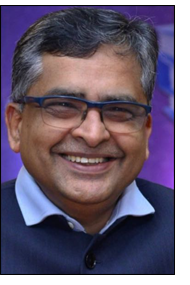 A S Kumar is the Founding Director of Fortress Envira Climate Change Technology and an accomplished professional with over 34 years of extensive experience in infrastructure planning, development, financing, and management. He holds an MBA from MIT Sloan, which brings a wealth of expertise to the field. His leadership and strategic insights have played a pivotal role in advancing sustainable infrastructure projects, focusing on innovation and climate-conscious solutions.
ET: There are many kinds of businesses that are loosely clubbed under the label of Infrastructure business. Could you please unpack them for us?
AK:
India's infrastructure business sectors encompass a wide range of industries that contribute to the country's development, combining technical, economic, and financial aspects. Key sectors include construction and engineering, utilities and services, transportation, real estate development, and technology and consulting.
Infrastructure Projects:
- Transportation: Roads, highways, bridges, railways, airports, and ports.
- Energy: Power plants, transmission lines, and distribution grids.
- Water: Dams, reservoirs, water treatment plants, and wastewater systems.
- Telecommunications: Fiber optic networks, cell towers, and data centers.
- Public Buildings: Schools, hospitals, government buildings, and community centers.
Green Infrastructure Projects:
- Renewable Energy: Solar farms, wind farms, hydroelectric power plants.
- Sustainable Transportation: Paths, walkways, charging stations, integrated transit systems & mass transit systems.
- Green Roofs: Vegetated roofs, storm water management.
- Rain Gardens: Landscapes that capture and filter storm water, reducing runoff and erosion.
- Tree Planting: Urban forestry, reducing the heat island effect, and air filtration.
- Coastal Protection: Mangrove forests, seawalls, and coastal areas to protect from erosion.
Hybrid Infrastructure Projects:
- Solar-powered energy - using solar energy to generate power.
- Green highways: Incorporating green corridors, Solar panels along highways.
- Sustainable transportation hubs: Integrating renewable energy, green roofs, and bike paths into transportation terminals.
ET: How has the government's focus on green infrastructure impacted the industry's approach to development? Please describe the current landscape of infrastructure development in India, particularly in relation to sustainability and climate change.
AK:
The focus on green infrastructure in India has led to a more sustainable and resilient approach to development. It has not only addressed environmental concerns but has also created new economic opportunities and improved quality of life.
Development is increasingly focused on the following sectors:
- Sustainable Urbanization: Green Buildings, smart cities, smart industrial cities.
- Renewable Energy Expansion: Solar, wind and hydropower to achieve 500 GW.
- Water Resource Management: Rainwater harvesting, wastewater treatment.
- Sustainable Transportation: Metro systems, electric vehicles, cycling and walking paths.
- Climate Resilience: Coastal protection, disaster management.
- Environmental Impact Assessment: Mandatory assessments.
As of last year, the country's installed renewable energy capacity exceeded 200 GW, with solar and wind power leading the charge.
India's infrastructure landscape is undergoing rapid transformation. The country is investing heavily in various sectors, including transportation, energy, water, and urban development. While challenges such as funding, land acquisition, and environmental concerns persist, government initiatives, foreign investment, and technological advancements are driving progress. The focus on green infrastructure and sustainable development is gaining momentum, contributing to a more resilient and equitable future for India.
ET: What challenges do infrastructure companies in India face when integrating climate change technologies into traditional construction practices?
AK:
The foremost challenge is understanding the difference between climate change infrastructure and climate change technology infrastructure and services. For example, climate infrastructure in an urban area would include strong and efficient storm water drainage systems, water management systems, wastewater management (including recycling and reuse), solid waste management systems, renewable energy, and large green belts/forestry. When basic and fundamental infrastructure systems are efficient, it would automatically help us conserve natural resources like water, energy, etc., helping cities deal with the vagaries of climate change in a more organized way. Moreover, climate change infrastructure and technology are vast and complex, with varying applications depending on the sector.
Climate change or sustainable technologies mainly include products, materials, and digital/IT tools that facilitate not only development of the infrastructure but also measure and monitor the outcome of the development on mitigating the adversities of climate change. As technology evolves, challenges also evolve. For example, appreciation of incremental cost vis-a-vis the time saved through faster implementation, incorporation of latest technologies in the government building codes, and cost of shifting are some of the challenges that one can anticipate.
Some of the challenges of integrating include:
- Supply chain challenges: Availability and affordability of materials and components needed for climate change technologies may be restricted.
- Interoperability issues: Climate change technologies may not be compatible with existing infrastructure or systems.
- Regulatory hurdles: Obtaining necessary permits and approvals for climate change technologies can be time-consuming and complex.
- Lack of standardized guidelines: There may be a lack of clear regulations and standards for integrating climate change technologies into construction projects.
- Uncertainty about future climate conditions: Predicting these conditions is challenging, making it difficult to assess the long-term effectiveness of climate change mitigation and adaptation measures.
- High initial costs: The upfront costs of climate change technologies can be significantly higher than traditional construction methods.
- Skill gap: Construction professionals may lack the necessary expertise and training to implement and maintain climate change technologies.
- Resistance to change: Stakeholders, such as contractors and building owners, may resist adopting new technologies that deviate from traditional practices.
- Uncertainty about long-term benefits: Unclear long-term benefits: Uncertainty about the long-term advantages of climate change technologies may cause hesitation in adoption.
- Lack of incentives: A lack of tax breaks or subsidies may discourage the adoption of climate change technologies.
ET: The infrastructure industry has always seemed very promising but many companies have come to grief in this sector. What does it take to succeed in this infrastructure business – and why do companies fail?
AK:
The infrastructure industry is particularly promising in an emerging market like India and is a crucial driver of growth. Some of the biggest challenges that the players in this sector face include:
- High dependency on government bodies (both at the state and central levels), leading to delays in planning, approvals, and financial realization.
- High investment requirement and long gestation.
- Availability of skilled resources.
As a buoyant and high-growth sector, there is a tendency among many companies to inappropriately assess technical and/or financial parameters, leading to significant financial hardships and project delays.
Overestimation of economic fundamentals, including aggressive undercutting by many new entrants, are major concerns affecting the industry. However, I believe we are in a transition phase, and the industry is increasingly becoming more organized and professional in its approach, which will help it emerge stronger in the coming years.
ET: What role does the Fortress Group of companies play in advancing infrastructure development in India? Can you share any examples where your company has successfully implemented sustainable infrastructure projects in India?
AK:
With over three decades of experience, Fortress Infracon Limited is a leading Indian infrastructure solutions provider. We offer a comprehensive suite of services, from initial planning to project completion, ensuring sustainable and eco-friendly outcomes. We provide innovative infrastructure solutions that drive progress and enhance the quality of life.
Fortress Envira Climate Change Technology specializes in environmental impact assessments, waste management, water conservation, renewable energy, and climate change mitigation, playing an instrumental role in creating smart cities that prioritize environmental sustainability.
Our services include:
- Sustainable urban planning.
- Climate change mitigation.
- Smart city solutions.
- Multimodal green mobility.
- Green building design.
- Resilient infrastructure planning.
Accomplishments:
- 100 gardens, green spaces & recreational eco-friendly areas.
- 120 WS Schemes of 3000 MLD & 37000 km pipeline.
- 4 rivers of 28 km & 100 lakes rejuvenation.
- 3.3 million tree plantations.
- 700 Km of Green Sink Expressway.
Project Portfolio:
- Atal Setu (MTHL) -12 Acres area, 8 acres landscaping, 3 acres of mangrove restoration, 33,000 saplings plantation & irrigation.
- Samruddhi Expressway - Carbon neutral green and Scenic Corridor of 701 km with plantation of 3.3 million plants & landscaping of 24 interchanges.
- Jhelum Riverfront, Srinagar - 5.5 km Jhelum Riverfront Development with emphasis on 'Bringing River to the People'.
- Kahn Saraswati riverfront, Indore - 3.9 Km river stretch with gardens, recreational spaces, parking zones, plantation & landscaping.
- Panvel Municipal area lakes conservation - Climate & environmentally resilient design water conservational activities.
- Waste to Energy plant, Kolhapur – Solid waste management plant generating energy from waste in Kolhapur.
back to top ^
|
|

|
|

The Maruti Story by R.C. Bhargava is an engrossing narrative chronicling the rise of Maruti Udyog Limited, a cornerstone of India's automotive industry. Bhargava, who served as the Chairman of Maruti for many years, provides a unique insider's perspective on the company's evolution from a government initiative into a competitive market leader. The book is an exploration of India's economic transformation during the 1980s and 1990s, laden with bureaucratic challenges, innovative strategies, and corporate governance lessons.
Bhargava sets the stage by immersing readers in the transformative climate of early 1980s India, a period marked by significant technological advancements such as satellite programs and colour television. This backdrop is crucial to understanding the impetus behind Maruti's creation - an ambitious vision to produce a "people's car." The launch of the Maruti 800 in 1983 is highlighted as a pivotal moment, not only symbolizing the company's entry into the market but also representing the broader aspirations of a nation on the brink of economic liberalization.
The author documents how Maruti emerged as a response to the inefficiencies of India's public sector. The collaboration with Suzuki Motor Corporation is particularly well-articulated, emphasizing how foreign partnerships became instrumental in overcoming bureaucratic obstacles and technological challenges. The support of political figures like Indira Gandhi is also underscored, demonstrating how strategic alliances were vital for Maruti's success amid India's complex political landscape.
A significant portion of the book is dedicated to exploring the governance and leadership dynamics within Maruti. Bhargava paints a compelling portrait of V. Krishnamurthy, whose leadership was crucial in steering the company through political pressures and internal strife. The operational challenges faced by Maruti, particularly in the realm of infrastructure limitations and power shortages, are also addressed. Bhargava highlights how these challenges tested the company's resilience and commitment to growth, which would ultimately become a hallmark of its corporate identity.
As Maruti sought to carve out its niche in a market dominated by older models, branding emerged as a formidable challenge. The Maruti 800, priced competitively at Rs. 45,000, epitomized affordability and accessibility. Bhargava details the innovative marketing strategies employed to enhance brand recognition, including roadshows and promotional events. This strategic marketing approach not only bolstered Maruti's presence but also contributed to changing consumer perceptions of automotive quality and value.
A salient theme in Bhargava's account is the company's unwavering commitment to customer satisfaction. Maruti shifted its focus from merely producing vehicles to prioritizing after-sales service and customer engagement. The establishment of a robust dealer network, coupled with a 'no sales without service' policy, was pivotal in creating a new customer culture that set a precedent in the Indian automotive sector.
One of the book's standout elements is its exploration of Maruti's commitment to employee training and cultural adaptation. Bhargava outlines how initiatives supported by Suzuki led to a transformation in workplace culture, emphasizing productivity, discipline, and quality control. The author celebrates the successful introduction of Japanese management principles that fostered teamwork and collaboration. The establishment of quality circles and training programs became instrumental in enhancing productivity and employee morale. These cultural changes not only influenced Maruti's operational success but also had a broader impact on HR practices across the Indian private sector.
The liberalization of India's economy in 1991 marked a critical turning point for Maruti. The government's decision to increase Suzuki's stake in Maruti granted the company greater operational autonomy and flexibility. However, this transition also revealed the tensions between the need for economic reforms and the remnants of public sector bureaucracy.
Bhargava's insights into the post-liberalization challenges - such as high inflation and rising interest rates - provide a realistic portrayal of the economic landscape. The development of new models, like the Zen, aimed at meeting international standards, underscored Maruti's ambition to compete globally. Yet, the narrative does not shy away from the complexities of succession planning and the cultural clashes that arose during leadership transitions.
The comprehensive analysis of Maruti's journey - from its inception amid skepticism to its emergence as a market leader - illuminates the interplay of government policies, foreign partnerships, and corporate governance. The book stands as an essential read for anyone interested in the Indian automotive landscape, offering timeless insights into the challenges and triumphs of building a successful enterprise. Bhargava's detailed account serves as both an inspiration and a guide, making it a valuable addition to the literature on business strategy and economic development in India.
back to top ^
|
|
| |
|
THROUGH THE LENS
|

|
|
Nature photographer Rupesh Balsara spots the Striated Laughingthrush, a bird species native to the mountainous regions of northern India, including the Himalayas, and parts of Nepal and Bhutan. It inhabits subtropical and temperate forests, often found in dense undergrowth and bamboo thickets. This social bird feeds primarily on a diet of insects, berries, seeds, and small invertebrates, often foraging in groups. Known for its melodious and distinctive laughing calls, it is a medium-sized bird with streaked brown and grey plumage, making it well-camouflaged in its forested habitat. The Striated Laughingthrush is an active and vocal species, frequently seen in mixed-species flocks.
|
|
|
|
Empowered Learning Systems
www.empoweredindia.com
101, Lords Manor, 49, Sahaney Sujan Park,
Lullanagar, Pune – 411040,
Maharashtra, India


|
 The ELS Lotus logo is trademark of Empowered Learning Systems The ELS Lotus logo is trademark of Empowered Learning Systems
©2024 Copyright Empowered Learning Systems (ELS). For private
circulation to clients and well-wishers of ELS. While ELS endeavors to ensure
accuracy of information, we do not accept any responsibility for any loss or
damage to any person resulting from it.
|
|
|
|
|
|
| |