|
|
|
|
| |
Dear Reader,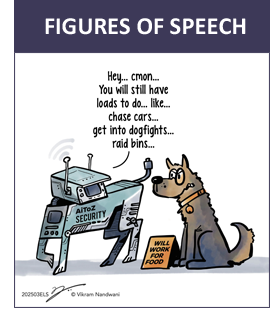
In today's rapidly evolving world, the key to sustained career growth lies not in resisting change but in embracing it. The concept of self-disruption is no longer a luxury; it is an essential strategy for professionals aiming to stay relevant and thrive in dynamic environments.
A growth mind-set is the foundation of self-disruption. By being open to continuous learning and new experiences, individuals can adapt to emerging technologies and industry trends. Seeking out opportunities to upskill and reskill allows professionals to stay ahead of the curve.
With the rise of AI, automation, and digital transformation, it's crucial to leverage technology as an enabler rather than viewing it as a threat. Familiarizing oneself with digital tools and platforms, as well as understanding data-driven decision-making, can unlock new career pathways.
In a world where collaboration and innovation thrive on connections, networking is vital. Engaging with diverse communities, attending industry events, and participating in mentorship programs can provide invaluable insights and opportunities. The ability to pivot and adapt to changing circumstances is essential. Building emotional resilience and staying flexible in the face of uncertainty empowers individuals to navigate career transitions with confidence. While chasing professional success, it is equally important to maintain mental and physical well-being. Aligning career goals with personal values and passions fosters long-term fulfilment and prevents burnout.
This month, Empowering Times (ET) explores 'Disrupting Oneself: How to Build Careers in a Changing World'. By embracing continuous learning, leveraging technology, and nurturing meaningful connections, individuals can build resilient and future-ready careers.
In the Thinking Aloud section, Jay highlights that the traditional career ladder is outdated, as modern professionals embrace portfolio careers, side hustles, and flexible career paths driven by technological shifts, evolving workplace expectations, and a growing emphasis on work-life balance and purpose. On the Podium, Raman Nanda, a seasoned corporate leader turned educator and business coach, leverages his diverse experience across CFO, CHRO, CMO, and CEO roles to guide business owners and CXOs on leadership, adaptability, and navigating career transitions in a rapidly evolving world. In the We Recommend we review Spreading Joy: How Joyalukkas Became the World's Favourite Jeweller by Thomas Scaria and Nidhi Jain which chronicles the inspiring journey of Joy Alukkas, who transformed his family's small jewellery business in Kerala into the world's largest single-owner jewellery retail chain, overcoming cultural barriers, economic challenges, and the Gulf War to establish a global empire.
In Figures of Speech, Vikram's toons adapt to the changing world!
Please also Click Here to check out our Special issue of ET, which is a collation of selected themes that were featured over the years highlighting the changing landscape of the business world. This special edition has been well received and can be Downloaded Here for easy reading and is a collector's item.
As always, we value your opinion, so do let us know how you liked this issue. To read our previous issues, do visit the Resources section on the website or simply Click Here. You can also follow us on Facebook, LinkedIn, X, Threads & Instagram - where you can join our community to continue the dialogue with us!
|
| Succeeding in Business: Nurturing Value in Family Business |  |
|
 |
Click below to order your copy now


Special offer for Empowering Times readers. Get 30% discount by using coupon ETSPECIAL on the Notion Press online store.
Click here to connect with Jay.
|
|
|
|

|
|
Time was when a man (yes, only men) joined a firm at the bottom of the rung, and worked his way up, and in his mid-fifties reached the pinnacle of his career, soon to retire when he reached 58 years (or, if lucky, at 60 years). This was the progression of many an average Joe who was not lucky to be born with a silver spoon, which would provide him an elevator route to the top of the organisation as an inheritor of a business created by others preceding him. Left out to pasture on his retirement after years of single-minded devotion to a job, many a bright individual did not know how to occupy themselves and soon became the old man who read his scriptures, awaiting death.
A melancholic picture of life, you may well say. But that was the standard model of life for the post-World War II generation globally, or in our case, the early decades after India's independence. Upward mobility in occupation was a given if one kept one's nose to the grindstone and carried on regardless, as seniority was the primary determinant of growth in rank and pay. While this was the sine qua non in a government enterprise, the limited private sector was no different. Holding on to the job was a commendable virtue, much valued at home, and touted as employee loyalty of the highest order, feted publicly with long-service awards for service beyond 25 years. In such a world, the mavericks who changed their job – and worse, changed careers – were branded as mercenaries who had no future, bad eggs who were unstable in mind, and unreliable everywhere.
Cut to today. Not that long -serving employees are rare but the rolling stone of yesterday is no pariah now. Valued as flexible and richer in experience, they seem to be the ones in demand, much to the chagrin of the loyal employee who wonders why he is being discriminated and taken-for-granted for his long-term presence. In fact, it is not unusual to meet employees who openly state that they have no intention of staying longer than a few years in a firm, and that they have come on board with the stated intention of seeking new experience for a limited time.
All this begs the question: what is career planning in today's environment of rapid change? Much before Artificial Intelligence (AI) became the ugly demonical word indicating organisational restructuring, the new age employee had begun viewing his career plan in a different light. Over three decades ago, the prescient scholar, Charles Handy, wrote about an emergent time when professionals would opt for a 'portfolio career'. No longer would the knowledge worker be willing to tie himself to a single workplace for a large part of his productive work life, but he would choose to wear multiple hats, in a manner of speaking. While this could be seen as a wonderful way to give expression to the multitude of talents that a person may have (a software professional by day and a stand-up comedian by night, for instance), this has also become a way of life at a time when technological shifts have impacted the lifespan of a firm. Consider this: recent studies indicate that the average lifespan of a company listed in the S&P index is 15 years. In the face of such turbulence, it would be foolish to hitch one's career solely on the fortunes of a single firm, one may well argue.
Consequently, upskilling is a natural outcome – but interestingly, what one is witnessing is also the move to choose a 'side hustle'. For those not in the know, this refers to a 'side gig' or a secondary job that some choose to have to use their time productively. The reasons for this are not necessarily economic, though a good alternate revenue flow (preferable not taxed) is very welcome to most people! Let's recognize that the level of active engagement of employees in their work is not uniform. For many, it is just an activity that enables them to keep the home fires burning; hence, if they can get away doing the bare minimum, that's what they will do. The outlet for their energy could be in other arenas of their life: a hobby, a passionate sport that they indulge in, a status enhancing social activity outside the workplace, a new challenge or volunteer work that gives them meaning in life, or a pet project that fetches them some revenue. Most of us have a lot to offer outside work, and given the opportunity would plunge into it. The gig economy is a perfect avenue for this exploration – and is a welcome distraction from the staid and standard traditional job that has straitjacketed millions for decades.
In this new world of Gen Z and millennials, where 'job safety' is an oxymoron, portfolio careers can flourish. With rising standards of lives, and the rapid growth of the service economy, technology has been a crucial enabler to accelerate the gig mind-set. The lockdown days compelled by Covid also provided evidence that old ways were not as great as made out to be by earlier generations. The clamor for work-life balance and the quest for purpose and meaning at work is another driver that has excited the minds of those restless at work.
Come to think of it, even those who wish to continue in large organisations too have begun to appreciate that career growth is not a vertical climb. Ascending to higher levels is often best achieved through sideways steps into new roles, new geographies, and new functions. Large organisations today seek to retain good talent by exhorting them to be intrapreneurial and offering assignments that can rotate them meaningfully, even across the globe. The willingness to accept these roles are taken as indicators of potential, and firms invest in such managers with support, including external coaching and courses.
Suffice it to say that human growth is not symbolized by a vertical ladder but more a minefield that has to be navigated with pluck, knowledge, skill and a lot of luck. Ready for this paradigm?
back to top ^
|
|

|
|
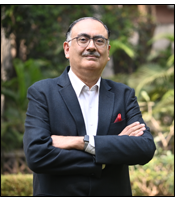 Raman Nanda is currently an Educator, a Family Business Adviser, and an Executive and Business Coach to Business Owners and CXOs, after a long and successful corporate career.
Raman has had an illustrious education and work experience. He is a gold medallist in B.Com (Hons.) from Shri Ram College of Commerce (Delhi University), followed by an MBA in Finance from IIM Ahmedabad.
Raman has a unique experience of serving in the CFO, CHRO, CMO, CEO positions, as well as Country Head during his working life. He has served on Tata Group Boards, MNC Boards and in Board Committees. He was an Executive Committee member of ACMA, the leading body in the automotive industry representing component manufacturers, for over five years.
On the teaching side, for three seasons, Raman has run Master Classes for Business Owners and Leaders, conducted a program for mid-level leaders, and led sessions on Leadership and Personal Mastery in those. In December 2023, Raman launched a 6-month Leadership Development program for MSME owners, MDs, and Decision Makers called 'The Captains' Club'. The program has 25 plus faculty, 40+ sessions, ranging from Design Thinking and Strategic Finance to Innovation.
Some of the subjects that fascinate Raman, and that he enjoys speaking about, include 'Difficult Conversations-How to discuss what matters the most', 'Being Effective-Personally and Professionally', 'How to meet your Numbers-The Flash Approach', 'Design your Life using Design Thinking', and 'How to scale up your business in a VUCA world'. For two years, Raman taught the subject of Professionalizing Family Business at Flame University, Pune. Recently Raman was invited to take sessions at IIM Kozhikode for their on-campus part of the Senior Management Program. He has also been invited to teach IIM Udaipur MDP participants in March 2025.
ET: How do you see the future of work shaping up, and what can professionals do today to prepare?
RN: What's the future of work? A few pointers.
As I see it, each of us will have to be significantly (at least twice) more productive every year, whether it's in term of revenue we generate, or savings we create, or the responsibilities that we shoulder, or any other target that we may have-linked always to the expectations of our Customer/Manager. Thus, the expectations are clear. We also will need to be more versatile to ensure full delivery to our customers, sometimes beyond our normal expertise.
To achieve that, we must use AI, creativity, innovation, technology, breakthrough thinking, or continuous learning. Or we will lose out to others who do it.
AI is just around the corner, potentially making you redundant—your responsibilities could easily be absorbed by your boss, peers, or subordinates. To stay relevant, you must start using AI, integrating it into your and your team's professional life, and evolving into someone who effectively combines human intelligence with AI.
I personally find that I can more than double my productivity using simple AI tools and significantly reduce the time on analysis, preparation and reading through so much that we all need to do. A big part of the learning is how to create better prompts, though.
Professionals need to allocate more time to learning than before. Systematize work, implement changes proactively, practice new things, and evangelize the learnings and make their journey unstoppable. Another dimension of work is that it will become less important and no longer the sole reason for our existence, a shift that has been happening since the pandemic. Life has many more dimensions to it and most of us have multiple intelligences which we have an opportunity to explore. Despite having no prior experience, I now teach subjects at IIMs and other institutions, train senior corporate leaders through my leadership programs, and provide business and executive coaching—things I never imagined doing just 10 years ago.
Indeed, a very exciting and an amazing future of work!!
ET: What are the challenges and concerns about taking on a different career path altogether?
RN: A different career path may be hard in the beginning but remember that we need to continuously practice getting into our discomfort zone. That's where growth happens.
New ideas, stretch targets, impossible goals, new contexts, new colleagues, diversity in thought and processes - all of this can lead to significant personal growth.
When I moved to Murugappa group at Chennai from another assignment at Hyderabad, in my mind both cities were essentially part of South India and therefore likely to be similar. However, the cultures, the pace, the professionalism of the Murugappa Group and so many other things made the transition more interesting, than I thought it would be.
On the other side, when you take a new career path, you may get a chance to share some of your own previous learnings, including your operating software, with your new team-things that they were not aware of.
Concerns may include whether you are taking on more than you can handle or if the level of change in your personal and family life is manageable. Adequate reflection, carrying your stakeholders with you, planning and prep will help, as well as discussing with a few mentors can give you more confidence besides some tips and tricks.
As an example, before moving from Chennai to Pune and joining a new Group, a new function, a new domain and a new manager, I did some due diligence and brought my wife along for a recce, and looking back that helped me immensely.
ET: How do you balance expertise in one domain with the need to stay adaptable in a rapidly changing job market?
RN:
Most important corporate issues and situations require more than knowledge of one function. For example, scaling up your business or outsmarting the competition. If you want to get ahead of competition, you may need new products with a new strategy and maybe a different kind of marketing and also salespeople to be successful. For that, the New Product Development/R&D, Marketing, Strategy, Sales and HR teams would need to work together on this assignment. Multi-function knowledge and comfort is more and more important. Often people in a meeting room consider the other functions to be 'black boxes' and that's where problems happen. The world has thus moved from the 'or' scenario to an 'and' scenario. You can be an expert in one domain and learn more skills in other areas. In fact, often there is no option to doing so, if you want to grow. With tools available today, simple expertise or remembering things from one domain is less important than exposure to different real-life scenarios, confidence in handling a variety of problems and crises, and a 'range' in your competencies.
There is no alternative to adaptability to stay relevant in a rapidly changing job market.
ET: What are the key leadership traits that help individuals successfully transition into new roles and industries?
RN: Some of the traits I believe individuals need, to be able to transition successfully, are:
- Learning continuously (if you don't disrupt yourself, the world will)
- Adapting (It's a VUCA/BANI world, baby!)
- Networking (Your Net worth equals network)
- Asking the right questions (Questions are more important than the answers)
- Coaching (Build your team continuously)
- Self and situational awareness (read the room, know yourself)
- Humility with confidence (Goes with learning attitude and resilience)
- Servant leadership. (Set stretch targets and enable/empower your team to win)
When you join a new role, there are hundreds of eyes watching you, sometimes for every potential misstep. Self-awareness kicks in as an important quality.
When I first took on the role of HR Head in Tata Auto Components, my conversations with the CHROs in other Tata companies met with raised eyebrows when they heard that I had no background in HR. Even some colleagues would have had some apprehensions. Self-awareness and humility with confidence helped me to achieve what I did-build ten teams with CEOs and direct reports, HR policies, campus recruitment et al.
When I switched from HR to Global Business Development, it was again a whole new world. Learning to deal with the Toyotas and Hondas on the one side, and the Fords and GMs on the other.
Winning a $100 million contract and positioning our company on the global stage after just a 10-minute presentation to the largest buyer in the automotive industry was a highlight I had not anticipated. But that was after 4 months of preparation, asking the right questions and so on.
These traits helped me survive and thrive in changing situations, both in my corporate life and today. Happy to share more with anyone who is interested.
ET: You've held leadership roles across multiple functions-CFO, CHRO, CMO, and CEO. How did you navigate these transitions, and what advice would you give to professionals looking to pivot in their careers?
RN: Since each context is different, I am cautious about giving generalized advice. What brought you here will not get you there, as Marshall Goldsmith famously says.
What helped me to take the calls to pivot are-staying open to possibilities, my need for growth (and the fact that I get bored easily), understanding that the perception of risk should not be magnified, and taking steps to understand the culture of the new organisation upfront is a must, if pivot includes a change of organisation.
Thereafter, aligning with your manager and organisation's goals and expectations, staying ahead of customer expectations, networking with the best in the new field or domain, seeking regular feedback, generally trusting and constantly building and improving your team, can be some useful ways to becoming a success in your eyes and that of the organisation.
Often my change of role was because I was able to step in to do what the organisation really needed then. It then became win-win for my growth, while solving the issues for the organisation.
When I pivoted from a CFO role to that of construction of a new plant in a new city, it was to take care of an existential crisis for the company. Or the CMO role that I took was because there was a vacuum in that function in our start-up organisation, and my manager saw a potential in me to carry out the role.
The first step though for each of us is having a growth mind-set, instead of a fixed mind-set.
back to top ^
|
|

|
|
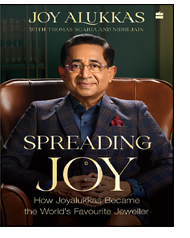
There are moments in life that define a person. For Joy Alukkas, one such moment came inside a luxury car showroom in Dubai. Dressed modestly and speaking with an Indian accent, he was brushed aside by a salesman who thought he couldn't afford the Rolls Royce Silver Seraph on display. That casual insult lit a fire. Joy bought the car on the spot—not just to make a point, but to make a move. He turned the Rolls Royce into a raffle prize for his jewellery brand, drawing massive public attention. The campaign was so successful that Rolls Royce later banned the use of its cars in promotions. But for Joy, this was more than a clever marketing stunt—it was a personal win, a response to years of being underestimated.
This sharp mix of pride, instinct, and bold thinking is what defines Spreading Joy. It's the story of a man who quietly built a global jewellery empire, not by following the rules, but by trusting his gut—and taking big risks when it mattered most.
The book begins in Thrissur, Kerala—India's gold capital—where Joy was born in 1956. His childhood was shaped by a strict but visionary father, known as Appan, who dabbled in textiles, umbrellas, real estate, and finally, jewellery. While Joy's brothers worked behind the counters, Joy was more interested in running around, helping with supplies, and learning through observation. His family thought he lacked business sense. In truth, he was learning in his own way—by watching his father, taking on practical jobs, and understanding how businesses actually worked.
When Joy first travelled to the Gulf in 1986, he expected opportunity. Instead, he found bureaucracy, language issues, and isolation. But he stayed. Through trial and error, he slowly set up shop in Abu Dhabi, and later, in Dubai's famous Gold Souk. One betrayal—an ad placed by a mentor trying to undercut him—pushed Joy to open a store right next door. He didn't lash out. He simply built better. And eventually, he thrived.
The stories in this book aren't just about business—they're about strategy, emotion, and belief. From importing massive quantities of gold at the height of the 2008 financial crisis, to launching a 10x-larger showroom in Chennai, Joy repeatedly took bold steps that others warned against. Many could have failed. But his timing, trust in his team, and deep understanding of people helped him pull through, again and again.
Perhaps the most important chapter in Joy's journey came when the family business had to be split. The process was tense. There were disagreements, delays, and disappointments. In the end, Joy gave up the Indian stores and real estate—and took full control of the Gulf operations. What seemed like a loss turned into a fresh beginning. He rebranded the company under his own name—Joyalukkas—and launched a massive marketing campaign to rebuild identity. Today, the name stands for quality, trust, and innovation across continents.
What gives the book heart is how grounded Joy remains throughout. Despite building a billion-dollar business, his joys are simple: family, football, practical jokes, and a deep sense of purpose. He doesn't chase luxury for the sake of it. Instead, he focuses on building something that lasts. His wife, Jolly, plays a key role—balancing faith, family, and philanthropy through the Joyalukkas Foundation.
The writing is easy to follow, even as it weaves in financial challenges, expansion strategies, and moments of reflection. The co-authors, Thomas Scaria and Nidhi Jain, spent 18 months researching Joy's life. Their voices stay in the background, letting Joy's actions speak for themselves. And while the tone is often admiring, it doesn't feel forced. Joy's story earns its respect.
If there is one critique, it is that the book sometimes smooths over the harder moments—conflicts, failures, or deeper emotions. But perhaps that reflects the man himself: focused on the future, not weighed down by the past.
By the end, what stays with you is not just the scale of Joy Alukkas' success, but the way he got there—quietly, steadily, and on his own terms. The book is not just about jewellery. It's about resilience, independence, and the power of thinking differently. In a world full of noise, Joy Alukkas built an empire by listening to his instincts—and following them wherever they led.
back to top ^
|
|
| |
|
THROUGH THE LENS
|

|
|
Nature photographer Rupesh Balsara sights the Eurasian Wryneck, a migratory woodpecker species that visits northern India during the winter months. Known for its cryptic plumage and ability to twist its neck in a snake-like manner when threatened, this bird is often found in open woodlands and scrubby habitats. It feeds primarily on ants and other insects, using its long, sticky tongue to forage. Though elusive and well-camouflaged, its distinctive call can help birdwatchers spot it during migration.
|
|
|
|
Empowered Learning Systems
www.empoweredindia.com
101, Lords Manor, 49, Sahaney Sujan Park,
Lullanagar, Pune – 411040,
Maharashtra, India


|
 The ELS Lotus logo is trademark of Empowered Learning Systems The ELS Lotus logo is trademark of Empowered Learning Systems
©2025 Copyright Empowered Learning Systems (ELS). For private
circulation to clients and well-wishers of ELS. While ELS endeavors to ensure
accuracy of information, we do not accept any responsibility for any loss or
damage to any person resulting from it.
|
|
|
|
|
|
| |