|
|
|
|
| |
|
Dear Reader,
Micro, Small, and Medium Enterprises (MSMEs) are the unsung backbone of our economy - agile, ambitious, and deeply woven into the social and economic fabric of the nation. Yet, despite contributing significantly to GDP, employment, and exports, MSMEs often find themselves grappling with persistent challenges: limited access to credit, outdated technology, regulatory bottlenecks, and a lack of skilled workforce.
As the world embraces digital transformation and supply chains grow more complex, MSMEs must reimagine their role, not as mere survivors but as drivers of innovation and resilience. This demands not only policy support but also a mindset shift - towards formalization, upskilling, and embracing new-age tools.
This month, Empowering Times (ET) explores 'Navigating the Challenges of the MSME Sector'. The road is tough, but with the right partnerships, smart capital, and an entrepreneurial spirit, MSMEs can not only weather the storm but shape the future of inclusive growth.
In the Thinking Aloud section, Jay's article highlights that while MSMEs are crucial to India's economy, their growth is hindered by bureaucratic barriers, short-term mindsets, and lack of vision, and calls for a shift toward innovation, human capital investment, and self-reliance to truly "grow up" beyond dependence on government support. On the Podium, Shrikant Pangarkar, a veteran engineer and consultant, tells readers how MSMEs can grow sustainably through better planning, effective delegation, resilience, and leadership development. In the We Recommend section, Jay reviews Ilya Strebulaev's book The Venture Mindset, which explores how venture capitalists make bold, high-risk bets to discover extraordinary start-ups, blending deep research, strategic insight, and a tolerance for failure in their pursuit of outsized success.
In Figures of Speech, Vikram's toon fish for bigger opportunities!
Please also Click Here to check out our Special issue of ET, which is a collation of selected themes that were featured over the years highlighting the changing landscape of the business world. This special edition has been well received and can be Downloaded Here for easy reading and is a collector's item.
As always, we value your opinion, so do let us know how you liked this issue. To read our previous issues, do visit the Resources section on the website or simply Click Here. You can also follow us on Facebook, LinkedIn, X, Threads & Instagram - where you can join our community to continue the dialogue with us!
|

Out Now!
Succeeding in Business: Nurturing Value in Family Business
Click below to order your copy now


|
|
Special offer for Empowering Times readers. Get 30% discount by using coupon ETSPECIAL on the Notion Press online store.
Click here to connect with Jay.
|
|
|

|
|
All businesses were start-ups once upon a time. But few grow up into oak trees. It is estimated that 30% of India's GDP is contributed by Micro, Small and Medium Enterprises (MSMEs), with over 111 million in the workforce, making it a significant part of the economy. However, a vast number of them continue to remain in the MSME bracket while most firms flounder and fail. You could argue that it is market capitalism that only a few will succeed but a closer study of the landscape reveals various factors that are hurdles to growth.
The recent episode of ministerial lecturing and 'ticking-off' of industry workhorses at the Start-up Mahakumubh by Commerce Minister Piyush Goyal is just the continuation of the long tradition of Indian government officials who are past masters at pontification. Very few have had the experience of actually operating a business, to be able to empathize with the start-up founder who struggles patiently to create an enterprise by marshalling scarce resources and battling red tape.
Hurdling should become the logo for a business enterprise - as that is what it takes to build a business in India. Bureaucracy in India is unrivalled when it comes to placing barriers at every stage: from land acquisition for the factory, to tackling logistical challenges to run a unit, to dealing with labour issues, and all the while securing working capital from Banks and other financial institutions. And, this is never ending! Year-after-year, apart from exhortations of providing single-windows for ease of business, uncertainty prevails due to tinkering in taxation and amplified documentation with unscrupulous scrutiny by pesky government administrators who have yet to realize why wealth creation is a national duty. Instead, in the socialist mindset that has become our national credo, personal greed and envy goads us to vilify any entrepreneur who has succeeded in the marketplace by hurdling over government created barriers.
Apart from the external challenges mentioned above, the real drivers for business growth of MSMEs lies elsewhere. Take, for instance, the need for a large and long-term vision. One can make a case that many Indian entrepreneurs are still preoccupied with the trader's mindset of quick returns based on small transactions. Innovative ideas in manufacturing requires a patient play by creating a market where consistent quality generates reliable brands. Customer's wallet share is won by demonstrating benefits in the intensely competitive marketplace. This requires managerial competence, harnessing technology, marketing wizardry and a deep desire to win by staying resilient to natural fluctuations in a changing world. Investments to such an entrepreneur is not just financial but also in human capital by building a team that can scale up beyond his limited bandwidth. This aspect is an important part that is often ignored as human capital development is a slow and purposeful process, and an article of faith that tests the most tenacious businessperson.
Another aspect worthy of consideration by MSMEs - but neglected - is the need for patents. Arguably, MSMEs are innovative as they are go-to suppliers for large firms and are called upon to tackle small but significant problems at the large manufacturer's shopfloor. Technical skills of MSME founders often makes the difference and they are renowned for finding solutions to intractable and complex shopfloor bottlenecks. However, how many of them realize that their skill (and creations) can be amplified by filing for patents? This not only provides protection for their ideas and inventions but also adds to the valuation of their firm. Granted that the small-scale owner does not have the stomach for battle to protect their patent given our legal enforcement mechanism, but it is equally true that not many are unaware of the benefits that accrue from patenting their creations, and that the government offers subsidies to MSMEs for this purpose.
Be that as it may, the real issue is that dependence on governmental subsidies and the ceaseless demand for crutches is a good cover to the lack of ambitions of many MSMEs. While much more can be done by the regulatory authorities, there is also the reality that capital markets have undergone significant changes in Inda. Money is available through multiple modes be it through venture capitalists, financial institutions as well as the Small and Medium Enterprises (SME) Exchange. What is needed is a deeper realization is that the future cannot be an extension of the past, if one desires to grow up. Like in the family, once you enter the age of adolescence, life changes, new rules apply, and you cannot hark back to the safety of parental care at every stage. You choose: do you want to be bold and seek a new adventure of growth, or a stunted, short life of protected care? MSMEs cannot waffle at the threshold of indecision.
back to top ^
|
|

|
|
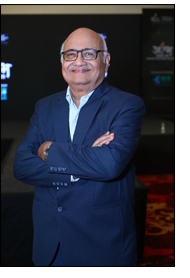 Shrikant Pangarkar holds a Postgraduate degree in Mechanical Engineering (M.Tech., 1971) from IIT Mumbai and an MBA (1976) from IIM Ahmedabad. With over 37 years of experience across multiple industries in India, he has held key roles in Production, Supply Chain Management, Operations, General Management, and as CEO & Executive Director. His career spans industries such as automotive, heavy engineering, plastics, electrical, and earth-moving machinery.
Pangarkar has led major strategic initiatives, including technology transfers, foreign collaborations (successfully tying up five agreements), and the establishment of new businesses and manufacturing facilities. In his last corporate role, he was responsible for the complete P&L of a multinational company, overseeing the creation and market establishment of a new business from concept to operational success.
Since 2011, Pangarkar has focused on Management Consultancy, providing transformative business solutions to corporate entities and MSMEs. He has worked with several renowned organizations, including Bosch, TVS Group, Masu Brakes, and Akebono Brakes, delivering results through turnaround strategies, operational improvements, and leadership mentoring. His expertise has helped companies significantly improve profitability, enter new markets, and develop new customer bases.
Since 2019, he has been associated with SI, an organization specializing in MSME guidance and implementation projects, where he continues to support long-term growth for small and medium enterprises. Additionally, as a Chartered Engineer, Pangarkar provides certification services.
ET: What are some common mistakes MSME entrepreneurs make when expanding their business, and how can they avoid them?
SP: MSME leaders generally make the following mistakes when planning expansion of their business.
The chief reasons are shown in the diagram below. The solution is to collect adequate relevant data, analyse the same and make decisions based on the results of the analysis.
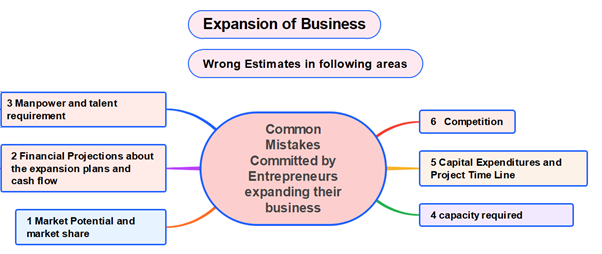
The principle - an ounce of planning saves a pound of difficulties in execution - applies well to most of the situations including this one. Entrepreneurs generally do not devote adequate time to think through the parameters shown in the above diagram resulting in unwelcome results. One can easily make a detailed template and checklist for the planning exercise and fill in reliable data. This will reduce the chances of misfire of the expansion exercise considerably and make it successful in delivering desired results.
ET: Many MSME leaders struggle with delegation and decision-making. How can they strike the right balance between control and autonomy?
SP:
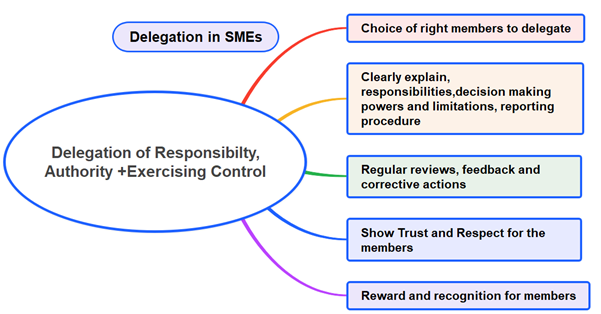
Delegation is absolutely essential to:
Generate time for leaders to attend to more important and strategic matters, rather than addressing routine matters which can be easily dealt with by lower level associates.
Getting challenging tasks and more responsibility motivates the team members. They feel that they are playing a meaningful role in achieving the established goals and advancing the mission.
This creates an atmosphere wherein the team works in unison to meet the set objectives and relieves the leader of base level tasks.
But delegation does not mean abdication of responsibility by the leader. Therefore there has to be regular reviews of the progress and mid-course corrections as and when required. This practice also trains the team members to discharge their responsibilities progressively better.
ET: How can MSMEs future-proof themselves against economic downturns and global uncertainties?
SP:
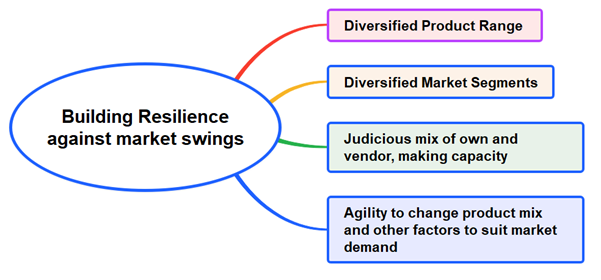
It is imperative for MSME organizations to get prepared for varying business seasons. Downturn is a routine part of business cycles which keep changing the demand levels over time. The best way to get prepared for such changes is to ensure diversified stability. The above figure shows the ways to introduce broad basing in the different segments of the business and become resilient. All products and market segments do not follow same (synchronized) upturns and downturns. This makes the business follow an almost uniform demand path over time. One most important requirement of the leader is to be outward looking and keep a keen eye on the movements in the market and be agile and be prepared to meet the changed situation, in advance.
ET: Training and skill development can be expensive. What practical steps can MSMEs take to foster a culture of continuous learning on a tight budget?
SP:
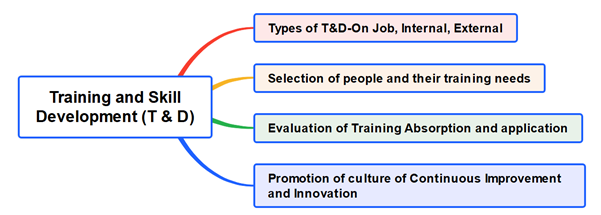
Sculpting a useful associate / team member to suit the organizational requirement is the purpose of Training & Development (T & D). There are many ways of training a team member. It can be on the job training under the guidance of a supervisor or a fellow trained associate, by an organized training program with internal faculty, or by participating in an external training program, or a senior executive trains the team member. All these methods need varying quantum of expenses. But they deliver results in the form of capable employees as required, by the responsibilities and tasks to be carried out and therefore these should be considered as investments in manpower development rather than an expense. Organizations should indeed make these investments and ensure payback. T & D to develop a mindset to critically look at any process and think of carrying out improvements is essential. Similarly innovative mindset to suggest new ways of doing activities also needs development through T & D.
ET: Your book delves into the challenges and opportunities in the MSME sector. What inspired you to write it, and what key insights do you hope entrepreneurs will take away from it?
SP: I have handled MSME vendors during my work as SCM Manager and through other roles. My observations about their work inspired me to write, to guide them to succeed, grow and prosper. MSMEs are the backbone of business activities anywhere, especially in India. The mortality rate for these enterprises is very high because of the lack of "Leadership Expertise" in these outfits. Almost 50% started to close down due to various factors like lack of marketing, among other reasons. Their survival depends upon the fitness which is created by the leaders of these enterprises. Lack of training, and capability of these leaders leads to frequent failures. This book is inspired by the desire to help leaders understand and develop leadership skills.
My advice to the leaders would be:
- Plan better in detail about Products, Processes, customer needs, competition, growth possibilities, market potential and likely share of business, etc. Make a detailed business plan for 3 to 5 years.
- Engage and build a high performance team
- Build "Standard Operating Procedures (SOPs)" and ensure compliance to these SOPs
- Keep regular communication with all stakeholders and learning attitude
- Keep future growth and profitability in mind all the time
- Show empathy and mutual well-being with stakeholders
- Demonstrate respect and trust in stakeholders
- Strive to build UVP
- Create "Innovative Culture"
- Be open to making corrections where required
back to top ^
|
|

|
|
 Recent figures indicate that there are over 444K start-ups in India, of which 117 have acquired the exalted status of being a Unicorn (valued at USD 1 Billion). It is another matter that some went even higher into the thermosphere and received greater glory as decacorns (privately owned start-ups with valuation over USD 10 billion). However, these Icaruses flew too close to the sun, got singed for multiple reasons and came crashing to earth. Byju's is perhaps the most inglorious example in India with a peak valuation of over USD 22 billion in 2022, reduced to ashes - reportedly the Founder admitted that the firm has zero value now. But the legend of the start-up millions continues to be fed by the handful of successes that have been witnessed in the business world. Some cases that are worth highlighting include Nykaa, Swiggy, Zomato (now known as Eternal), Flipkart, and a few others.
While one can admire the guts of the young Indian entrepreneur, furiously risking everything, in the quest for ultimate fame as the Indian Steve Jobs or the local Elon Musk, this journey is an arduous one, full of pain, sweat, near disaster and worse. Yes, fortune does favour the brave - and the lucky. While India's first unicorn was InMobi in 2011, it is the e-commerce story of Flipkart (unicorn status in 2012), PayTM, Byju, Oyo (all unicorns of the 2018 batch), and some others who hit the headlines and excited the imagination of the vast army of dreamers in India. From then to the 100th unicorn (Open Financial Technologies), in 2022, was a matter of just a decade, and it is estimated that it takes an average of six years to achieve this unique position. That siren continues to beckon and also fuels the economy, as we all know.
But who are the puppeteers who raise these firms to the sky? And how do they do it? Be it Chinese money (Jack Ma , Tencent, and others who were early investors over a decade ago in India), or the Vision Fund of the legendary investor Masayoshi Son, or the American Venture Capital (VC) funds, or Indian VCs, the thought process of these gigantic private capital is fascinating. And, of course, their appetite for making money is limitless.
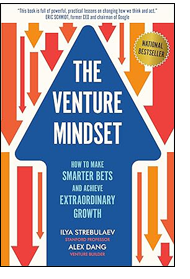
In The Venture Mindset, Ilya Strebulaev (professor at Stanford) and Alex Dang (former Partner at McKinsey), have brought to us a deep dive into the intricate and fertile mind of those who are shaping the modern world. These unique individuals (collectively operating as VC Funds) have their own principles which enables them to trawl through the ocean of opportunities, discarding the small fish that come across their path, and going after the big ones deep in the ocean. Like the explorers of yore, they are seeking the whale that can feed the village and are willing to risk their lives (funds in this case) in their quest for gargantuan profits.
These deep-sea whalers are not your average fishermen who set out for a few nights in the sea, but they are the ones who mount multi-year expeditions in their search for the next big one. Nor are these made in the mold of the Buffetts and the Grahams who are cautious with their investments, for the VCs are willing to take big financial blows while chasing the pot of gold at the end of the rainbow. Or, in the words of the authors, 'Home runs matter, strikeouts don't'.
Strebulaev and Dang have researched their field well and present the stories - both successes and misses - to illustrate their playbook. Be it Zoom, Airbnb, Linkedin, or the many other poster children of Silicon Valley, the book offers a recipe in ten parts that can be a great education for anyone seeking to understand the mind of the VC. It helps that the book has been crafted by an academician and a practitioner for they have lucidly demystified the science and art of VC investing. And, beyond the profoundness of ideas there is also an admission that luck has played a part in both entrepreneurial and investment success. However, since chance favours the prepared mind (which has been wonderfully explained), the astonishing hard work that goes behind the deal-making has been systematically and well laid out through the chapters. Failures or missed opportunities have also been highlighted as there are many VCs who rue the sad fact that despite their famed talent to pick champions, they were blind when an unorthodox opportunity was knocking at their door. Afterall, looking beyond corners comes with its own risks as no algorithm can guarantee unlimited market success.
Consider also that the big payday for a VC is only when a liquidity event happens (listing, or a buy-out). This could take years - Spacex is a good example where after 15 years (and a valuation of over USD 350 billion, over multiple fund raising rounds) the early backers (Founders Fund, Fidelity, Alphabet, etc.) have not seen the Exit gate yet. And, like the WeWork flame out from its glorious USD 47 Billion valuation to its bankruptcy, there are never any guarantees in the VC world!
Expectedly, the book has an American flavour to it - with heroes abounding from Silicon Valley - but that is an invitation to other writers to explore examples from both European and Asian (Chinese and Indian) economies. I would highly recommend this book for its easy story-telling and the playbook approach that can be useful for those who wonder what makes Venture Capitalists tick, and how they pick winners in the marketplace. And, more important, how they are shaping tomorrow's world for the rest of us.
back to top ^
|
|
| |
|
THROUGH THE LENS
|

|
|
Nature photographer Rupesh Balsara sights the Bronze-winged Jacana, a common wetland bird across India, seen in lakes and marshes with floating vegetation. It has bronze-green wings, a white face, and long toes that help it walk on lily pads. Active during the monsoon, it feeds on insects and seeds. The species is widespread and not threatened.
|
|
|
|
Empowered Learning Systems
www.empoweredindia.com
101, Lords Manor, 49, Sahaney Sujan Park,
Lullanagar, Pune – 411040,
Maharashtra, India


|
 The ELS Lotus logo is trademark of Empowered Learning Systems The ELS Lotus logo is trademark of Empowered Learning Systems
©2025 Copyright Empowered Learning Systems (ELS). For private
circulation to clients and well-wishers of ELS. While ELS endeavors to ensure
accuracy of information, we do not accept any responsibility for any loss or
damage to any person resulting from it.
|
|
|
|
|
|
| |