|
|
|
|
| |
Dear Reader,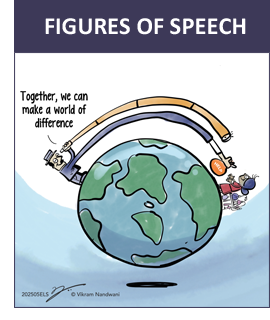
As the world faces big challenges-climate change, conflicts, and growing inequality - international philanthropy is becoming more important than ever. With governments cutting back on aid, many charities and foundations are stepping in to support communities that need help the most.
But philanthropy today isn't just about giving money. It's about working together, sharing ideas, and supporting long-term solutions. Thanks to technology, we can now do more - like track forests, support farmers, and improve healthcare in ways that weren't possible before.
At its heart, though, true philanthropy is about people. It's about kindness, trust, and the desire to make a lasting difference. When donors listen, learn, and build real partnerships, their impact grows.
This month, Empowering Times (ET) explores 'International Philanthropy: Its Role in a Changing World'.
In the Thinking Aloud section, Jay's article explores the evolving landscape of philanthropy, distinguishing it from charity by emphasizing its strategic, long-term focus on systemic change, while highlighting global and Indian examples of impactful giving across money, time, and expertise. On the Podium, Valerie Remoquillo-Jenni - CEO, Fourfold Foundation emphasizes that effective, forward-looking philanthropy must combine technological innovation, clear mission focus, and trusted partnerships to sustain civil society and ecological well-being, while also encouraging everyday generosity rooted in compassion and responsibility. In the We Recommend section, Harish Bhat's Tata Stories is a collection of forty inspiring, simply told tales that celebrate the Tata Group's legacy of blending business excellence with social purpose, highlighting how its values and vision have shaped both modern India and countless individual lives.
In Figures of Speech, Vikram's toon bends borders with a simple act of giving!
Please also Click Here to check out our Special issue of ET, which is a collation of selected themes that were featured over the years highlighting the changing landscape of the business world. This special edition has been well received and can be Downloaded Here for easy reading and is a collector's item.
As always, we value your opinion, so do let us know how you liked this issue. To read our previous issues, do visit the Resources section on the website or simply Click Here. You can also follow us on Facebook, LinkedIn, X, Threads & Instagram - where you can join our community to continue the dialogue with us!
|
| Succeeding in Business: Nurturing Value in Family Business |  |
|
 |
Click below to order your copy now


Special offer for Empowering Times readers. Get 30% discount by using coupon ETSPECIAL on the Notion Press online store.
Click here to connect with Jay.
|
|
|
|

|
|
It is said that philanthropy begins where charity ends. And, in an era of unprecedented global wealth, we are also witnessing the rise of philanthropy across the world. Estimates from the Global Philanthropy Tracker (measured by Indiana University) indicate that the cross-border philanthropy amounted to over USD 70 billion in 2020 - and is surely much more now. The Hurun India Philanthropy Report for 2024 mentions a total contribution of about Rs. 8,783 Crores from over 200 philanthropists of which the top 10 contributors aggregated Rs. 4,625 crores (that is 53% of the total donations). India's leading philanthropist continues to be Shiv Nadar and his family with Rs. 2,153 crores coming from him.
The primary focus of the donors is education, public healthcare and ecosystem building, given our national challenges. This is quite in line with the steps taken by other large global giants in philanthropy, like Warren Buffett and Bill Gates.
Interestingly, Indian philanthropists have not limited themselves to national boundaries when it comes to their Giving initiatives. Amongst others, Harvard University has been the beneficiary of largesse from Ratan Tata (and the Tata Trusts), Anand Mahindra, and Lakshmi Mittal. The Harvard University Press has also received over USD 5 million from Narayana Murthy for translating Indian classics. The post liberalization surge of billionaires has also augured well for Indian universities, and money has flown to the usual suspects - IITs, IISc, and a few private Universities (Ashoka, Ahmedabad, Plaksha, etc.).
The crux of the discussion still centers around the difference between charity and philanthropy. The terms are used synonymously given that both represent charitable acts that benefits someone else, be it an individual or a large section of society. However, there are some intrinsic nuances that need to be highlighted. Charity is often a quick, one-time, emotionally driven action to fix a problem that is visible and sometimes a stark reminder of despair and inequity. All religions extol charitable actions and children are taught the value of sharing with the less fortunate as a virtuous and humane step. Springing from a source of sympathy for the under-privileged or the unlucky recipient, the charitable step is both a helping hand to the bleeding and also an avenue to score positive or virtuous marks in the karmic cycle of life. After all, as individuals we all benefit from the golden rule of 'do unto others as you would have them do unto you'.
Philanthropy is associated with deliberate action, crafted with strategic intention, and with a longer time frame in perspective recognizing that root causes of social afflictions cannot be remedied through band-aid solutions. Creating these solutions may call for systemic changes in social behavior, modifications in institutions, and even deep shifts in philosophy and policy. Cross-border money spent on such initiatives can be called into question as being applied for nefarious personal or political agenda (ask, George Soros or Rockefeller) but also can be very crucial to social transformations, when it takes the form of public-private partnerships. The work of the Gates Foundation in fighting the global scourge of malaria is an instance where over two decades the Foundation's work extends from education, amelioration, eradication and prevention.
Global legends of philanthropy include Jamsetji N. Tata and Andrew Carnegie, from days past, and currently, Warren Buffett, who has been in the news for announcing his decision to leave the Chief Executive's role at Berkshire Hathaway after six decades. Buffett's illustrious life has offered many lessons, and a key one is in philanthropy. Believing that 'fate's distribution of long straws is wildly capricious', Buffett stated that the most precious asset he owned was time. His words are that 'a struggling child, befriended and nurtured by a caring mentor, receives a gift whose value far exceeds what can be bestowed by a check', and admitted that 'I've done little of this'. Instead, he did the next best thing: pledging more than 99% of his wealth to philanthropy during his lifetime or at death.
If one reads his words carefully, it also addresses the misconception that philanthropy is all about money. Yes, the financial metric is perhaps the biggest barometer of success in our society, but generosity has many facets. Volunteering time and sharing one's expertise is indeed a powerful contribution too. By this measure, one can be a contributor at any stage of life as against the common notion that philanthropy starts when a nest egg or corpus has been created after a successful career. Thankfully, this vein of thought has its proponents and is gaining currency. Early lessons in childhood at home and school and programs at the workplace are good places to spread this message.
A powerful reminder for us is Buffett's words that, 'If you're in the luckiest 1 percent of humanity, you owe it to the rest of humanity to think about the other 99 percent.'
back to top ^
|
|

|
|
 Valerie Remoquillo-Jenni brings her leadership and expertise in family advisory, philanthropy and social entrepreneurship to her role as CEO of the Fourfold Foundation. Fourfold is a Swiss charitable foundation that envisions a healthy and equitable world that respects all forms of life. Valerie oversees a broad portfolio of philanthropic and impact investing partnerships focused on economic models for sustainability, food systems transformation and biodiversity.
Valerie started her career in the development sector, first as a specialist trainer in fundraising and advocacy for NGOs in the Asia-Pacific region. She then moved on to diplomacy and international relations, spearheading a large-scale education collaborative between Asian and European students, researchers and policymakers. Valerie was also director of community relations and philanthropy for an award-winning social enterprise that supports smallholder farmers from Latin America.
Building on her rich field experience, Valerie went on to design philanthropic programmes for multigenerational families and their foundations. In her stint of nearly a decade at a Zurich-based family office, she headed family advisory services and eventually developed a framework for family wellbeing called THRIVE. As a passion project, Valerie founded VERA, a retail venture that showcased Filipino designers and artisans in Europe.
Valerie earned her Masters in Public Affairs cum laude at Sciences Po in Paris on a Bourse d'Excellence Eiffel scholarship and her BA in Economics magna cum laude from the Ateneo de Davao University in the Philippines. She holds an Advanced Certificate in Family Wealth Advising (ACFWA) from the Family Firm Institute.
ET: What is the most significant role that international philanthropy plays in today's changing world?
VR-J: With sharp cuts to official development aid and a volatile geopolitical environment, philanthropy, be it local or global in orientation, has an important role to play in providing continuity and stability to civil society organisations working on the ground. Safeguarding the independence and the ability of NGOs and its dedicated staff to deliver crucial services to communities is a key task of philanthropy. Foundations needs to remain steadfast and committed to its mission to people and the planet even in the face of changing political winds.
ET: How has the landscape of international philanthropy changed over the past decade, and what do you think are the primary drivers of these changes?
VR-J: It's hard to take a scan of the landscape over the past decade as things are shifting at a much faster rate. A key driver of change is certainly technology, particularly artificial intelligence, high-speed computing capabilities and broader internet connectivity. This is enabling philanthropy to invest in more innovative solutions that were unthinkable just a few years ago. For example, in the field of sustainability, powered by machine learning to process massive ecological datasets and advanced geospatial satellite monitoring, we now have capabilities to observe and measure nature in its complexity. The information we gather from this can significantly transform conservation efforts of communities and policymakers.
ET: What are some of the biggest challenges faced by international philanthropic organizations?
VR-J: To me, the largest challenges faced by philanthropies are internal. Faced with urgent social and environmental problems to tackle, a philanthropic organization needs to clearly define its mission and the change it wants to see in the world. With a clear definition of impact and the means to credibly and intentionally measure it, a philanthropist becomes highly effective. In addition, charitable foundations need to build strong relationships of trust with partners at an eye-level, and be aware of the power dynamics between a funder and a grantee. Finally, a philanthropist has to be aware of how to responsibly steward a project in a way that does not breed dependency but instead, supports long-term viability, even after the partnership has ended.
ET: Can you tell us about your organisation Fourfold Foundation? What are some of the most innovative philanthropic programs or initiatives that you have implemented, and what has been their impact?
VR-J: Fourfold (www.fourfold.ch) is a family foundation based in Switzerland with a vision of a healthy and equitable world that respects all forms of life. It was founded in 2020 and has around 22 partnerships focused on sustainability, in the fields of biodiversity, food systems and social entrepreneurship.
ET: What advice would you give to other our readers who are interested in incorporating philanthropy into their life?
VR-J: Practicing philanthropy in our daily lives sounds like such a lofty act. I would rather think about us as individuals who, regardless of our professions and circumstances, consider the wellbeing of others, including of other forms of life, and act with responsibility, kindness and compassion. Philanthropy - or rather generosity - stems from there.
back to top ^
|
|

|
|
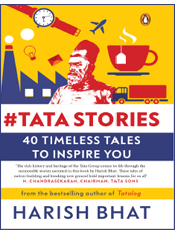 In a business world often defined by quarterly earnings, shareholder returns, and management jargon, Tata Stories: 40 Timeless Tales to Inspire You by Harish Bhat is a breath of fresh air. It is not a celebration of profits, but of purpose. In forty short and simply told stories, Bhat explores how the Tata Group has, for over 150 years, combined enterprise with empathy, ambition with altruism. Through these pages, the reader encounters not just the evolution of a corporate house, but the making of modern India - through steel, science, tea, trust, and above all, character.
What makes this collection stand out is not just its subject matter, but its storytelling style. Bhat, a seasoned Tata insider and brand custodian, does not lecture or laud from a pedestal. Instead, he shares each episode with the humility of a chronicler and the precision of a journalist. The result is a series of intimate portraits - some well-known, others surprising - all united by a quiet moral force.
Take, for instance, the story of how Jamsetji Tata envisioned the Indian Institute of Science (IISc) as early as the 1890s. At a time when India was still in the grip of colonial rule, Tata believed that scientific research and education held the key to national regeneration. Despite having no political power, he corresponded with Swami Vivekananda, navigated government resistance, and funded the vision with his personal wealth. That dream eventually led to the establishment of IISc in 1909, now one of India's premier research institutions
Some stories in the book are deeply personal. One recounts how J.R.D. Tata, on receiving a letter from a 12-year-old girl who wanted to be India's first female pilot, not only wrote back but personally encouraged her. That girl, later known as Sarla Thakral, went on to become one of India's earliest women aviators. J.R.D., India's first licensed pilot himself, didn't just shape aviation policy or build Air India - he inspired people, one by one.
Harish Bhat doesn't limit himself to the founders or top leadership. Many of the most powerful stories are about individuals who might never appear in a corporate annual report. Take the case of Sumant Moolgaokar, the man who built the now Tata Motors into a manufacturing powerhouse. Known for his engineering brilliance and quiet resolve, Moolgaokar would personally inspect plant floors, eat lunch with workers, and emphasize product quality with missionary zeal. He was responsible for introducing India's first indigenous truck and creating a vendor ecosystem that later laid the foundation for India's auto industry.
One of the most compelling chapters tells the story of how Tata Tea responded to the crisis of terrorism in the North East by launching the now-iconic Jaago Re campaign. Instead of focusing on selling tea, the company turned its advertising into a call for citizen awakening - urging people to vote, stay informed, and speak up. This fusion of brand and social message redefined what advertising could mean in India.
What gives the book enduring value is its balance of scale and soul. Bhat is never boastful. He acknowledges failures too, albeit gently. He notes, for example, how Tata's global ambitions - like the Jaguar-Land Rover acquisition - were met with scepticism at first. Yet the company stayed committed, invested in design and engineering, and eventually turned around two struggling brands into global symbols of excellence. In this, one sees the Tata way: patience, resilience, and an unshakeable faith in people and process.
In the wider context of Indian business literature, Tata Stories is significant. It contributes to a growing genre of narrative non-fiction that seeks to tell the story of Indian enterprise with nuance and pride. As Bhat rightly notes, the stories of great businesses deserve to be told -not just to record facts, but to explore ideas. In a country as vast and varied as India, institutions like the Tata Group are more than economic players - they are cultural and moral reference points. Understanding them helps us understand the India we live in, and the India we wish to create. If there is a critique to be made, it is perhaps that the book is unapologetically celebratory. It does not dwell on controversies.
Ultimately, Tata Stories is not just a book for business readers. It is a book for dreamers, doers, and anyone who believes that integrity and ambition are not mutually exclusive. It is for young professionals setting out on their journeys, for leaders trying to navigate complex choices, and for parents hoping to pass on stories of substance to the next generation.
back to top ^
|
|
| |
|
THROUGH THE LENS
|

|
|
Nature photographer Rupesh Balsara sights the striking Grandala, a cobalt-blue thrush of the high Himalayas. Found in India’s Sikkim and Arunachal Pradesh, it feeds on insects and berries. The Grandala is a winter visitor to lower altitudes and retreats to alpine zones in summer. Though not endangered, it is considered uncommon and a prized sighting for birders.
|
|
|
|
Empowered Learning Systems
www.empoweredindia.com
101, Lords Manor, 49, Sahaney Sujan Park,
Lullanagar, Pune – 411040,
Maharashtra, India


|
 The ELS Lotus logo is trademark of Empowered Learning Systems The ELS Lotus logo is trademark of Empowered Learning Systems
©2025 Copyright Empowered Learning Systems (ELS). For private
circulation to clients and well-wishers of ELS. While ELS endeavors to ensure
accuracy of information, we do not accept any responsibility for any loss or
damage to any person resulting from it.
|
|
|
|
|
|
| |